

Introduction
For many households, the biggest financial question is how middle-class families build wealth despite rising living costs, limited disposable income, and growing financial responsibilities. Salaries may provide stability, but they rarely create long-term financial security on their own. Without a structured approach to savings, investments, and asset growth, it becomes difficult for families to move beyond basic financial comfort.
Across India, middle-class families are increasingly focusing on smarter financial decisions that support long-term wealth creation. This shift is driven by several factors:
- Increasing education about financial planning
- Growing awareness of diversified investments
- The need to secure future family stability
- Long-term goals such as children’s education, retirement, and asset ownership
Building wealth is rarely about a single Land investment or sudden financial gain. Instead, it is typically the result of consistent financial habits, disciplined planning, and strategic asset building over time. Families that focus on long-term growth often adopt structured strategies that balance income, savings, and investments.
In the following sections, we will explore the financial principles, habits, and decisions that influence how middle-class families build wealth and how these strategies can support sustainable financial growth over the years.
Why Many Middle-Class Families Struggle to Build Wealth
For many households, the challenge is not earning money but managing it in a way that supports long-term financial growth. Even with stable income, many families find it difficult to accumulate significant assets over time. This is one of the main reasons why discussions about how middle-class families build wealth have become increasingly relevant.
A major issue is the growing gap between income and expenses. Rising housing costs, education fees, healthcare expenses, and lifestyle spending often consume a large portion of household income. As a result, families may focus more on short-term financial stability rather than long-term wealth creation.
Several common barriers make wealth building difficult:
- High monthly expenses that reduce savings potential
- Limited financial planning, especially in early earning years
- Dependence on a single income source
- Lack of diversified investments such as property or long-term assets
Another important factor is delayed investing. Many families wait until later stages of life to start structured financial planning, which reduces the benefits of long-term compounding.
Research highlighted in this wealth formula shows that disciplined investing and consistent financial habits can significantly improve wealth accumulation for middle-class households.
Understanding these challenges is the first step toward building a stronger financial foundation and adopting strategies that support sustainable wealth growth.
Core Financial Principles That Help Middle-Class Families Build Wealth
While income plays an important role in financial stability, wealth creation usually depends on disciplined financial principles. Families that successfully grow their assets tend to follow structured approaches that balance saving, investing, and long-term planning. These principles form the foundation for how middle-class families build wealth over time.
One of the most important principles is consistent investing. Instead of waiting for large sums of money, many families build wealth through regular land investment. Small but consistent contributions can grow significantly over time when supported by long-term financial discipline.
Another key factor is diversification. Relying on a single financial instrument can increase risk, while spreading land investments across multiple assets helps maintain stability. Common options families explore include savings plans, long-term investment schemes, and property-based assets.
Families focusing on wealth creation often follow these financial principles:
- Structured savings habits that prioritize long-term goals
- Investment diversification to manage financial risks
- Long-term financial planning instead of short-term spending
- Asset accumulation strategies that support steady growth
Financial experts also emphasize the importance of choosing structured investment options. Many of these are discussed in detailed investment plans designed specifically for middle-class households.
By focusing on these principles early, families can gradually transition from income-based financial security to long-term asset-based wealth.
Smart Financial Habits That Strengthen Family Wealth Growth
Wealth creation is rarely the result of a single financial decision. Instead, it develops through consistent habits that support long-term financial discipline. Families that focus on structured money management often create stronger financial stability over time. These everyday habits play an important role in how middle-class families build wealth gradually and sustainably.
One of the most effective habits is maintaining a clear financial structure. When families track income, expenses, and savings regularly, they gain better control over how their money is used. This helps reduce unnecessary spending and allows more funds to be directed toward asset-building opportunities.
Several financial habits commonly support long-term wealth growth:
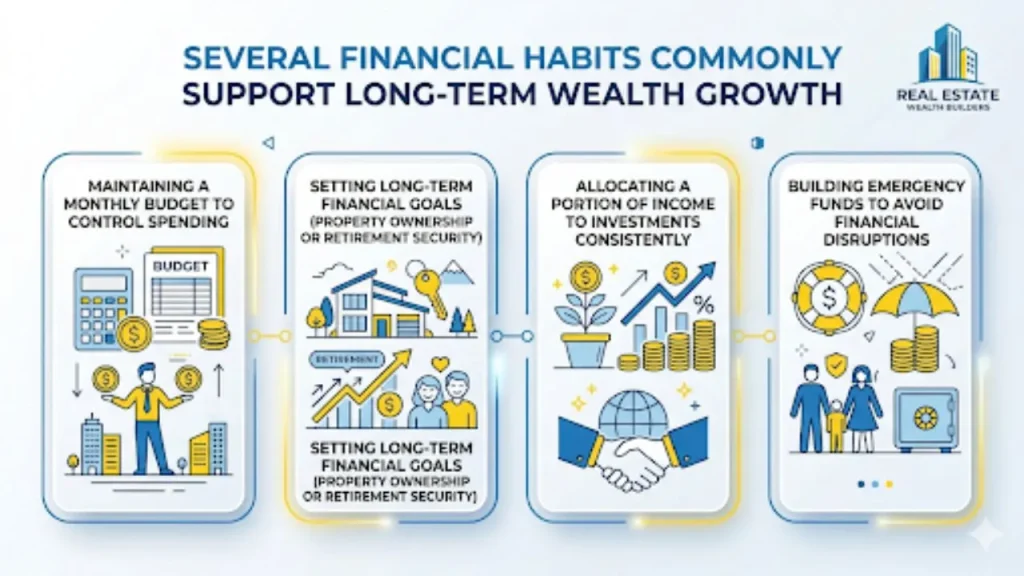
- Maintaining a monthly budget to control spending
- Setting long-term financial goals such as property ownership or retirement security
- Allocating a portion of income to investments consistently
- Building emergency funds to avoid financial disruptions
How Consistent Investing Builds Wealth Over Time
Consistent investing allows families to benefit from compounding. Even moderate land investments, when made regularly over several years, can grow into significant financial assets. This disciplined approach helps households gradually move from income-based stability toward asset-based financial growth.
Insights discussed in these wealth strategies highlight how long-term planning and consistent contributions can help families build substantial wealth over time.
Adopting these habits early can significantly improve financial outcomes across generations.
Financial Behavior Comparison: Spending vs Wealth Building
One of the most significant differences between families that achieve long-term financial growth and those that struggle is how income is used. While many households focus primarily on immediate lifestyle improvements, others prioritize asset creation and long-term financial stability. Understanding this difference can help explain how middle-class families build wealth over time.
In many cases, income increases lead to higher spending rather than stronger investments. Lifestyle upgrades such as frequent purchases, expensive gadgets, or short-term comforts can gradually reduce the ability to save or invest. Over time, this pattern limits opportunities to accumulate meaningful assets.
Families that successfully build wealth often adopt a different financial approach. Instead of directing most of their income toward consumption, they focus on gradually expanding their asset base through disciplined financial planning.
The comparison below highlights how financial choices can influence long-term outcomes.
Financial Behavior Comparison: Spending vs Wealth Building
| Financial Behavior | Spending Building | Wealth Building |
| Income usage | Lifestyle upgrades | Asset accumulation |
| Savings behaviour | Irregular savings | Structured investing |
| Financial planning | Immediate needs | Long-term wealth strategy |
| Financial outcome | Limited wealth growth | Sustainable asset development |
This shift in financial mindset allows households to build stronger economic stability. Over time, disciplined investing and asset accumulation create opportunities for financial independence and long-term family security.
Common Financial Mistakes That Delay Wealth Creation
Many families work hard to increase their income, yet wealth growth remains slow because of certain financial mistakes. These mistakes are often unintentional but can significantly affect long-term financial stability. Recognizing them early is important for families that want to understand how middle-class families build wealth through better financial decisions.
One of the most common mistakes is delaying investments. Many households postpone investing until they feel financially comfortable. However, starting late reduces the benefits of compounding and long-term asset growth.
Another issue is relying heavily on a single income source. When families depend only on salary income without building additional assets, financial growth becomes limited. Over time, this approach may slow down wealth accumulation and reduce financial flexibility.
Other common mistakes include:
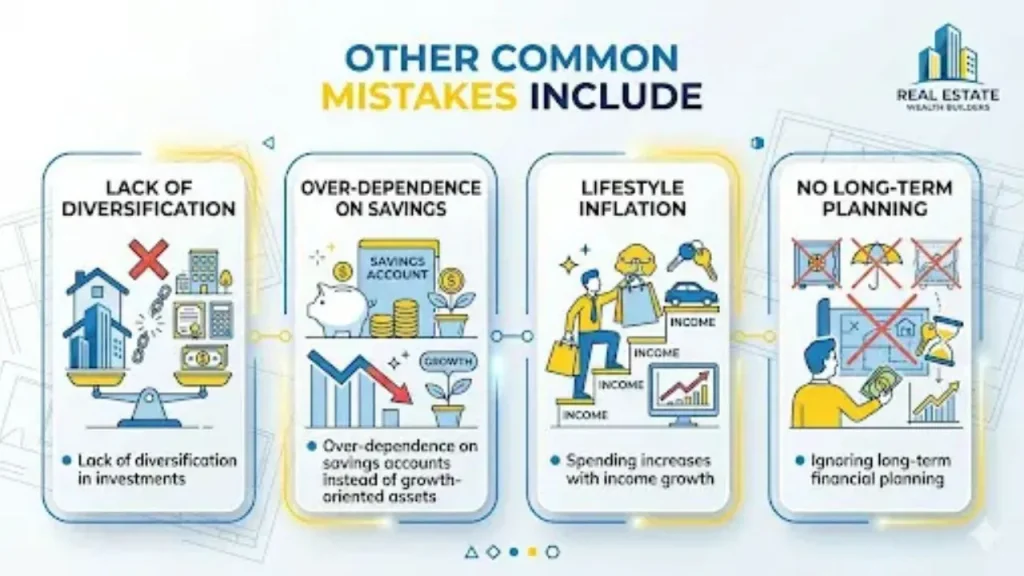
- Lack of diversification in investments
- Over-dependence on savings accounts instead of growth-oriented assets
- Spending increases with income growth
- Ignoring long-term financial planning
The table below highlights how these financial mistakes can influence long-term wealth creation.
| Financial Mistake | Immediate Impact | Long-Term Effect |
| Late investing | Missed compounding benefits | Slower wealth growth |
| Salary dependence | Limited income sources | Reduced financial resilience |
| Poor diversification | Higher financial risk | Unstable wealth growth |
| Lack of asset planning | Weak financial structure | Limited wealth accumulation |
By identifying and correcting these mistakes early, families can build stronger financial foundations and improve their chances of sustainable wealth growth.
Internal Resources for Smarter Property Investment Planning
For many families, real estate remains one of the most reliable long-term assets for building financial stability. While savings and traditional investments play an important role, property ownership often provides an additional layer of security and long-term value growth. This is one reason real estate is frequently considered when discussing how middle-class families build wealth over time.
Property investments can support wealth creation in several ways. Unlike short-term financial instruments, real estate typically offers both long-term appreciation and the potential for stable returns. When families approach property investment with proper research and planning, it can become a strong component of a diversified financial portfolio.
Several factors make real estate attractive for long-term wealth planning:
- Asset appreciation over time, especially in developing locations
- Potential rental income that supports additional cash flow
- Tangible asset ownership, which adds financial security
- Diversification beyond traditional financial investments
Understanding the background and future vision of a development company can also help families make more informed investment decisions. Insights about project planning and company leadership are discussed in this leadership vision section.
In addition, reviewing new property opportunities can help families explore long-term investment possibilities. Details about upcoming developments can be found through these future developments.
Exploring such resources allows families to better evaluate property investment opportunities as part of their long-term wealth strategy.
Final Thoughts
Building long-term financial stability rarely happens through sudden financial gains. Instead, it usually develops through consistent habits, disciplined planning, and smart investment decisions made over many years. Understanding how middle-class families build wealth often begins with recognizing the importance of structured financial thinking rather than relying only on income growth.
Families that focus on long-term financial security typically adopt strategies that balance savings, land investment, and asset creation. Rather than directing all income toward short-term spending, they gradually build assets that support financial stability across different life stages.
Several key factors support sustainable wealth creation:
- Consistent saving and investing habits that allow compounding to work over time
- Diversified financial planning, including property and long-term assets
- Avoiding common financial mistakes that reduce growth potential
- Clear financial goals that guide investment decisions
As financial awareness continues to grow, many households are shifting from a consumption-focused mindset to a long-term wealth-building approach. This shift allows families to strengthen their financial foundations and create greater economic stability for future generations.
Ultimately, wealth creation is not determined by income alone. It is shaped by the financial choices families make, the discipline they maintain, and the long-term strategies they follow to gradually build and protect their assets.
Take the Next Step Toward Long-Term Wealth Creation
Families looking to strengthen their long-term financial strategies often consider property investments as part of their wealth-building journey. Exploring structured real estate opportunities can help households diversify assets and create stronger financial stability.
To learn more about investment opportunities and property development solutions, explore our Real Estate Services.
Frequently Asked Questions:
1. How do middle-class families build wealth?
Middle-class families build wealth through disciplined financial habits such as regular saving, long-term investing, and careful financial planning. By diversifying investment, avoiding unnecessary debt, and focusing on asset creation like property or retirement funds, families can gradually improve their financial stability and create long-term wealth.
2. What are the best wealth-building strategies for families?
The most effective wealth-building strategies focus on consistent investing and disciplined financial planning. Families often benefit from strategies such as:
Regular savings and systematic investments
1. Diversifying assets across multiple options
2. Investing in long-term assets like property
3. Setting clear financial goals
Following these strategies helps families gradually grow their financial assets and improve long-term financial security.
3. Why is long-term investing important for wealth creation?
Long-term investing allows families to benefit from compounding, where Land investment returns generate additional growth over time. Instead of focusing on short-term gains, consistent long-term investments help families gradually build larger financial assets and achieve greater financial stability.
4. What financial habits support wealth growth?
Several financial habits can significantly improve wealth growth for families. These include:
1. Maintaining a monthly budget
2. Saving a portion of income consistently
3. Investing regularly in diversified assets
4. Building emergency savings
These habits help families control spending, strengthen financial discipline, and gradually increase long-term wealth.
5. What mistakes prevent middle-class families from building wealth?
Common mistakes include delaying investments, relying only on salary income, increasing lifestyle spending with income growth, and failing to diversify land investments. These financial habits reduce opportunities for long-term asset accumulation and slow down wealth creation.
6. Can property land investment help families build wealth?
Yes, property land investment can support long-term wealth creation. Real estate often provides:
1. Long-term asset appreciation
2. Potential rental income
3. Portfolio diversification
4. Greater financial security through tangible assets
When chosen carefully, property investments can become a strong component of a family’s long-term wealth strategy.
7. Why is diversification important for wealth creation?
Diversification spreads investments across different asset types, reducing financial risk. By investing in multiple areas such as savings plans, mutual funds, and property, families can protect their finances and maintain more stable long-term wealth growth.
8. When should families start investing?
Families should start investing as early as possible. Early investing allows more time for compounding returns, which helps investments grow significantly over time. Even small land investment made consistently can lead to meaningful wealth accumulation.
9. How does financial planning help families build wealth?
Financial planning helps families organize income, savings, and investments in a structured way. A good financial plan usually includes:
1. Budget management
2. Long-term investment planning
3. Emergency fund creation
4. Retirement preparation
This structured approach improves financial decision-making and supports sustainable wealth growth.
10. How can families achieve long-term financial security?
Families can achieve financial security by maintaining disciplined savings, investing consistently, avoiding unnecessary debt, and focusing on long-term assets. Over time, these practices help create stable financial foundations and support wealth growth for future generations.