Enquire Now for a free site visit – call

Introduction
Individual House Buying is a dream for many families, but the process can often feel complicated and risky without the right guidance. From verifying legal documents to evaluating location and property value, homebuyers must consider several important factors before making a final decision. According to the National Housing Bank (NHB), residential property demand in India has steadily increased in recent years, driven by urban growth and rising homeownership aspirations. In addition, a report by Knight Frank India states that housing sales in major Indian cities crossed 3 lakh units in 2023, highlighting the growing interest in independent and land-owned properties.
For buyers, understanding the right steps can help avoid costly mistakes and ensure a safe investment.
Key things every homebuyer should know:
- Importance of legal document verification
- Choosing the right location and infrastructure
- Evaluating property price and long-term appreciation
- Understanding the complete house buying process
- Avoiding common real estate investment mistakes
This guide will help you navigate the process with confidence and clarity.
What is an Individual House?
An individual house refers to a standalone residential property where the owner has complete ownership of both the building and the land it stands on. Unlike apartments, which share walls and common facilities with other residents, an provides full control over the property and its surrounding space.
Many homebuyers prefer individual houses because they offer greater privacy, flexibility, and long-term land value appreciation. According to reports from Knight Frank India, demand for independent houses and villas has increased in growing suburban areas due to the need for larger living spaces and land ownership.
Individual House vs Apartment
| Feature | Individual House | Apartment |
| Ownership | Land + Building | Only the Unit |
| Privacy | High | Moderate |
| Space | Larger plot and outdoor space | Limited to unit area |
| Customization | Easy to modify or expand | Restricted by building rules |
| Maintenance | Owner manages property | Managed by apartment association |
For example, a family buying a 2,400 sq. ft. plot with a constructed house owns the entire land parcel. In contrast, apartment owners only hold rights to their specific unit and shared common areas.
Benefits of Buying an Individual House
Buying a house offers several advantages that attract both homebuyers and real estate investors. Unlike apartments, an individual house provides full ownership of the land and building, which significantly increases long-term value. As urban areas expand, land becomes more limited, making independent houses a strong investment option. According to real estate reports from Knight Frank India, properties with land ownership tend to show stronger long-term appreciation compared to many apartment developments.
Key Benefits of Buying a House
- Complete Ownership and Control
You own both the house and the land it stands on. This ownership gives you full authority to modify, renovate, or rebuild the property whenever needed. - Higher Property Appreciation
Land value generally increases over time. For example, houses located in developing suburbs often experience significant price growth as infrastructure improves. - Greater Privacy and Space
Individual houses provide a peaceful living environment because they do not share walls with neighbors. Families also benefit from private outdoor spaces like gardens or parking areas. - Flexibility for Future Expansion
Owners can add additional floors, extend rooms, or redesign interiors. For instance, many homeowners build rental units on upper floors to generate extra income. - Better Lifestyle and Comfort
Independent houses usually offer:
- Private parking space
- Personal terrace or garden
- More ventilation and natural light
- Private parking space
- Rental Income Opportunities
Homeowners can rent out extra floors or portions of the house, creating a steady income stream while still living on the property.
Because of these benefits, many families choose individual houses for long-term living, investment security, and future flexibility.
Important Factors to Consider Before Buying an Individual House
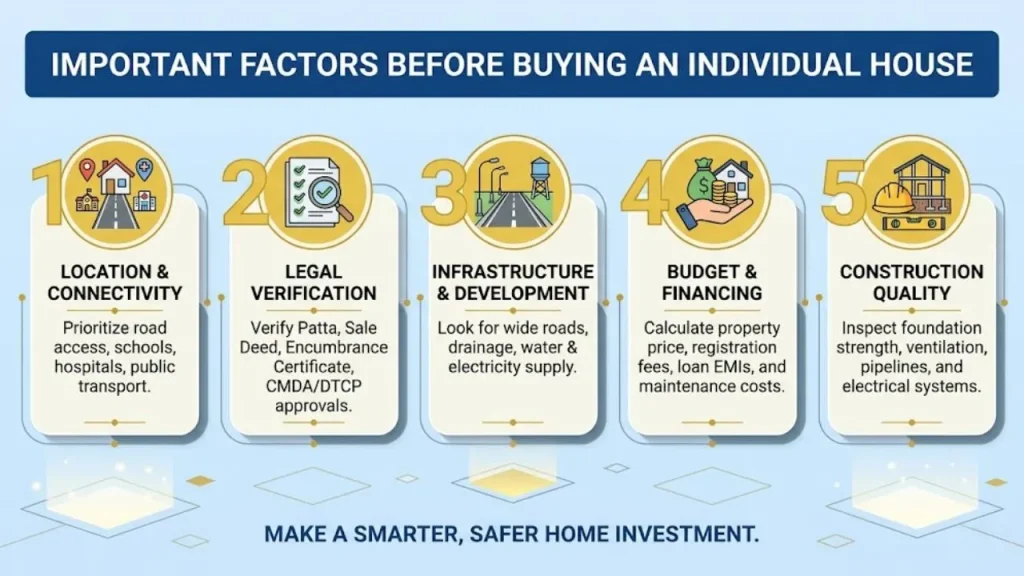
It requires careful evaluation because it involves a major financial commitment. A small mistake in location, legal verification, or budget planning can lead to long-term problems. According to Knight Frank India’s Residential Report, infrastructure development and location remain two of the biggest factors influencing property price growth in Indian cities. Homebuyers who analyze these factors carefully often make safer and more profitable investments.
Key Factors Every Homebuyer Should Evaluate
- Location and Connectivity
Choose areas with strong road access, schools, hospitals, and public transport.
Example: A house near metro stations or IT corridors usually has higher resale value. - Legal Document Verification
Check property documents carefully to avoid legal disputes. Important documents include:
- Patta or land ownership record
- Sale deed
- Encumbrance Certificate (EC)
- DTCP or CMDA approval
- Patta or land ownership record
- Infrastructure and Neighborhood Development
Growing infrastructure often increases property value. Look for:
- Wide roads and drainage systems
- Reliable water and electricity supply
- Nearby commercial development
- Wide roads and drainage systems
- Budget and Financing Plan
Calculate your total cost before finalizing a property:
- Property price
- Registration charges
- Home loan EMI
- Maintenance and renovation expenses
- Property price
- Construction Quality and Property Condition
Inspect the structure carefully. Check foundation strength, ventilation, water pipelines, and electrical systems.
Quick Evaluation Checklist
| Factor | What to Check | Example |
| Location | Road access, schools, hospitals | House near IT park |
| Legal Documents | Patta, EC, approvals | Clear title ownership |
| Infrastructure | Water, drainage, electricity | Developed residential layout |
| Budget | EMI affordability | Within 30–40% income rule |
When buyers evaluate these factors carefully, they reduce risks and choose a house that delivers both comfortable living and long-term investment value.
Step-by-Step Process – Buyer’s Report
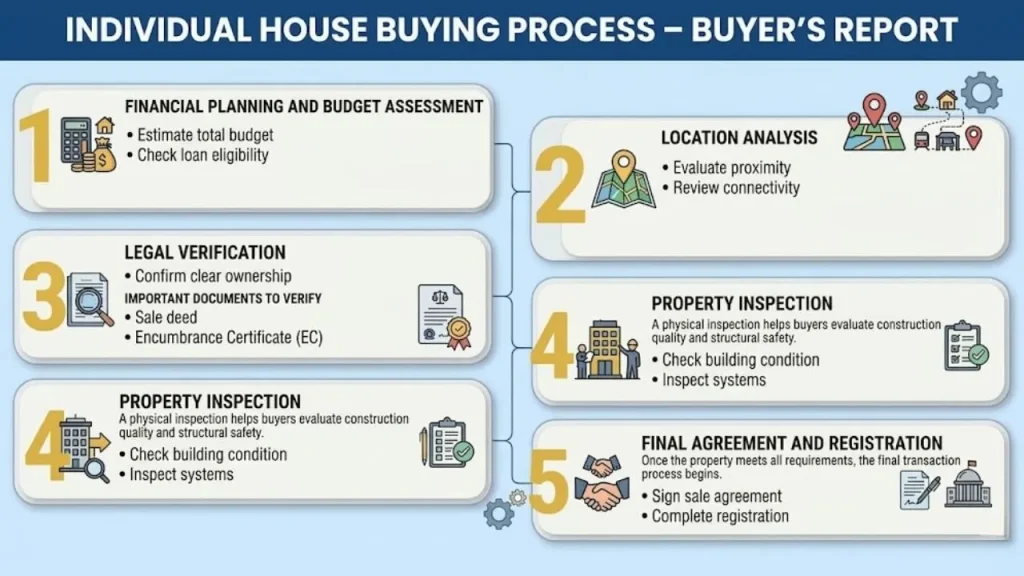
Purchasing a house requires a structured approach to minimize financial and legal risks. A well-planned buying process helps homebuyers evaluate property value, verify ownership records, and complete the transaction safely. The following report outlines the essential stages involved in buying a house.
Step 1: Financial Planning and Budget Assessment
Before starting the property search, buyers should evaluate their financial readiness.
- Estimate total property budget
- Check home loan eligibility with banks or financial institutions
- Plan down payment and registration expenses
Example: Financial advisors often recommend keeping home loan EMI within 30–40% of monthly income.
Step 2: Location Analysis
Location strongly influences property value and future appreciation.
- Evaluate proximity to schools, hospitals, and workplaces
- Review connectivity through highways, metro, or public transport
- Study upcoming infrastructure projects in the area
Example: Houses located near developing IT corridors often show higher demand and resale value.
Step 3: Legal Verification
Buyers must confirm that the property has clear legal ownership.
Important documents to verify:
- Patta or land ownership certificate
- Sale deed
- Encumbrance Certificate (EC)
- Local authority approvals such as DTCP or CMDA
Step 4: Property Inspection
A physical inspection helps buyers evaluate construction quality and structural safety.
- Check foundation and building condition
- Inspect plumbing, drainage, and electrical systems
- Evaluate ventilation, lighting, and surrounding environment
Step 5: Final Agreement and Registration
Once the property meets all requirements, the final transaction process begins.
- Negotiate property price
- Sign the sale agreement
- Complete property registration with the local registration authority
Following this step-by-step process allows buyers to secure a legally verified and financially sound individual house investment.
Common Mistakes to Avoid When Buying an Individual House – Buyer Awareness Report
Buying a house involves significant financial commitment, and small mistakes during the process can lead to long-term legal or financial problems. Many property disputes in India occur due to lack of document verification or poor property research. According to data from the National Crime Records Bureau (NCRB), property-related fraud cases continue to appear in several states each year, highlighting the importance of careful verification before purchasing real estate. Understanding common buying mistakes helps homebuyers make safer investment decisions.
Failing to Research the Neighborhood
Many buyers focus only on the house and ignore the surrounding area. The neighborhood greatly affects lifestyle and property value.
Things to check include:
- Road access and public transportation
- Nearby schools, hospitals, and markets
- Safety and overall development of the locality
Not Verifying Property Boundaries
Individual houses include land ownership, so buyers must confirm exact plot boundaries and measurements.
Important checks:
- Land survey details
- Plot size mentioned in the sale deed
- Boundary markers on the property
Ignoring Future Maintenance Needs
Unlike apartments, individual house owners manage all maintenance work themselves.
Common maintenance responsibilities include:
- Roof repairs
- Plumbing maintenance
- Exterior painting and structural upkeep
Buyers should estimate these costs before purchasing.
Every dream home starts with the right guidance. If you are planning an affordable house for your family, explore the leadership insights Tiruthanikai Infra City shared on the and take the first step toward building your future home.
Individual House Investment Potential
A house offers strong investment potential because buyers gain ownership of both the land and the building. In real estate, land value often increases over time, especially in expanding cities and developing suburbs. As infrastructure projects like highways, metro networks, and commercial hubs grow, property demand in nearby areas usually rises. Because of this, many investors prefer individual houses for long-term wealth creation and stable property appreciation.
Land Ownership Increases Long-Term Value
One of the biggest advantages of a house lies in land ownership. Land remains limited while urban populations continue to grow, which increases its market value.
Key advantages include:
- Strong price appreciation over time
- Higher resale demand in developing locations
- Greater security compared to shared housing properties
Opportunities for Rental Income
Create multiple income opportunities because owners can rent different portions of the property.
Common rental options include:
- Renting the entire house to tenants
- Renting individual floors separately
- Creating additional rental rooms or portions
Expansion and Property Development Potential
Unlike apartments, individual houses allow property owners to expand or modify the structure.
Possible expansion options include:
- Adding additional floors
- Building extra rental units
- Renovating or redesigning the property layout
Flexible Use for Different Purposes
It provide flexibility for different uses depending on zoning rules.
Examples include:
- Residential living
- Rental property investment
- Home office or small business use
Because of these advantages, individual houses remain a popular real estate investment choice for long-term financial growth and property security.
Why Houses Are Popular in Growing Cities

Rapid urban growth has increased the demand for in many cities. As metropolitan areas expand, people look for homes that offer more space, privacy, and long-term investment value. Individual houses meet these expectations because they provide land ownership and flexible living space. Many families also prefer independent homes as they move away from crowded apartment complexes.
Demand for More Space and Privacy
Modern homebuyers prioritize comfortable living environments. It provide more personal space compared to apartments.
Key advantages include:
- No shared walls with neighbors
- Private parking or garden areas
- Larger living spaces for families
Example: Families with children often choose independent houses because they can create outdoor play areas or small gardens.
Rising Land Value in Expanding Cities
As cities grow, land becomes more valuable. Houses located in developing suburbs often gain higher market value over time.
Reasons for rising property demand include:
- New infrastructure projects like highways and metro lines
- Growth of IT parks and commercial zones
- Expansion of residential layouts in suburban areas
Example: Areas near upcoming business districts often attract buyers who expect future price appreciation.
Flexible Living and Expansion Opportunities
It allow homeowners to modify or expand the property according to their needs.
Common flexibility benefits include:
- Adding extra floors for extended family members
- Creating rental portions for additional income
- Renovating the house without restrictions from housing associations
Better Lifestyle and Long-Term Investment
Many buyers see individual houses as both a lifestyle upgrade and a financial asset.
People prefer them because they offer:
- Greater independence in property decisions
- Potential rental income from additional floors
- Strong long-term appreciation due to land ownership
Because of these factors, continue to gain popularity in growing cities as buyers seek space, flexibility, and long-term property value.
Looking for an affordable place to build your dream home? Explore budget-friendly plots and housing opportunities at Tiruthanikai Infra City and take the first step toward owning your own low budget house.
Conclusion
Buying an individual house is one of the most important financial decisions for many families. Unlike apartments, It provides full ownership of both land and building, which increases long-term value and offers greater flexibility. However, a successful purchase requires careful planning, proper legal verification, and thorough property evaluation.
Homebuyers should always focus on key factors such as location, infrastructure development, legal documentation, construction quality, and financial planning. Taking time to compare multiple properties and consulting experts can help avoid costly mistakes and ensure a secure investment.
A house also offers strong long-term benefits such as privacy, expansion opportunities, rental income potential, and land value appreciation. With growing urban development and rising housing demand, independent houses continue to remain a reliable real estate investment.
By following the right buying process and verifying every detail carefully, buyers can confidently invest in a house that provides both comfortable living and long-term financial security.
Frequently Asked Questions
1. What is an individual house?
It is a standalone residential property where the owner has full ownership of both the land and the building.
2. What documents should I verify before buying an individual house?
Important documents include:
Sale Deed
Patta or land ownership record
Encumbrance Certificate (EC)
Approved building plan
Property tax receipts
3. What is the difference between an individual house and an apartment?
It includes land ownership and full property control, while an apartment owner only owns the housing unit within a shared building.
4. How do I check if a property has legal approval?
You should verify government approvals such as DTCP or CMDA approval, along with land records and encumbrance certificates.
5. What factors affect the value of a house?
Several factors influence property value, including:
Location and connectivity
Infrastructure development
Land size and property condition
Market demand
6. Can I get a home loan for buying a house?
Yes, many banks and financial institutions provide home loans for independent house purchases, depending on your income, credit score, and property documents.
7. Can I build additional floors on a house?
Yes, property owners can usually build additional floors if the local building regulations and approvals allow it.
8. Is buying a house in developing areas a good idea?
Yes, houses in developing areas often offer better appreciation potential as infrastructure and population growth increase property demand.