Enquire Now for a free site visit – call
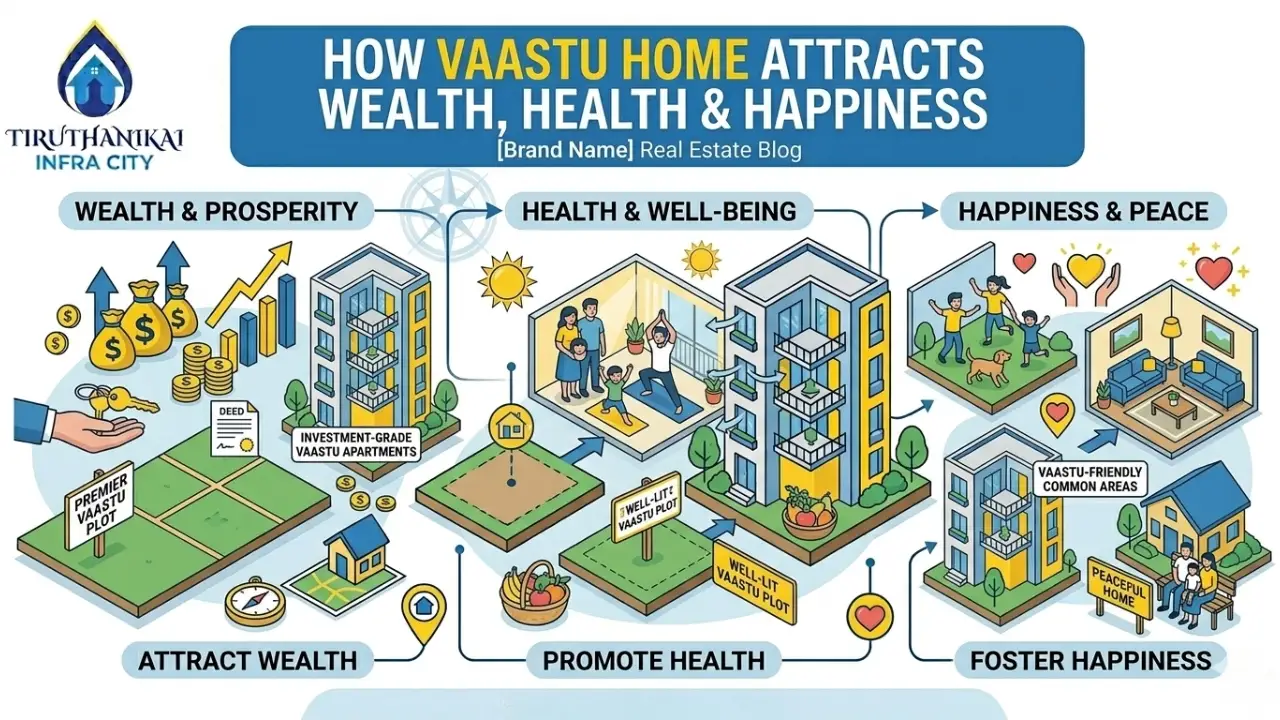
Introduction
Buying a home has always been about more than location, price, or square footage. For many buyers, a home is also expected to support prosperity, comfort, and long-term well-being. That is one reason Vaastu Home continue to hold strong relevance in modern real estate.
While today’s buyers compare amenities, connectivity, and investment value, many also evaluate how a property feels in terms of balance, openness, and livability. This is where Vaastu often becomes part of the conversation-not simply as tradition, but as a framework many associate with thoughtful home planning.
Interest in Vaastu-compliant homes has grown because buyers increasingly connect design choices with lifestyle outcomes. Factors such as natural light, airflow, room orientation, and spatial harmony are not only traditional considerations; they are also practical elements linked to comfortable living. Some wellness research has even reinforced how built environments can influence well-being, making these ideas relevant beyond cultural preference.
Why Vaastu Still Influences Modern Homebuyers
Modern homebuyers are making more informed decisions than ever before. Along with evaluating price, connectivity, legal approvals, and amenities, many buyers also consider whether a property aligns with principles associated with balance and positive living. This is why Vaastu Home continue to influence residential buying decisions across markets.
For many people, Vaastu is not viewed only as a traditional preference. It is often seen as part of a broader decision-making framework that includes comfort, functionality, and long-term peace of mind.
One reason for this continued relevance is that several Vaastu considerations overlap with practical design logic. Features such as airflow, sunlight, room orientation, and open spatial movement are often linked with healthier living environments. Some wellness research also highlights how built environments can affect occupant comfort and mental well-being, reinforcing why these factors matter to buyers.
How Vaastu Principles Are Linked to Prosperity and Positive Energy
One of the main reasons buyers prefer Vaastu Home is the belief that proper spatial planning can support prosperity, stability, and positive living. While these ideas are often rooted in tradition, many of them also connect with practical design principles that improve how a home functions.
For many buyers, prosperity is not interpreted only in symbolic terms. It can also mean living in a home that supports comfort, efficiency, and long-term value.
Key Vaastu Elements Buyers Often Evaluate
When evaluating Vaastu-oriented properties, buyers often pay attention to several layout factors.
Entrance Orientation
The entrance is often considered important because it influences first impressions, movement, and in many cases natural light access. Buyers frequently evaluate whether entrance placement contributes to openness and balance.
Room Placement
Positioning of living rooms, bedrooms, and kitchens is another major factor. Many buyers prefer layouts where spaces feel functionally connected while still supporting privacy and comfort.
Open Space Balance
Balanced open areas, uncluttered layouts, and good circulation often contribute to homes feeling spacious and comfortable.
Some broader planning evidence in architectural studies also supports how thoughtful spatial organization can improve usability and living experience.
How Prosperity Is Often Interpreted in Real Estate
For many buyers, prosperity linked to Vaastu can include practical outcomes such as:
- Better living comfort
- Stronger emotional satisfaction with the home
- Improved long-term desirability
- Greater buyer confidence
- Potential resale appeal
In this sense, prosperity is often tied to the quality of living a home supports.
Positive Energy and Functional Design
“Positive energy” is often described in traditional language, but buyers may interpret it through practical experience:
- Does the home feel open?
- Is there enough natural light?
- Does movement through the home feel easy?
- Are spaces balanced and comfortable?
These are often functional design questions as much as Vaastu questions.
Why Buyers Connect Vaastu With Investment Confidence
Many buyers also believe properties designed with thoughtful planning can hold stronger long-term appeal.
That perception can influence:
- Purchase confidence
- Demand preferences
- Family suitability
- Long-term ownership satisfaction
This is one reason Vaastu considerations can extend beyond lifestyle and become part of investment evaluation too.
Why Health and Well-Being Are Often Connected to Vaastu Design
Beyond prosperity, many buyers associate Vaastu Home with healthier and more balanced living. This connection often comes from practical design elements that influence comfort, environmental quality, and daily well-being.
Modern homebuyers increasingly view health as an important part of real estate decisions. A home is expected not just to look good, but to support better living experiences.
Several principles associated with Vaastu-such as ventilation, daylight access, and spatial balance-align with ideas often discussed in health insights related to occupant wellness.
How Home Design Can Support Well-Being
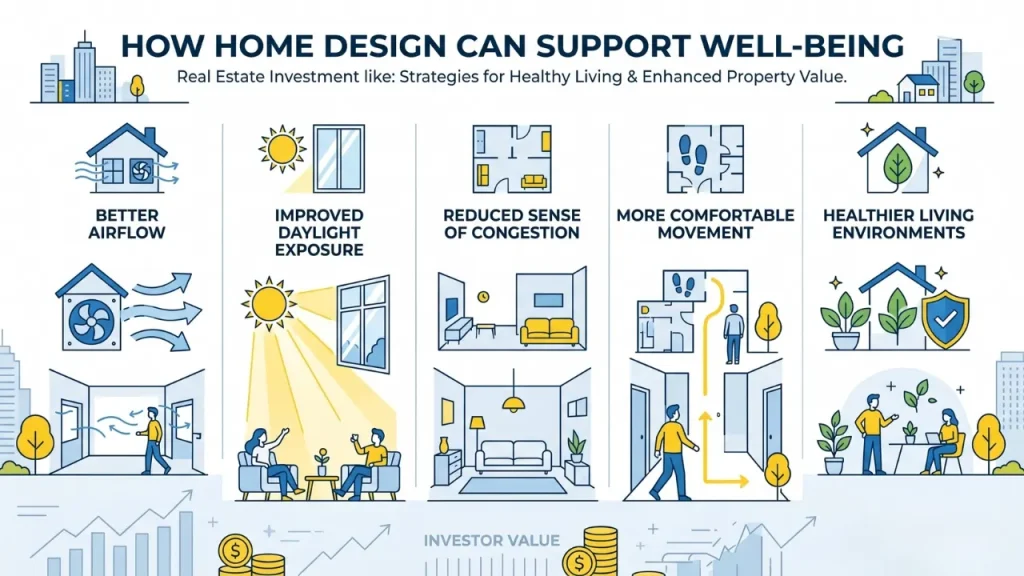
Thoughtful layouts can contribute to:
- Better airflow
- Improved daylight exposure
- Reduced sense of congestion
- More comfortable movement within the home
- Healthier living environments
These factors are often practical reasons buyers consider Vaastu-oriented homes.
Before vs After Impact of Vaastu-Oriented Planning
| Home Factor | Conventional Layout | Vaastu-Oriented Layout |
| Airflow | Basic circulation | Improved ventilation |
| Natural Light | Uneven exposure | Balanced daylight |
| Space Flow | Functional only | Optimized movement |
| Occupant Comfort | Standard usability | Wellness-focused living |
This comparison shows why many buyers see Vaastu not only as belief-driven, but also linked to planning decisions that can affect living quality.
Why Buyers Value Wellness-Oriented Homes
Today’s buyers often prioritize homes that support:
- Healthier indoor environments
- Better natural ventilation
- Reduced dependence on artificial conditions
- Greater day-to-day comfort
- Long-term family well-being
That shift has made wellness an important part of housing preferences.
Common Issues Buyers Try to Avoid
Poor layouts can create practical problems over time, such as:
- Limited airflow
- Dark interiors
- Inefficient room flow
- Uncomfortable living spaces
These are often concerns buyers try to reduce when choosing thoughtfully designed homes.
Why This Matters Beyond Comfort
Well-designed homes can also influence long-term satisfaction after purchase.
A property may look attractive initially, but poor planning often affects everyday living. That is why many buyers see wellness-oriented design as part of both lifestyle quality and smarter home selection.
For many, Vaastu becomes relevant because it often overlaps with these practical priorities.
What Property Buyers Should Check Before Choosing a Vaastu Home
While Vaastu can influence homebuying decisions, experienced buyers know it should be evaluated alongside practical property fundamentals. A home may claim Vaastu compliance, but buyers should still assess whether it supports functionality, legal security, and long-term value.
This is where proper property guidance becomes important.
A strong property decision usually balances traditional preferences with practical due diligence.
Evaluate Layout Functionality First
Before considering directional alignment alone, buyers should review whether the layout works in real life.
Check for:
- Efficient room flow
- Proper ventilation
- Natural light distribution
- Space utilization
- Functional room positioning
A home should support both Vaastu preferences and everyday usability.
Assess Construction Quality
Vaastu should never replace quality checks.
Review:
- Structural standards
- Material quality
- Plumbing and electrical planning
- Safety considerations
- Builder credibility
Even a well-oriented home loses value if core construction fundamentals are weak.
Verify Legal and Project Due Diligence
One of the biggest buyer mistakes is focusing heavily on design while overlooking documentation.
Important checks include:
- Title clarity
- Approvals and compliance
- Project documentation
- Possession timelines
- Developer track record
Many buyers seek expert buyer solutions at this stage to reduce risk and improve decision confidence.
Consider Location and Investment Logic
A property should work not only as a home, but as an investment.
Evaluate:
- Infrastructure growth
- Connectivity
- Neighborhood demand
- Future appreciation potential
- Resale prospects
A good property should align lifestyle benefits with long-term financial sense.
Use a Balanced Decision Framework
Rather than asking only “Is this Vaastu compliant?”, strong buyers often ask:
- Is the home well planned?
- Is the construction reliable?
- Does it support long-term value?
- Does Vaastu complement practical strengths?
That shift helps avoid emotionally driven decisions and supports smarter property selection.
Why Balance Matters
Vaastu can be a valuable factor-but it works best as one part of a broader buying framework.
The strongest decisions usually combine:
- Traditional alignment
- Functional design
- Risk assessment
- Investment logic
That approach helps buyers choose homes with both confidence and clarity.
Common Myths About Vaastu That Mislead Homebuyers
As interest in Vaastu Home has grown, so have misconceptions that can confuse buyers. While Vaastu can support thoughtful home evaluation, myths often lead people to prioritize assumptions over practical decision-making.
This is where balanced understanding matters.
Some broader research analysis around planning misconceptions also suggests that many common beliefs are often oversimplified or misunderstood.
Myth 1: A Home Must Be Perfectly Vaastu-Compliant to Be Valuable
One of the biggest misconceptions is that even small deviations make a property unsuitable.
In reality, many strong homes may not follow every traditional interpretation but still offer:
- Excellent planning
- Strong functionality
- Healthy living environments
- Good investment potential
Perfection is often less important than balanced evaluation.
Myth 2: Vaastu Alone Guarantees Prosperity
A well-designed home can support comfort and confidence, but prosperity depends on many factors beyond property layout.
Assuming Vaastu alone determines outcomes can create unrealistic expectations.
Myth 3: Buyers Should Prioritize Vaastu Over Practical Due Diligence
This can be a costly mistake.
Ignoring:
- Construction quality
- Legal approvals
- Builder credibility
- Location growth
- Resale demand
can create greater risks than minor Vaastu concerns.
Risk vs Impact of Common Buyer Mistakes
| Buyer Mistake | Potential Impact |
| Following myths blindly | Poor purchase decisions |
| Ignoring due diligence | Higher ownership risks |
| Misreading Vaastu claims | Wrong property fit |
| Prioritizing beliefs over fundamentals | Reduced long-term value |
This comparison shows why myths can affect both lifestyle outcomes and investment quality.
Myth 4: All “Vaastu Homes” Offer the Same Value
Many projects use the term loosely in marketing.
Buyers should verify whether claims relate to:
- Actual planning principles
- Functional layout quality
- Project design standards
- Genuine buyer relevance
Labels alone should never replace evaluation.
Focus on Practical Interpretation
A better approach is to treat Vaastu as one layer of decision-making, not the only one.
Strong buyers typically combine:
- Practical design review
- Risk assessment
- Investment logic
- Reasonable Vaastu consideration
That balanced perspective helps avoid myths while improving purchase confidence.
Why Vaastu Can Influence Long-Term Property Value
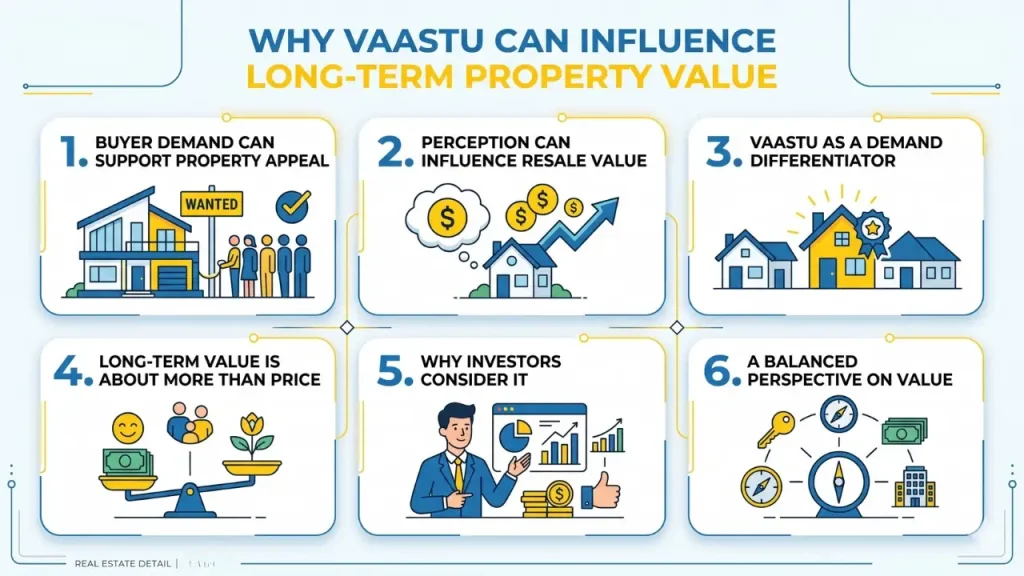
For many buyers, Vaastu Homes are not only about lifestyle preferences but also about long-term investment thinking. In markets where buyer demand favors Vaastu-compliant properties, that preference can influence desirability, resale perception, and even marketability over time.
Real estate value is often shaped not just by physical assets, but by what buyers actively seek.
Buyer Demand Can Support Property Appeal
When a large segment of buyers prefers certain planning principles, those preferences can affect demand patterns.
This may influence:
- Faster buyer interest
- Wider resale appeal
- Stronger market perception
- Better long-term desirability
That is one reason some investors evaluate Vaastu as part of broader investment options when comparing properties.
Perception Can Influence Resale Value
In real estate, perception often matters alongside fundamentals.
If more buyers see Vaastu-oriented homes as desirable, those homes may benefit from:
- Broader buyer pool
- Better resale positioning
- Higher perceived livability
- Improved market competitiveness
While value depends on many factors, buyer preference can still shape outcomes.
Vaastu as a Demand Differentiator
In competitive housing markets, differentiation matters.
Alongside location and amenities, Vaastu compliance can act as an additional demand driver for some projects.
This may matter especially when buyers compare similar properties and use intangible factors to make final decisions.
Long-Term Value Is About More Than Price
Property value is not just purchase price or appreciation.
It can also involve:
- Sustained buyer demand
- Livability appeal
- Resale confidence
- Market positioning
Homes aligned with what buyers consistently prefer often hold stronger long-term relevance.
Why Investors Consider It
Many investors do not evaluate Vaastu in isolation. They often view it as one factor among:
- Location growth
- Construction quality
- Demand trends
- Buyer sentiment
When these align, Vaastu can sometimes strengthen a property’s perceived market advantage.
A Balanced Perspective on Value
Vaastu alone does not determine appreciation.
But when combined with:
- Good project fundamentals
- Strong location
- Practical layout
- Buyer demand
it can contribute to how a property is perceived and valued over time.
Choosing the Right Vaastu-Aligned Property With Confidence
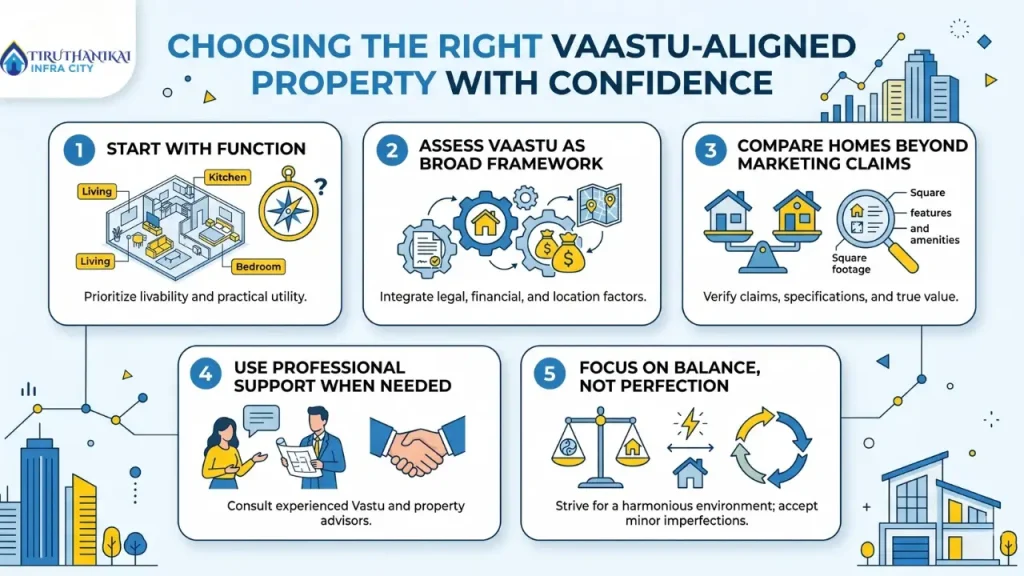
Choosing a Vaastu-oriented home is rarely about following traditional principles alone. For most buyers, the goal is to find a property that combines thoughtful design, practical value, and long-term confidence.
That is where a balanced decision-making approach matters.
Start With Function, Not Just Orientation
A strong property choice should first satisfy practical needs.
Evaluate whether the home offers:
- Functional layout
- Comfortable space planning
- Good ventilation and light
- Construction quality
- Long-term usability
Vaastu works best when it complements these fundamentals rather than replacing them.
Assess Vaastu as Part of a Bigger Framework
Instead of treating Vaastu as a rigid checklist, many smart buyers use it as one factor within a broader property evaluation model.
That may include reviewing:
- Layout balance
- Investment potential
- Legal due diligence
- Builder credibility
- Lifestyle suitability
This often leads to more balanced decisions.
Compare Homes Beyond Marketing Claims
Many projects promote themselves as Vaastu-friendly, but buyers should go beyond labels.
Compare properties based on:
- Actual design quality
- Functional planning
- Long-term value drivers
- Buyer demand in the market
Well-informed comparisons usually lead to stronger decisions.
Use Professional Support When Needed
For many buyers, expert guidance can help evaluate whether a property aligns with both Vaastu considerations and investment goals.
Working with experienced advisors through Real Estate Services can help simplify evaluation and reduce uncertainty.
For project-specific assistance or buying support, you can also contact experts to assess suitable options based on your goals.
Focus on Balance, Not Perfection
The best property decisions often come from balancing:
- Tradition
- Practicality
- Risk awareness
- Investment logic
Perfection is rarely the goal-confidence is.
Final Thoughts
Vaastu Homes continue to attract buyers because they often represent more than tradition. Many buyers associate them with thoughtful planning, healthier living, and long-term property confidence.
When evaluated alongside strong fundamentals, Vaastu can become part of a smarter and more holistic home-buying decision.
Conclusion
The appeal of Vaastu Homes goes beyond belief-driven preferences. For many modern buyers, they represent a combination of balanced design, wellness-focused living, and long-term investment confidence.
From prosperity and health to buyer demand and property value, Vaastu often intersects with practical factors that influence smarter residential decisions.Looking for a property that combines thoughtful planning with long-term value? Explore our Real Estate Services to find Vaastu-aligned homes designed for comfort, confidence, and smarter investment decisions.
Frequently Asked Questions
1. What are Vaastu Homes and why are they important?
Vaastu Homes are properties designed using principles associated with spatial balance, directional planning, and positive energy flow. Many buyers consider them important because they are often linked with comfort, prosperity, and long-term well-being, while also aligning with practical home planning concepts.
2. Can Vaastu Homes attract wealth and prosperity?
Many people believe Vaastu Homes can support prosperity by promoting balanced living environments. In practical terms, buyers often associate them with thoughtful layouts, stronger emotional confidence, and in some cases better long-term property desirability.
3. How do Vaastu principles support health and well-being?
Several Vaastu principles emphasize natural light, airflow, and balanced room placement, which can contribute to healthier living environments. These practical design factors are one reason many buyers connect Vaastu with wellness.
4. Do Vaastu-compliant homes have higher property value?
Property value depends on multiple factors, but in markets where buyer demand favors Vaastu-compliant homes, they may benefit from stronger resale perception and wider buyer interest.
5. What should buyers check before purchasing a Vaastu home?
Buyers should review:
*Layout functionality
*Construction quality
*Legal approvals
*Location growth
Long-term investment potential
Genuine Vaastu planning, not just marketing claims
A balanced evaluation is important.
6. Are all Vaastu Homes perfectly aligned with traditional rules?
Not necessarily. Many homes may incorporate major Vaastu principles without following every traditional interpretation. Buyers often focus on practical balance rather than rigid perfection.
7. Can Vaastu influence positive energy in a home?
Many homeowners believe layout balance, openness, ventilation, and natural light contribute to a sense of positive energy. In many cases, these ideas overlap with good architectural planning.
8. Are Vaastu Homes a good investment for long-term buyers?
They can be, especially when combined with strong fundamentals such as location, construction quality, and market demand. Many buyers view Vaastu as an added factor supporting long-term confidence.
9. What are common myths buyers should avoid about Vaastu?
Common myths include believing:
*Perfect Vaastu guarantees prosperity
*Minor deviations ruin a property
*Vaastu matters more than legal or quality checks
*Smart buyers balance Vaastu with practical due diligence.
10. How can I choose the right Vaastu-aligned property?
Start by evaluating functionality, construction quality, location, and investment value first. Then assess how Vaastu considerations complement those fundamentals. Professional guidance can also help make a more informed decision.