Enquire Now for a free site visit – call
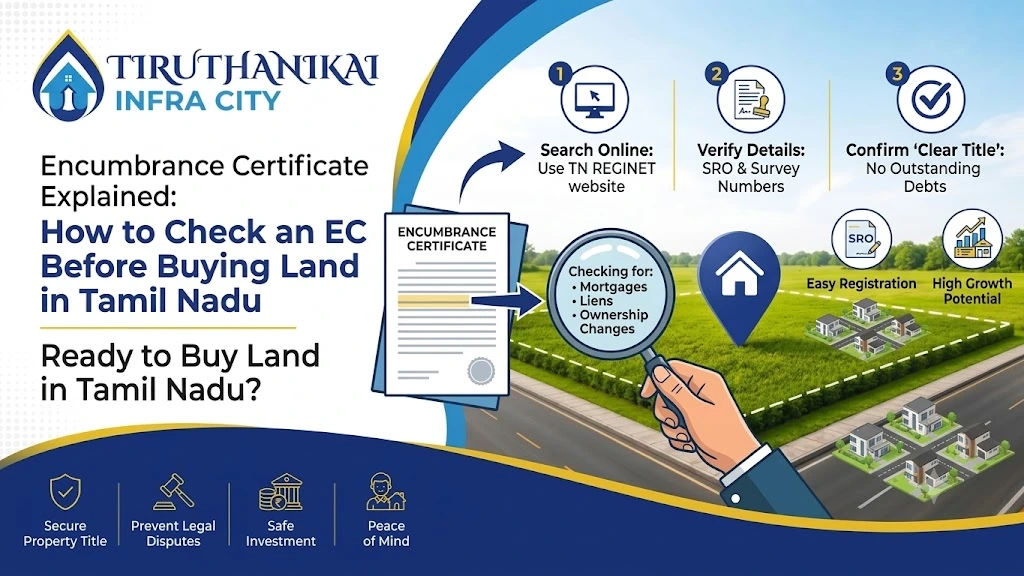
Buying land in Tamil Nadu is a major financial decision, but checking ownership documents alone may not reveal every registered transaction connected to a property. An encumbrance certificate Tamil Nadu buyers can obtain helps review registered transactions and encumbrances recorded against a property for a selected period. This check becomes especially important when purchasing plots, as overlooked entries can create complications during due diligence. Tamil Nadu recorded an estimated 33,34,997 registered documents in 2024–25, highlighting the scale of property-related registration activity in the state. The state also provides online Encumbrance Certificate services, including application and download options through its e-governance system. This guide explains how to check an EC, understand its entries, and verify it alongside other essential land documents before purchasing property.
What Is an Encumbrance Certificate in Tamil Nadu?
An Encumbrance Certificate (EC) is an important property document that helps buyers check registered transactions and encumbrances connected with land for a specific period. In Tamil Nadu, buyers can apply for an EC through the official online registration system, where the Sub-Registrar processes the request before the document becomes available in the applicant’s registered login. An encumbrance certificate Tamil Nadu search can help you review property-related entries before committing money to a purchase. However, an EC should work as one part of your property due diligence, alongside title deeds, revenue records, approvals, and other relevant documents.
What Does an Encumbrance Certificate Mean?
An Encumbrance Certificate tells you about registered transactions or encumbrances recorded against a property during a chosen period. Think of it as a useful document for reviewing the property’s registered transaction history. For example, if a property has a recorded mortgage or registered transfer within the search period, the EC may show the relevant entry. The official Tamil Nadu EC process allows registered users to apply online and receive the processed document through their login. When checking an encumbrance certificate Tamil Nadu buyers should compare the property details and entries with the seller’s title documents before proceeding with the purchase.
What Information Does an EC Show?
An EC can provide important details about registered transactions connected with a property during the selected search period. Depending on the records available, buyers may find information such as:
- Property identification details
- Registration or document numbers
- Dates of registered transactions
- Nature of registered transactions
- Names of relevant parties
- Recorded mortgage or other encumbrance entries
The exact information can depend on the records and search period. When reviewing an encumbrance certificate Tamil Nadu buyers should carefully compare these details with the sale deed and other property documents. If you notice a mismatch, investigate it before paying an advance or completing the purchase.
What Does a Nil Encumbrance Certificate Mean?
A Nil Encumbrance Certificate generally indicates that the search did not identify recorded transactions or encumbrances of the relevant type during the selected search period. For example, if you check a plot for a specific period and receive a Nil EC, the search may show no recorded encumbrance entries for that period. However, a Nil EC does not automatically prove complete ownership or guarantee that the property has no legal issues. Buyers should still verify title deeds, revenue records, approvals, and other documents. Therefore, treat an encumbrance certificate Tamil Nadu search as one important step in a wider property due-diligence process.
How to Apply for an Encumbrance Certificate in Tamil Nadu
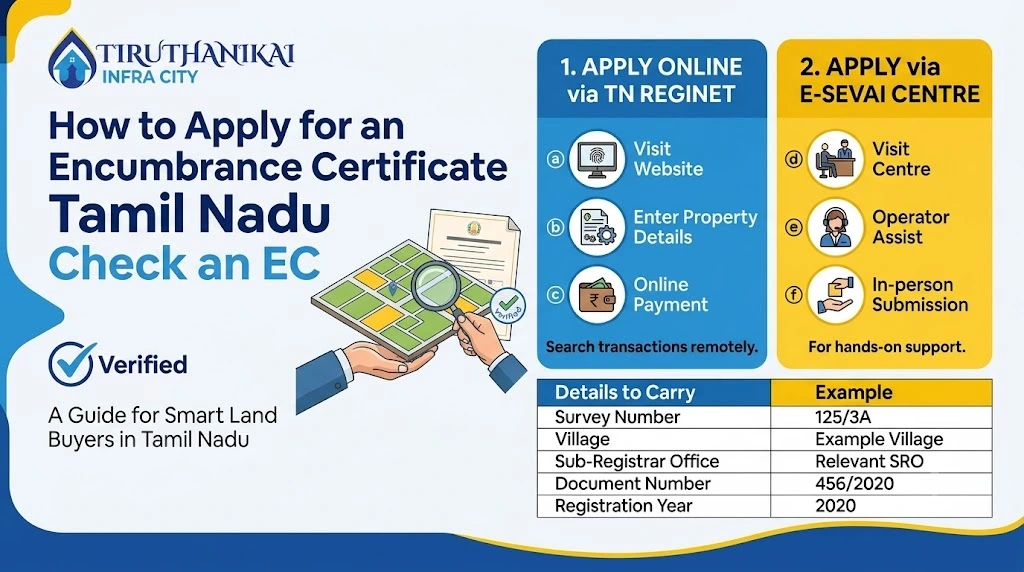
Applying for an encumbrance certificate Tamil Nadu has become easier with online property services. Property buyers can request an EC online or visit an e-Sevai Centre for assistance. The process mainly requires accurate property details, such as the survey number, document number, and registration details. Tamil Nadu’s registration services help applicants search property transactions recorded with the registration department. Before applying, keep your sale deed or previous property document ready to avoid errors. For example, if you plan to buy a plot, use its correct survey number and registration details
How to Apply for an EC Online?
You can apply for an encumbrance certificate in Tamil Nadu online through the state’s registration services without making an immediate visit to a Sub-Registrar Office. Start by entering the required property and registration details in the online EC service. Select the appropriate search period and provide details such as the district, Sub-Registrar Office, village, survey number, and property information. Review every entry before submitting the request because an incorrect survey number can lead to an inaccurate search. For example, if your land falls under a specific village and survey number, enter those details exactly as they appear in your registered document. After completing the application and required payment, follow the portal instructions to access the EC details.
How to Apply Through an e-Sevai Centre?
If you prefer in-person assistance, you can apply for an encumbrance certificate in Tamil Nadu through an e-Sevai Centre. The centre operator can help you enter the required property and registration information and submit the service request. Carry your property documents so you can provide accurate details.
| Details to Carry | Example |
| Survey Number | 125/3A |
| Village | Example Village |
| Sub-Registrar Office | Relevant SRO |
| Document Number | 456/2020 |
| Registration Year | 2020 |
Check all details before submission. This simple step can reduce errors and help the search match the correct property. Ask the operator about the applicable service charges and collection process before completing the request.
What Details Are Needed to Apply for an EC?
To apply for an encumbrance certificate Tamil Nadu, keep the property details ready before starting the application. The exact information can depend on the property and the search method, so use your registered documents as the main reference. Common details include the district, Sub-Registrar Office, village, survey number, and registration or document details. For example, if you want an EC for a residential plot, your sale deed may show the survey number as 125/3A, the village name, and a document number such as 456/2020. Enter these details carefully and match them with your property records. Correct information helps the search identify the relevant registered transactions and reduces the risk of checking the wrong property.
How to Check an Encumbrance Certificate in Tamil Nadu
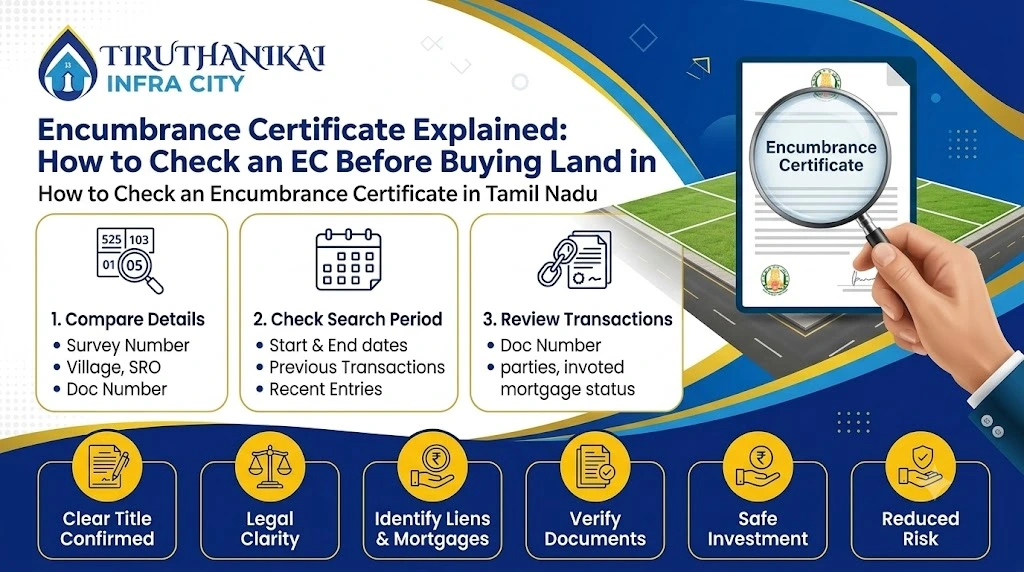
Checking an encumbrance certificate Tamil Nadu helps you review the registered transactions linked to a property before buying land. Start by matching the EC with the property documents and checking whether the details agree. Focus on the survey number, village, Sub-Registrar Office, document number, and search period. Next, review every transaction entry shown in the certificate. A mismatch can signal the need for further verification. For example, if the sale deed shows survey number 125/3A but the EC shows a different number, stop and verify the records before proceeding. Careful EC checking gives buyers a clearer picture of recorded property transactions and supports better document due diligence.
How to Verify the Property Details?
Before relying on an encumbrance certificate Tamil Nadu, compare its property details with your sale deed and other available records. Check the survey number, village, district, Sub-Registrar Office, and property description carefully. Even a small difference can lead you to review the wrong property record. For example, your sale deed may mention survey number 125/3A, while the EC may show 125/3B. Do not ignore this difference. Check the original records and clarify the discrepancy before making a purchase decision. Also compare the document number and registration year where available. Matching these details helps you confirm that the EC relates to the same land you plan to buy.
How to Check the EC Search Period?
The search period matters when you review an encumbrance certificate in Tamil Nadu because the certificate only reflects transactions within the period you request. Choose a period that gives you enough history to understand the property’s registered transactions. When checking the EC, focus on:
- Start and end dates: Confirm the exact period covered.
- Previous transactions: Look for older registered sales or transfers.
- Recent entries: Check transactions close to the proposed purchase.
- Document history: Compare important entries with your property documents.
For example, if you check only the last five years but an important transaction occurred earlier, your search may not show it. Use an appropriate search period and review the property history carefully.
How to Check the Transaction Entries?
When you receive an encumbrance certificate in Tamil Nadu, review each transaction entry instead of checking only whether the certificate says “Nil.” Look at the document number, registration date, transaction type, and parties involved where the EC provides those details. Compare these entries with the seller’s property documents. For example, if the EC shows a registered mortgage or sale transaction, ask the seller for the related documents and clarification before proceeding. If the EC shows a previous sale, confirm that the seller’s ownership documents reflect the same transaction chain. A careful review can help you identify differences between the EC and other property records before you commit to buying land.
Is an Encumbrance Certificate Enough to Buy Land Safely?
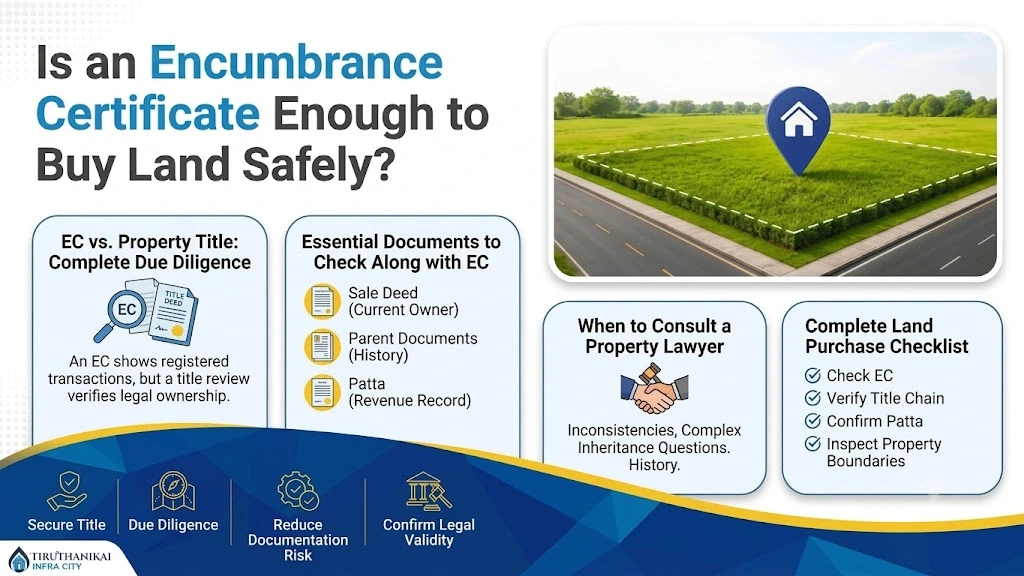
An encumbrance certificate Tamil Nadu gives useful information about registered transactions linked to a property, but it should not become your only document for a land purchase. An EC can help you identify recorded sales, mortgages, or other registered transactions during the selected search period. However, property ownership also depends on the title chain and other supporting documents. For example, a Nil EC does not automatically prove that the seller has a clear and undisputed title. Review the sale deed, parent documents, patta, and other relevant records along with the EC. Taking a complete approach helps you reduce documentation risks before purchasing land.
Why Is EC Only One Part of Property Due Diligence?
An encumbrance certificate Tamil Nadu focuses mainly on registered transactions recorded for the property during a selected period. Property due diligence requires a wider document review. Buyers should compare the EC with ownership documents, previous title deeds, patta, property details, and other relevant records. Each document answers a different question about the property. For example, the EC may show a registered transaction, while the title documents help you understand how ownership moved from one person to another. You should also check whether the property details match across documents. A careful review of multiple records gives you a clearer understanding of the land before you proceed with the purchase.
Why Should You Verify the Property Title Separately?
An encumbrance certificate Tamil Nadu does not replace a complete title review. Verify the ownership chain separately to understand whether the seller can legally transfer the property. Compare the title documents with the EC and other property records.
| Document/Check | What to Verify |
| Sale deed | Current seller and property details |
| Parent documents | Previous ownership chain |
| Patta | Revenue record details |
| EC | Registered transactions |
| Property description | Survey number and boundaries |
For example, if the seller’s name appears in the latest sale deed but earlier documents show another owner, review the complete chain. This approach helps identify gaps that an EC alone may not reveal.
When Should You Consult a Property Lawyer?
Consider consulting a property lawyer when the documents show inconsistencies, complicated ownership history, or transactions that you cannot confidently interpret. A lawyer can review the encumbrance certificate Tamil Nadu alongside the title documents and other relevant records. For example, suppose the EC shows a mortgage entry, the seller provides a release document, but the details do not match. A professional review can help you understand what needs further verification. You may also seek legal advice when several owners appear in the title chain, inherited property creates ownership questions, or the seller cannot provide important parent documents. Early legal review can help you identify documentation issues before you commit to the purchase.
Conclusion
Checking an encumbrance certificate in Tamil Nadu is an important step before buying land, but it should not be your only verification. Review the EC carefully, match the property details with the sale deed, check the search period, and examine every transaction entry. You should also verify the property title and supporting documents to understand the complete ownership history. If you find discrepancies or complicated records, consider getting professional legal guidance before proceeding. A careful document check can help you avoid unnecessary risks and make a more informed property decision.
Planning to buy land in Tamil Nadu? Explore Tiruthanikai Infra City for property options and take your next step with greater confidence.
FAQ’s
1. What is an Encumbrance Certificate in Tamil Nadu?
An encumbrance certificate Tamil Nadu shows registered transactions and certain encumbrances recorded against a property during the selected search period.
2. Why should I check an EC before buying land?
Checking an EC helps you review registered property transactions and identify entries such as sales or mortgages before purchasing land.
3. Can I apply for an EC online in Tamil Nadu?
Yes. You can use Tamil Nadu’s online registration services to apply for and access EC-related services.
4. What details do I need to apply for an EC?
You generally need property details such as the district, village, Sub-Registrar Office, survey number, and relevant registration or document information.
5. What does a Nil EC mean?
A Nil EC generally indicates that the search did not show registered transactions or encumbrances during the selected search period. It does not by itself prove clear title.
6. How do I check the EC search period?
Check the start and end dates shown for the EC search. Make sure the period covers the property history you want to review.
7. What should I check in EC transaction entries?
Review the document number, registration date, transaction type, and other available details, then compare them with the seller’s property documents.
8. Is an EC enough to buy land safely?
No. An EC forms only one part of property due diligence. Also review the title documents, sale deed, parent documents, patta, and other relevant records.
9. Why should I verify the property title separately?
Title verification helps you understand the ownership chain and whether the seller has the relevant rights to transfer the property.
10. When should I consult a property lawyer?
Consider legal advice when you find document mismatches, complicated ownership history, mortgage entries, inheritance issues, or missing parent documents.