Enquire Now for a free site visit – call

In real estate investment, timing often plays a crucial role in determining the potential return on investment. Investors who understand the advantages of buying land early often position themselves to benefit from long-term land appreciation. As infrastructure expands and urban areas grow, previously underdeveloped regions can transform into valuable real estate markets, significantly increasing the value of early land investments.
Early land buyers typically gain access to properties at lower prices before major development begins. As new roads, residential communities, and commercial projects emerge, the demand for land in these regions gradually increases. This growing demand can contribute to steady land value appreciation, creating opportunities for higher returns over time.
Understanding the ROI potential of buying land early requires evaluating factors such as infrastructure development, location growth potential, and future residential demand. Investors who identify these indicators early often benefit from stronger appreciation compared to those who enter the market after development has already taken place. In the following sections, we will explore how early land investments can generate long-term real estate returns.
Why Timing Matters in Land Investment
In real estate, timing can significantly influence the success of an investment. Investors who understand the benefits of buying land early often gain an advantage by entering the market before major development begins. When land is purchased in emerging areas at an early stage, investors typically benefit from lower acquisition costs and greater long-term appreciation potential.
One key reason timing matters is that property values usually increase as infrastructure and urban development expand. When new roads, transport networks, or commercial hubs are introduced in a region, nearby land often becomes more desirable. Investors who purchased land earlier in these areas may experience significant value growth as demand increases.
Another advantage of early land investment is reduced competition. In the early stages of development, fewer buyers may be aware of a location’s growth potential. This allows early investors to secure plots before demand rises and prices begin to increase.
Several factors explain why timing plays an important role in land investment success:
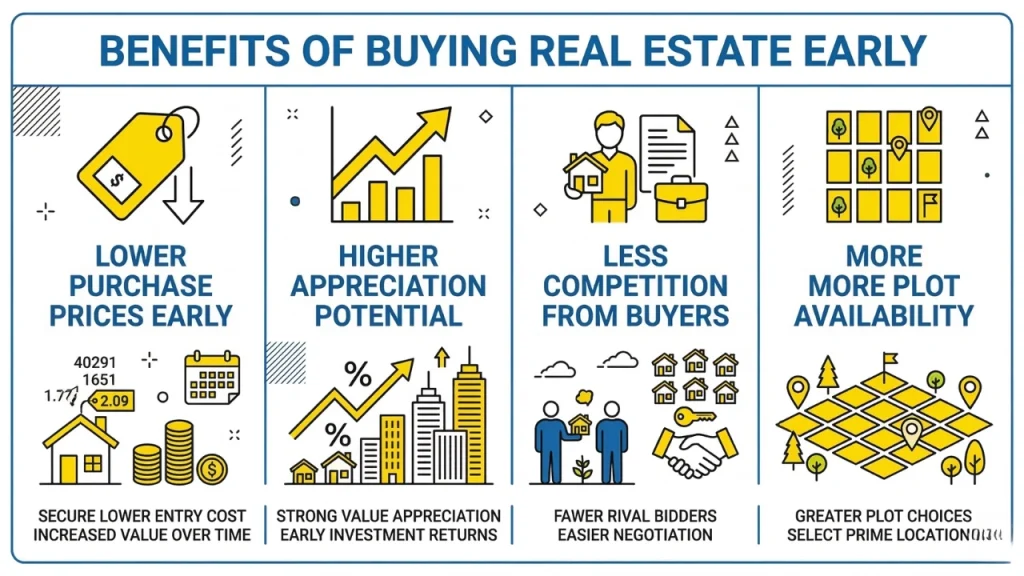
- Lower purchase prices before development begins
- Higher appreciation potential as infrastructure improves
- Greater availability of plots in emerging regions
- Reduced competition among early investors
Insights shared in this early investment article highlight how entering property markets early can contribute to stronger long-term returns.
By focusing on timing, investors can identify opportunities that maximize the ROI potential of land investments.
How Early Land Buyers Benefit from Infrastructure Growth
Infrastructure development is one of the strongest drivers of land value appreciation. Investors who practice buying land early often position themselves in areas that are expected to benefit from future infrastructure projects. As new roads, transportation networks, and commercial developments emerge, surrounding land gradually becomes more attractive for residential and business expansion.
Early land buyers typically benefit from purchasing plots before these infrastructure projects are fully developed. When a region begins to receive improved connectivity through highways, rail networks, or public transportation systems, the demand for nearby land increases significantly. This increased demand often leads to higher property values and stronger investment returns.
Another important factor is the role of infrastructure in attracting economic activity. Industrial zones, business parks, and commercial developments often follow major infrastructure investments. These developments bring employment opportunities and population growth, which further increases demand for residential land.
Several infrastructure-related factors contribute to stronger ROI for early land investors:
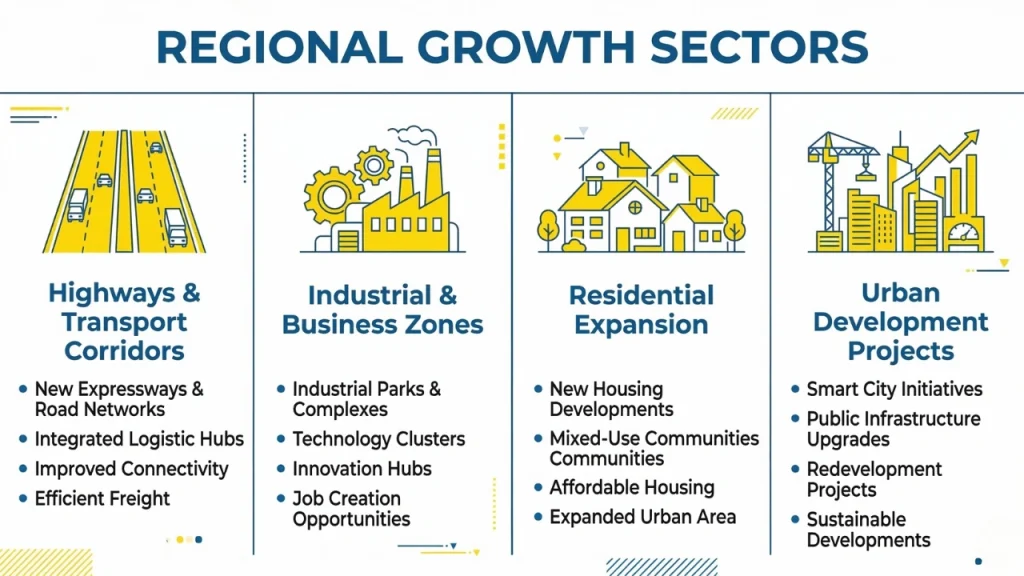
- Highways and transportation corridors improving connectivity
- Industrial and commercial developments attracting economic activity
- Residential expansion driven by growing housing demand
- Urban development projects increasing property demand
Investors sometimes use tools such as this roi calculator to estimate potential returns based on land value appreciation and development timelines.
By identifying infrastructure-driven growth early, investors can take advantage of opportunities that support long-term real estate returns.
Key Factors That Influence Land Investment ROI
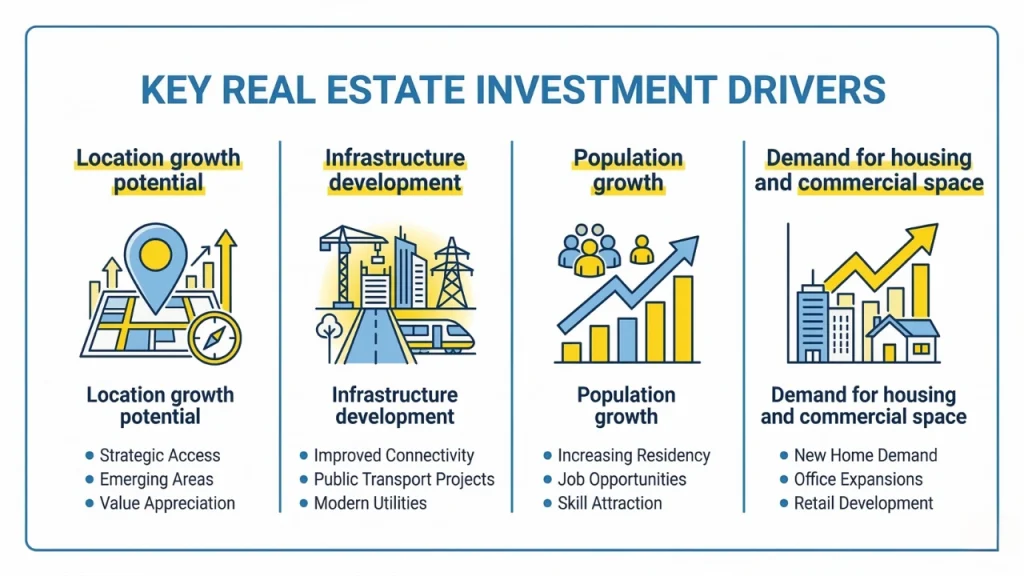
The return on investment in land is influenced by several strategic factors. Investors who focus on buying land early usually analyze these factors carefully to identify locations that have strong growth potential. Understanding what drives land appreciation can help investors choose opportunities that generate long-term returns.
One of the most important factors is location growth potential. Areas that are close to expanding cities, industrial zones, or infrastructure corridors often experience increasing land demand. As development spreads into these regions, property values may rise steadily.
Another key factor is infrastructure development. Transportation networks such as highways, metro systems, and regional connectivity projects can transform emerging regions into active residential or commercial hubs. Investors who purchase land before these developments are completed often benefit from higher appreciation.
Demand for housing and commercial space also plays a significant role in determining land investment ROI. When population growth increases housing needs, nearby land becomes more valuable for residential development.
Why Early Investors Gain Higher Returns
Investors who enter property markets early often gain the advantage of purchasing land at lower prices before development begins. As infrastructure and population growth increase demand, the value of land may appreciate significantly over time.
Insights discussed in this real estate roi article explain how different real estate investment factors influence long-term returns.
By evaluating these factors, investors can better understand how buying land early contributes to higher ROI potential.
Buying Land Early vs Buying After Development
Investors often face a common decision in real estate: whether to purchase land early in a developing region or wait until infrastructure and residential growth are already visible. While both approaches can offer benefits, buying land early generally provides greater potential for long-term appreciation. Early investors often gain access to plots at lower prices and benefit as development gradually increases land demand.
When investors purchase land at an early stage, they usually enter the market before major infrastructure projects are completed. As roads, transport systems, and residential communities expand, the value of surrounding land tends to rise steadily. This gradual growth can create significant returns for those who secured plots before the area became popular.
On the other hand, buying land after development has already taken place may reduce potential ROI. At that stage, property prices are often higher due to increased demand and improved infrastructure. While such locations may still offer stability, the opportunity for dramatic appreciation may be limited.
The comparison below highlights the key differences between these two investment approaches.
| Investment Factor | Buying Land Early | Buying After Development |
| Purchase price | Lower | Higher |
| Growth potential | High appreciation | Moderate growth |
| Competition | Low | High |
| Investment advantage | Long-term gains | Limited ROI potential |
Understanding this difference helps investors recognize why early entry into emerging locations can significantly improve real estate investment returns.
Common Risks When Investing in Land Too Late
Entering a land investment market at a later stage can reduce the potential returns that investors might achieve. While developed locations may appear safer, they often come with higher entry costs and limited appreciation potential. Investors who delay buying land early may miss opportunities that exist during the early stages of regional development.
One of the most noticeable risks is higher purchase prices. Once infrastructure projects and residential developments begin attracting buyers, land prices tend to rise quickly. Late investors may have to pay significantly more for the same plots that were previously available at lower prices.
Another challenge is the limited availability of premium locations. Early investors often secure plots in the most promising areas before development gains attention. By the time the region becomes popular, many of the most strategic plots may already be purchased.
Market competition also becomes stronger in developed areas. More investors, developers, and homebuyers begin competing for the same properties, which can further increase prices and reduce profit margins.
The table below highlights common risks associated with late land investments and the strategies investors can use to avoid them.
| Investment Risk | Impact | Investor Strategy |
| Late entry | Higher purchase cost | Invest early in growth areas |
| Limited inventory | Fewer premium plots | Identify emerging markets |
| Market competition | Price escalation | Monitor development plans |
| Reduced ROI potential | Slower returns | Focus on early investment |
Explore Opportunities Through Trusted Property Insights
Investors looking to maximize the ROI potential of buying land early often benefit from understanding market trends and upcoming development plans. Reliable insights from experienced professionals and real estate networks can help investors identify emerging locations before they attract widespread attention.
One useful approach is studying upcoming real estate developments and regional planning initiatives. Areas that are expected to experience residential or commercial expansion may present opportunities for early land investment. Monitoring these developments allows investors to identify locations that may benefit from future infrastructure growth and increasing property demand. Exploring future developments can provide useful information about regions where new projects and property activity are taking shape.
Learning from industry leadership perspectives can also help investors understand long-term real estate strategies. Experienced professionals often analyze market trends, infrastructure plans, and development patterns when evaluating property investments. Reviewing these perspectives through leadership insights can provide a deeper understanding of how property opportunities are identified and evaluated.
By combining market research with professional insights, investors can better recognize early land investment opportunities and make more informed decisions that support long-term real estate returns.
Final Thoughts
Understanding the ROI potential of buying land early can help investors make smarter long-term real estate decisions. Early investments often allow buyers to secure land at lower prices and benefit from appreciation as infrastructure, residential demand, and economic development increase in surrounding areas.
Key insights about early land investment include:
- Lower entry prices before large-scale development begins
- Higher appreciation potential as infrastructure projects expand
- Greater availability of strategic plots in emerging growth areas
- Long-term investment advantages compared to late market entry
Investors who analyze development trends, infrastructure plans, and location growth potential can better position themselves to benefit from future real estate appreciation.
Strategic land investments often begin with identifying opportunities before development accelerates. Early entry into promising locations can create stronger long-term returns and greater investment flexibility.
To explore professionally guided property opportunities, learn more about our Real Estate Services.
Frequently Asked Questions
1. What does buying land early mean in real estate investment?
Buying land early refers to purchasing property in a developing area before major infrastructure or residential development begins. Early investors often benefit from lower purchase prices and the potential for higher land value appreciation as the region develops.
2. Why does buying land early offer higher ROI potential?
Buying land early can provide higher ROI because investors enter the market before demand increases. Key advantages include:
1. Lower property prices during early development stages
2. Greater appreciation as infrastructure projects expand
3. Higher demand for land once development begins
4. Increased long-term investment potential
These factors can contribute to stronger real estate returns over time.
3. What factors influence land appreciation after buying early?
Land appreciation is often influenced by infrastructure development, urban expansion, population growth, and economic activity in the surrounding region. These factors gradually increase demand for land and contribute to rising property values.
4. How does infrastructure development impact early land investments?
Infrastructure projects can significantly increase land value in nearby areas. Important developments include:
1. Highways and transportation networks
2. Industrial zones and employment hubs
3. Residential development projects
4. Public utilities and connectivity improvements
These developments often attract population growth and property demand.
5. Is buying land early a good strategy for long-term investment?
Yes, buying land early can be an effective long-term investment strategy. Investors who identify developing regions before major growth occurs often benefit from gradual land appreciation and increasing property demand.
6. What risks should investors consider when buying land early?
Investors should evaluate several factors before purchasing land early:
1. Verification of land titles and documentation
2. Future infrastructure and development plans
3. Location growth potential
4. Market demand for residential or commercial development
Proper research helps reduce investment risks.
7. How can investors identify early land investment opportunities?
Investors can identify early opportunities by studying infrastructure plans, government development initiatives, and urban expansion trends. Regions located near future growth corridors often provide promising land investment prospects.
8. What is the difference between early land investment and late land investment?
Early land investment involves purchasing land before major development occurs, while late investment happens after infrastructure and demand increase. Early investors usually benefit from:
1. Lower purchase prices
2. Higher appreciation potential
3. Greater availability of premium plots
4. Reduced competition
Late investors may face higher prices and limited growth opportunities.
9. Can early land investment provide long-term financial growth?
Yes, early land investments can provide long-term financial growth if the property is located in an area with strong development potential. Over time, increasing demand and infrastructure expansion can significantly increase land value.
10. How can investors maximize ROI when buying land early?
Investors can maximize ROI by focusing on key strategies:
1. Choosing locations near infrastructure projects
2. Studying regional development plans
3. Verifying legal documentation and approvals
4. Holding the investment long enough for value appreciation
These strategies help improve the chances of strong land investment returns.