Enquire Now for a free site visit – call

Introduction
Buying a plot near a railway station can look like a smart move—easy commuting, strong connectivity, and convenient access to everyday essentials. But proximity alone doesn’t make a property worth buying. Noise, traffic, drainage, land approvals, railway-related restrictions, and unclear titles can turn a seemingly attractive plot into an expensive mistake.
The demand for rail connectivity is significant: Indian Railways recorded 6,905 million passenger journeys in 2023–24, including 3,981 million suburban and 2,924 million non-suburban journeys. So, how do you separate a genuinely well-located plot from one that simply has a “near railway station” label? This guide covers the key advantages, legal and physical checks, connectivity factors, and practical questions to ask before buying property near a railway station.
Why Consider Plots Near a Railway Station?
For many buyers, connectivity can make the difference between a convenient property and one that stays difficult to access. Indian Railways carried 6.905 billion passenger journeys in 2023–24, up from 6.396 billion in 2022–23, showing the scale of rail travel across India. This makes locations with practical railway access worth considering. However, buyers should look beyond the station distance. A good plot should combine connectivity with road access, essential services, a suitable neighborhood, clear documentation, and construction feasibility. Understanding these factors helps buyers assess whether a plot near a railway station actually fits their lifestyle or investment plans.
Better Connectivity for Daily Travel
Daily travel becomes easier when your plot sits within practical reach of a railway station. Indian Railways recorded 3.981 billion suburban passenger journeys and 2.924 billion non-suburban journeys in 2023–24, highlighting how extensively people rely on rail travel for both local and longer-distance journeys.
A well-connected plot can help residents:
- Reach workplaces and business hubs more conveniently.
- Reduce dependence on private vehicles for some journeys.
- Access nearby towns and cities through rail connections.
- Make travel easier for family members and visitors.
For example, someone working in a nearby city could use the train for regular commuting instead of driving every day. But don’t judge connectivity by a property’s advertised distance alone. Check the actual road route, walking access, station entry points, traffic, and public transport options before you buy.
Convenient Access to Essential Services
A railway station often sits within an active urban or semi-urban area, where daily necessities may already exist or continue to develop. This can make nearby plots practical for people who want more than just transport convenience.
Depending on the location, buyers may find:
- Schools and colleges for families with children
- Hospitals and clinics for healthcare access
- Supermarkets and local markets for everyday shopping
- Banks, ATMs, restaurants, and pharmacies for routine needs
- Bus stops, autos, and other transport options for last-mile travel
For instance, a family buying a residential plot near a station may benefit when a school, hospital, and market also sit within a short drive. However, don’t assume every station area offers these facilities. Visit the neighbourhood and verify the actual travel time to essential services before making a decision.
Potential for Long-Term Property Demand
Connectivity can influence how people evaluate a property over the long term. Indian Railways recorded 6.905 billion passenger journeys in 2023–24, compared with 6.396 billion the previous year. High passenger activity does not guarantee property appreciation, but it shows why transport access can matter when buyers assess locations.
For example:
- A residential plot near a station may appeal to commuters seeking easier travel.
- A plot in an established neighborhood may attract families who value nearby amenities.
- A location with good roads and planned infrastructure may become more convenient as development expands.
Still, demand depends on several factors—not the railway station alone. Compare local land prices, development, approvals, road access, neighbourhood quality, and actual buyer demand before treating a plot as a long-term investment.
Advantages of Buying Plots Near a Railway Station
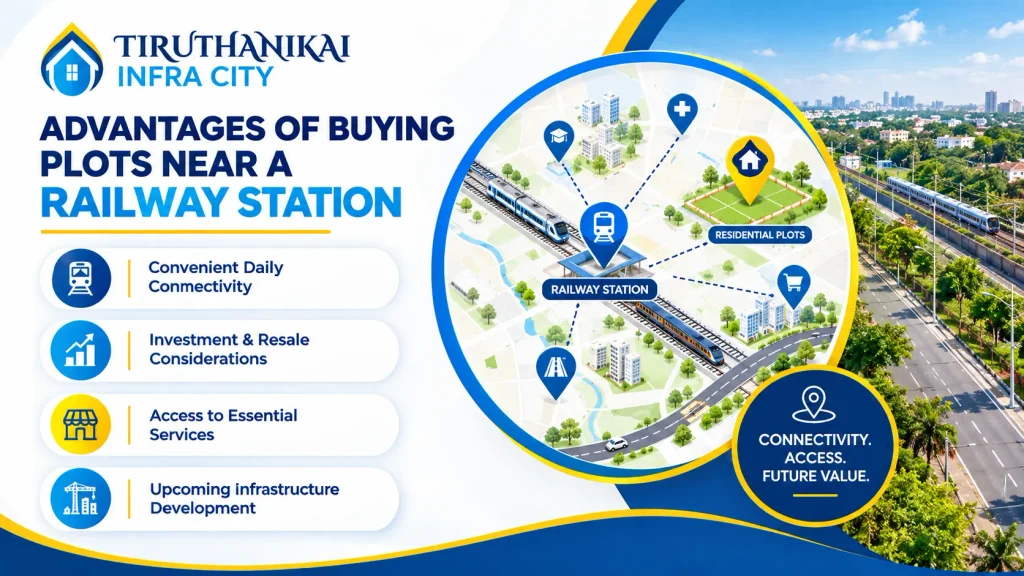
A railway station can add practical value to a property by improving daily mobility, access to nearby services, and exposure to future infrastructure development. Indian Railways recorded 6.905 billion passenger journeys in 2023–24, up from 6.396 billion in 2022–23. That level of passenger activity shows why rail connectivity matters to many households and businesses. However, buyers should look beyond the station signboard. The real advantage comes from a combination of convenient access, good roads, essential amenities, a strong neighbourhood, and clear property documentation. When these factors work together, a plot near a railway station can offer practical benefits for both end users and long-term property owners.
Convenience and Accessibility
Living near a railway station can simplify everyday travel, especially for people who commute between cities or depend on public transport. In 2023–24, Indian Railways recorded 3.981 billion suburban passenger journeys and 2.924 billion non-suburban journeys. These numbers reflect the large role rail transport plays in daily and intercity mobility.
For plot buyers, convenient access can mean:
- Shorter trips to the railway station
- Easier commuting to nearby employment hubs
- Better options for family members without private vehicles
- Convenient travel for visitors and tenants
- Access to nearby bus, auto, and taxi services
For example, a professional working in a neighbouring city may prefer a home near a station to avoid long daily road journeys. Still, check the actual travel route, not just the advertised distance, before buying.
Investment and Resale Considerations
Connectivity can influence how buyers assess a property’s long-term usefulness, but railway proximity alone cannot guarantee appreciation or an easy resale. Indian Railways recorded 6.905 billion passenger journeys in 2023–24, indicating the scale of rail usage across the country. Buyers should therefore assess connectivity alongside local demand and property fundamentals.
| Factor | What Buyers Should Check |
|---|---|
| Location | Actual distance and route to the station |
| Demand | Interest from residents, commuters and local businesses |
| Accessibility | Roads, public transport and parking |
| Property status | Clear title and required approvals |
| Neighbourhood | Schools, hospitals, shops and other amenities |
| Resale potential | Local transactions and comparable plot prices |
Improved Access to Upcoming Infrastructure
Infrastructure development can change how people use and value an area over time. Indian Railways identified 1,337 stations for development under the Amrit Bharat Station Scheme, with 180 stations completed by March 2026. The programme includes better station access, parking, foot overbridges, passenger facilities and multimodal integration.
This creates an important consideration for plot buyers: look at what the area may realistically gain, not just what it promises today.
For example:
- A station redevelopment project may improve access roads and passenger facilities.
- A new road or railway connectivity project may reduce travel time.
- Better multimodal connections may increase movement around the station.
How Close Should a Plot Be to a Railway Station?

There is no universal distance that makes a plot “ideal” near a railway station. The right distance depends on how you plan to use the property and how well the location balances access with comfort. Indian Railways recorded 6.905 billion passenger journeys in 2023–24, showing the scale of rail-based travel in India. Instead of chasing the shortest distance, assess the actual route, road quality, public transport, surrounding development, noise, and safety. A plot a little farther away may offer a quieter residential setting while still keeping the station within convenient reach. Always visit the site and measure the real travel time before you decide.
Walking Distance vs Driving Distance
A property advertised as “500 metres from the railway station” may sound extremely convenient. But that figure can mean very little if the road network forces you to take a longer route. Always compare straight-line distance with actual walking and driving distance before buying.
Check These Practical Factors:
- Distance from the plot to the station entrance
- Availability of footpaths and safe pedestrian routes
- Road width and traffic conditions
- Auto, bus, and taxi availability
- Time required during peak hours
For example, a plot 800 metres from a station with a direct, well-lit road may offer better everyday access than a plot 400 metres away behind a busy road or restricted pathway. With Indian Railways handling 6.905 billion passenger journeys in 2023–24, practical station access matters more than a marketing number alone.
Why Extremely Close Is Not Always Better
Being next to a railway station can save travel time, but extremely close locations can introduce other challenges. Railway activity can create recurring noise, traffic, crowds, and movement throughout the day. WHO identifies railway traffic as an important source of environmental noise and links excessive noise exposure with sleep disturbance, annoyance, and other health effects.
Before choosing a plot, consider:
- Train noise: Frequent movement can affect quiet residential living.
- Traffic: Station roads may become congested during peak hours.
- Crowds: Busy surroundings can reduce privacy.
- Dust and pollution: Heavy vehicle movement can affect the immediate environment.
- Safety: Check pedestrian crossings, lighting, and road conditions.
- Development restrictions: Verify applicable railway and local planning requirements.
Finding the Right Balance Between Connectivity and Comfort
The ideal plot should give you practical railway access without forcing you to compromise on everyday comfort. Start by deciding how often you or your family will actually use the station. Then compare travel time, road access, neighbourhood quality, noise, and essential amenities.
For example, a daily commuter may prefer a plot within a short walk or drive of the station. A family planning a quiet home may prefer a location a little farther away, provided the station remains easily accessible. WHO guidance highlights railway noise as a relevant environmental consideration, particularly when exposure affects sleep and daily life.
So, don’t ask only “How close is the plot?” Ask “How convenient is the plot without sacrificing comfort?” That question gives you a much more realistic basis for comparison.
Important Checks Before Buying Plots Near Railway Station
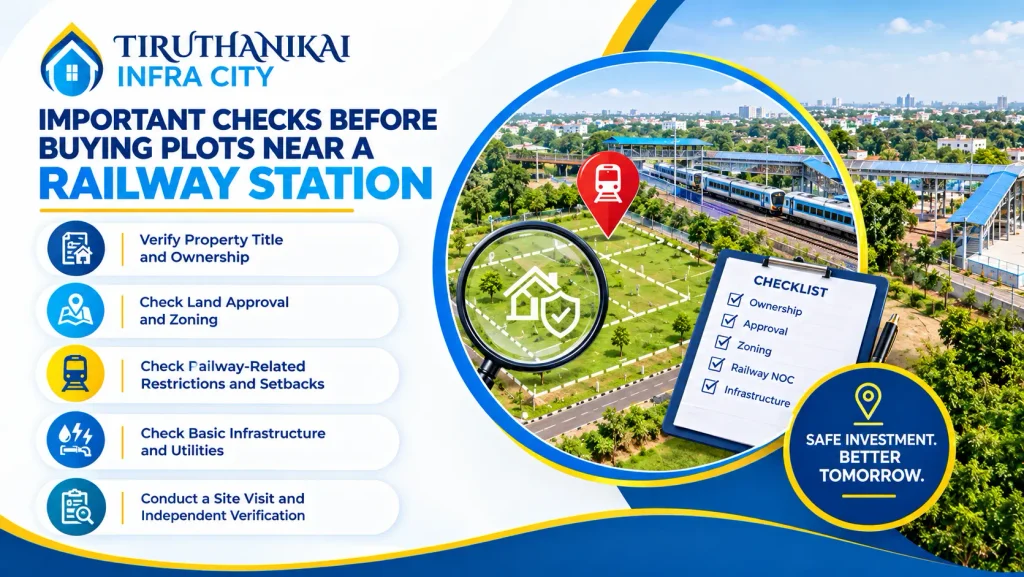
Buying plots near railway station can offer strong connectivity, but location alone should not decide your purchase. Before paying an advance, verify the plot’s ownership, approval status, zoning, road access, and railway-related restrictions. In Tamil Nadu, official approval systems check details such as survey numbers, ownership documents, road width, proposed land use, and approved layout status. You should also check drainage, water supply, electricity, soil conditions, noise levels, and future infrastructure plans. A site visit and independent document verification can help you identify issues that a property brochure may not show.
Verify the Property Title and Ownership
Start with the most important question: Does the seller legally own the plot? Check the original sale deed, parent documents, patta, survey details, and applicable encumbrance records before making any payment. The property details should match across these documents, including the survey number, extent, boundaries, and owner’s name.
Tamil Nadu’s official layout approval process itself requires ownership details and supporting documents such as sale deeds, inheritance documents, gift or settlement deeds, court orders, or government assignments.
For example, if the seller claims to own a 2,400 sq. ft. plot but the registered document shows a different extent, stop and investigate the discrepancy. Consider getting the documents reviewed by an independent property lawyer before signing the agreement.
Check Land Approval and Zoning
A plot may look attractive because of its railway access, but its approved land use matters just as much. Confirm whether the plot falls under an approved layout and whether the zoning permits your intended use, such as residential or commercial development. Tamil Nadu’s approval system records present use, proposed use, survey details, road width, ownership documents, and approved-layout information.
| What to Check | Why It Matters |
|---|---|
| Layout approval | Confirms the layout follows applicable planning requirements |
| Land-use zoning | Shows whether your intended development fits the permitted use |
| Survey number | Helps match the physical plot with official records |
| Road width | Can affect access and future building approval |
| Plot extent | Confirms the actual documented area |
Check Railway-Related Restrictions and Setbacks
When you buy plots near railway station, check the exact distance from the railway boundary—not just the distance shown in the property advertisement. Railway land boundaries, safety requirements, access routes, and construction conditions can affect nearby development. Indian Railways guidelines specifically address construction along railway boundaries and note that railway approval or a No Objection Certificate (NOC) may apply in certain situations.
For example:
- Plot beside a railway boundary: Confirm whether any railway NOC applies before construction.
- Plot requiring deep excavation: Check additional safety requirements, especially for basements or high-rise structures.
- Plot close to tracks: Verify that your construction will not interfere with railway safety or access.
- Plot near a station expansion area: Check whether railway land or infrastructure plans could affect the site.
Conclusion
Buying property near a railway station can offer everyday convenience, easier connectivity, and potential long-term demand. However, a well-connected location alone does not make a plot the right choice. Before you invest, verify the property title, layout approval, zoning, road access, railway-related restrictions, drainage, utilities, and overall site conditions. Compare the plot’s location with your future plans, budget, and development needs rather than focusing only on its distance from the station.
Looking for well-connected plots near a railway station? Explore available properties, check the documents carefully, and choose a plot that combines connectivity with legal clarity, accessibility, and long-term usability.
Frequently Asked Questions
1. Is buying a plot near a railway station a good idea?
Plots near railway stations can offer convenient connectivity and easier access to daily transportation. However, check approvals, access, noise, and railway-related restrictions before buying.
2. How far should a plot be from a railway station?
There is no fixed ideal distance for every buyer. A plot within convenient walking or driving distance can offer connectivity while avoiding excessive noise and congestion.
3. What documents should I check before buying a plot?
Check the sale deed, parent documents, patta, encumbrance records, survey details, and layout approval. Verify that all details match the actual property.
4. Are plots near railway stations more expensive?
Prices depend on factors such as location, road access, infrastructure, demand, and plot approval. Railway proximity alone does not determine the property value.
5. Can I construct a house near railway tracks?
Construction may involve specific railway and local planning requirements depending on the location. Check applicable setbacks, NOCs, and safety regulations before construction.
6. Do railway stations increase property demand?
Good transport connectivity can make an area more accessible to residents and businesses. However, demand varies based on the neighbourhood and wider infrastructure.
7. What are the disadvantages of buying property near a railway station?
Potential concerns include train noise, traffic, crowds, dust, and limited privacy. Visit the property at different times before making a decision.
8. Should I check the railway boundary before buying a plot?
Yes. Confirm the exact railway boundary and whether any railway restrictions or NOC requirements apply to the property.
9. Is a railway station nearby enough for good connectivity?
Not necessarily. Also check road connectivity, public transport, nearby facilities, traffic conditions, and the actual travel time to the station.
10. What is the most important check before buying a plot near a railway station?
Start with legal ownership and approval documents, then verify zoning, access, railway restrictions, and site conditions. Independent legal verification can help identify potential issues..