Enquire Now for a free site visit – call

Introduction
Buying land is one of the most significant financial decisions most people make but what if the title isn’t truly “clear”? In India, unclear or incomplete land titles have fueled decades of disputes, with *land and property conflicts reportedly accounting for up to 66% of all civil cases in courts and often taking over 20 years to resolve. These disputes whether due to missing documents, overlapping claims, or poor record keeping can cost buyers time, money, and even whole investments.
In this guide, you’ll get a simple explanation of what a Clear Title means, how to verify it effectively, and the major red flags to watch out for before you buy, helping you make safe, confident land purchases.
What Is a Clear Title in Land?
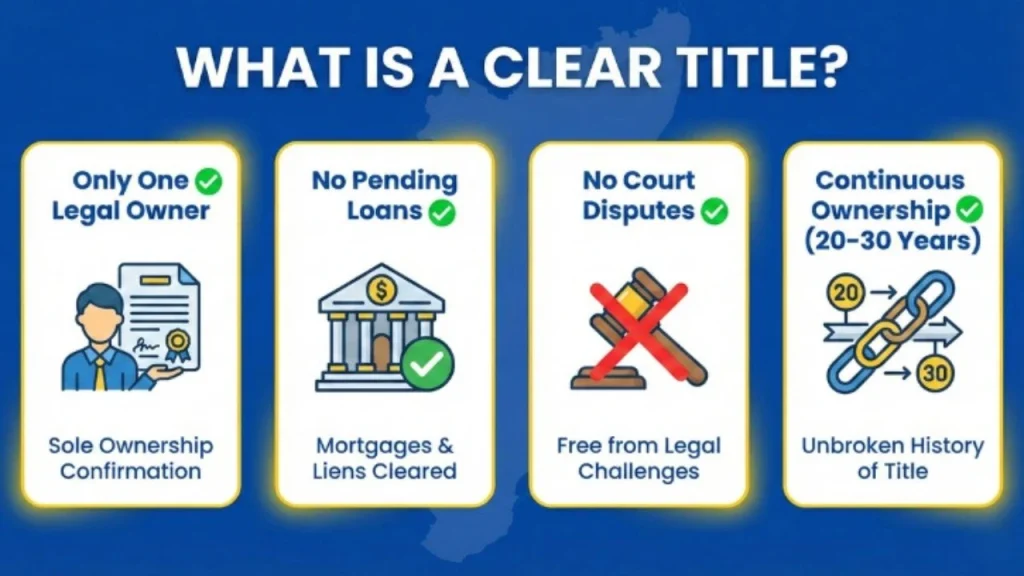
A Clear Title means the person selling the land legally owns it with zero disputes, zero unpaid loans, and zero hidden claims. In simple words, the property stands clean in government records, and you can buy it without future legal trouble.
Think of it like this 👇
If someone sells you a bike, they must prove it’s theirs and not stolen or under loan. Land works the same way just with more documents.
A land has a clear title when
- Only one rightful owner (or all owners give written consent)
- No pending court cases
- No bank loans or legal charges on the property
- Ownership history stays continuous (usually last 30 years)
- All documents match government records
Simple Example
Let’s say Ravi plans to buy a plot. The seller shows the Sale Deed, latest tax receipts, and an Encumbrance Certificate stating “Nil entries.” Ravi also verifies past ownership and finds no disputes. That land has a Ravi can safely proceed.
Now imagine another case: the price looks cheap, but the seller cannot produce original documents, and a previous owner still appears in records. That’s not a clear title it’s a red flag 🚩
Why does this matter?
- Property disputes make up over 60% of civil court cases in India
- Banks reject home loans if the title isn’t clear
- Reselling such land becomes difficult
Full ownership, legal safety, and peace of mind. Always verify before you pay even ₹1.
Why Clear Title Is So Important Before Buying Property
Let’s be honest, buying property already feels stressful. Now imagine discovering legal problems after paying your hard earned money. That’s exactly what happens when buyers ignore.
In India, over 60% of civil court cases involve land or property disputes. Most start because buyers skip proper title verification.
protects you in three powerful ways:
Legal Safety
You avoid ownership fights, court notices, and surprise claims.
Financial Security
Banks approve home or plot loans only when documents show a clear title.
Peace of Mind
You enjoy your property without worrying about future trouble.
Simple Example
Arun buys a plot without checking past ownership. Six months later, another person claims rights over the same land. Arun now spends years in court.
Meanwhile, Priya verifies the Sale Deed, EC, and ownership chain. She buys confidently no stress, no disputes.
That’s the difference.
Why buyers MUST insist on Clear Title
- Protects your full ownership rights
- Prevents hidden loans or legal charges
- Makes resale easier and faster
- Helps you get bank loans smoothly
- Saves you from expensive legal battles
Quick Comparison
| With Clear Title ✅ | Without Clear Title ❌ |
| Safe ownership | Legal disputes |
| Easy bank loan | Loan rejection |
| High resale value | Difficult resale |
| Peace of mind | Constant stress |
Property mistakes cost lakhs sometimes crores. A costs only time and verification
So before you sign anything or pay advance, verify first. Always.
Key Documents That Prove
You don’t confirm with just one paper. You verify it using a set of legal documents that together prove ownership, history, and freedom from disputes.
Think of these as your property safety kit 👇
Must-Have Documents
- Sale Deed
Shows legal ownership transfer. Always check the latest registered Sale Deed. - Encumbrance Certificate (EC)
Confirms whether loans, legal charges, or claims exist on the property.
Look for “Nil Encumbrance” that’s what you want. - Patta / Khata / RTC
Government land records that connect the owner’s name with the property. - Mother Deed (Ownership History)
Tracks ownership for the past 20–30 years. This helps spot breaks in titles. - Latest Property Tax Receipts
Proves the current owner actively maintains the property. - Approved Layout / Building Plan (for plots & houses)
Confirms local authority approval.
Simple Example
Let’s say Meena plans to buy a plot. The seller gives her:
- Latest Sale Deed
- EC showing no loans
- Patta in seller’s name
- Continuous ownership records
Meena verifies everything with a lawyer. Result? Confirmed.
Now imagine the seller avoids sharing original documents or says, “Trust me, everything is fine.” That’s your cue to walk away
Why so strict?
Property disputes account for more than 60% of civil cases in India, and missing documents cause most of them.
Quick Tip
Before paying any advance:
- Cross-check originals
- Match names across documents
- Verify ownership history
- Consult a property lawyer
Documents don’t lie, people sometimes do. Always trust paperwork, not promises
How to Check If Land Has (Step-by-Step)
You don’t need to be a lawyer to verify, you just need a systematic approach. Follow these steps before you pay even ₹1.
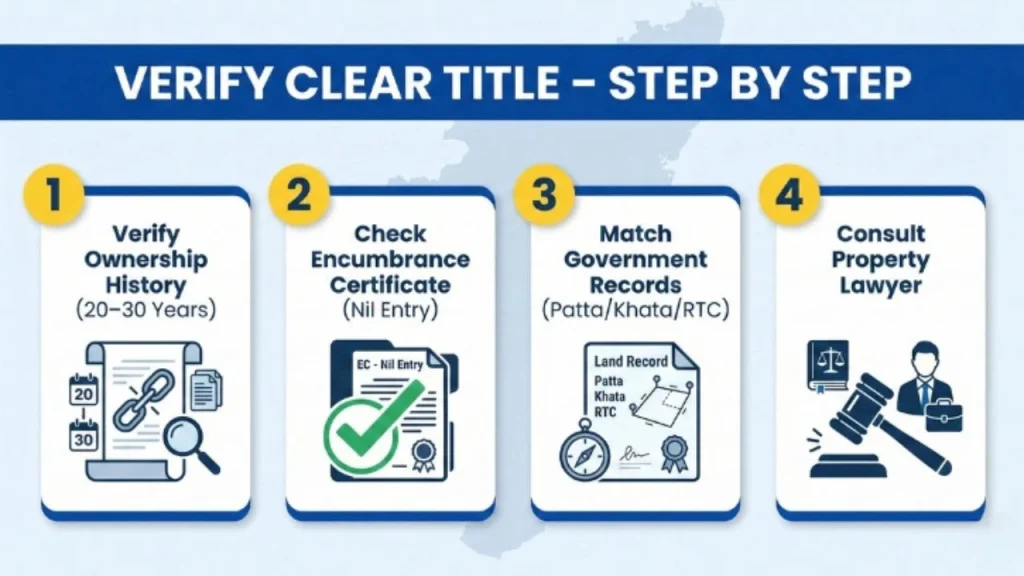
Step 1: Verify Ownership History (Last 20–30 Years)
Ask for the Mother Deed and past Sale Deeds.
Make sure ownership flows continuously without gaps.
👉 If one owner disappears in the chain stop right there.
Step 2: Check Encumbrance Certificate (EC)
Get the EC from the Sub-Registrar Office.
Look for “Nil Encumbrance” this confirms no loans or legal charges.
Step 3: Match Government Records
Cross-check:
- Patta / Khata / RTC
- Property tax receipts
- Owner’s name across all documents
Names and survey numbers must match perfectly.
Step 4: Confirm Approvals (Especially for Plots)
- Approved layout
- Local authority permissions
- Registration under Real Estate Regulatory Authority (for builder projects)
Banks reject loans if approvals don’t exist.
Step 5: Consult a Property Lawyer
Spend a few thousand on legal verification.
It can save you lakhs later.
Simple Example
Karthik wants to buy land. He checks EC, verifies 25 years of ownership, matches Patta details, and asks a lawyer to review everything. Result? Clean records. Safe purchase.
His friend skips verification because the price looks cheap. Six months later court notice.
That’s the difference.
Why does this matter?
- Property disputes make up over 60% of civil court cases in India
- Most buyers face trouble because they skip document verification
Final Tip
- Never trust verbal promises
- Always verify originals
- Always involve a lawyer
checking takes days. Legal problems last year.
Major Red Flags to Watch Out For
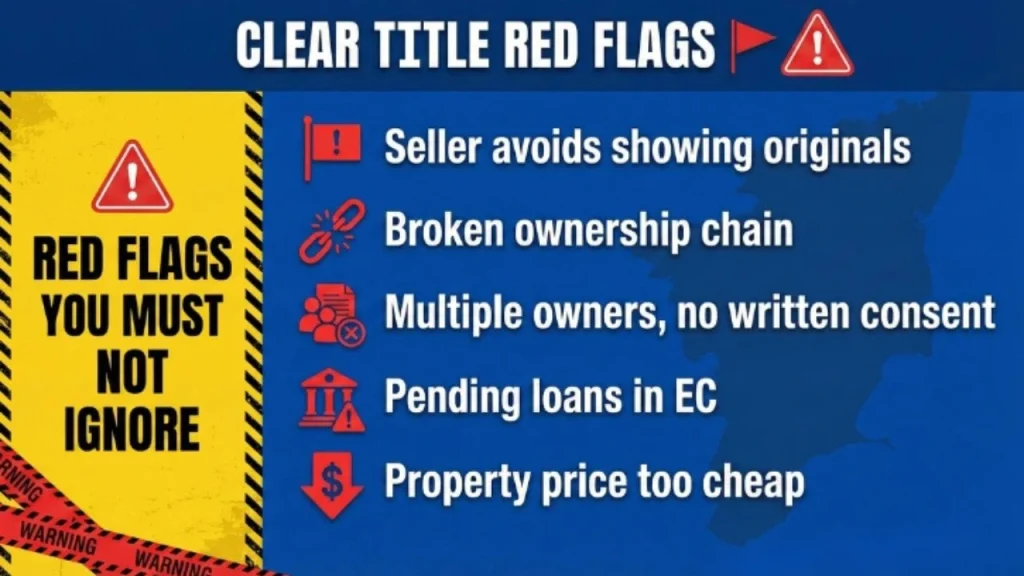
When buying land, small warning signs often point to big legal problems. Most property disputes start because buyers ignore these early red flags.
In India, over 60% of civil court cases involve land or property issues and unclear ownership tops the list.
So before you move forward, watch out for these danger signals:
Seller avoids showing original documents
If they say “Xerox copy is enough” or “originals are with someone else,” walk away.
Broken ownership chain
You notice missing Sale Deeds or unexplained ownership gaps in the last 20–30 years. That usually means future disputes.
Multiple owners, no written consent
All legal owners must sign the sale. Verbal approval doesn’t count.
Pending loans or unclear EC
If the Encumbrance Certificate doesn’t show “Nil entries,” the land may carry hidden liabilities.
Property price looks too cheap
Scammers often attract buyers with unusually low prices.
Inherited property without legal transfer
Heirs must complete legal mutation before selling. Otherwise, ownership stays unclear.
Simple Example
Ramesh finds a plot at a “special discount.” The seller rushes him to pay advance and avoids sharing EC details. Ramesh ignores the signs. Three months later, a bank claims loan rights over the land.
Meanwhile, Anitha rejects a similar deal because documents don’t match. She saves herself years of legal trouble.
That’s smart buying.
Remember this:
- Never trust verbal promises
- Never rush because of “limited-time offers”
- Never skip legal verification
Red flags don’t disappear after purchase; they multiply.
If something feels off, pause. There’s always another property. Your money deserves protection.
Clear Title vs Encumbered Property
Before buying land, you must understand this one difference: Clear Title vs Encumbered Property. It can decide whether you enjoy peaceful ownership or spend years fighting legal battles.
It means the property has no loans, no disputes, and no third-party claims.
An Encumbered Property carries legal or financial burdens like bank mortgages, court cases, or ownership conflicts.
Let’s break it down simply:
Property
- One rightful owner (or all owners legally agree)
- No pending loans or court cases
- Banks approve loans easily
- High resale value
- Zero legal stress
Encumbered Property
- Active home loan or legal charge
- Disputed ownership
- Loan rejection from banks
- Difficult resale
- High risk of court notices
Quick Comparison Table
| Clear Title ✅ | Encumbered Property ❌ |
| Safe to buy | Risky investment |
| Easy bank loan | Loan usually rejected |
| Smooth resale | Buyers hesitate |
| Full ownership | Limited rights |
| Peace of mind | Legal stress |
Simple Example
Vijay buys a plot with clear documents and Nil EC. He gets a bank loan and later sells the land at profit.
His friend Manoj chooses a cheaper plot with pending loan issues. The bank refuses finance. Later, creditors claim the land.
Same city. Same budget. Very different outcomes.
Why does this matter?
Property disputes make up over 60% of civil court cases in India, and most start with encumbered or unclear titles.
Cheap land with problems isn’t a bargain, it’s a trap.
Always choose:
Short answer? Yes, you can but you absolutely shouldn’t.
- Clear ownership
- Clean documents
- Legal verification
Because fixing legal mistakes costs far more than doing proper checks upfront.
Can You Buy Land Without?
Many buyers move forward because the price looks attractive or the seller sounds convincing. That’s where problems begin.
When land doesn’t have a clear title, it usually means loans, disputes, missing owners, or legal claims already exist. You may not see them today but they surface later.
And when they do, they hit hard.
In India, over 60% of civil court cases relate to land or property disputes, and most start because buyers ignore title verification.
Here’s what typically happens when you buy land without a clear title:
Major Risks You Take
- Banks reject home or plot loans
- Another person may claim ownership
- You struggle to resell the property
- You face legal notices or court cases
- You lose years and sometimes your money
Simple Example
Prakash buys a plot at a “discount” without checking the Encumbrance Certificate. Three months later, a bank issues a notice because the previous owner never closed a loan.
Prakash now pays legal fees instead of enjoying his property.
Meanwhile, Divya spends a few days verifying documents and consulting a lawyer. She buys slightly higher but sleeps peacefully.
That’s the real difference.
Some people say: “I’ll fix documents later.”
Reality: legal problems don’t shrink with time they grow.
Buying land without a clear title isn’t bravery. It’s gambling.
Before you invest:
- Verify ownership history
- Check EC for Nil entries
- Match all records
- Talk to a property lawyer
Land lasts forever. Legal mistakes do too.
Always choose safety over shortcuts.
Quick Buyer Checklist
Before you pay advance or sign any agreement. It takes a few days but it can save you years of legal stress.
Property disputes account for over 60% of civil court cases in India, and most buyers face trouble because they skip basic verification.
Use this checklist every time 👇
Ownership Verification
- Check Sale Deed (latest registered copy)
- Verify continuous ownership for last 20–30 years
- Confirm all legal owners sign the sale
👉 If one owner’s signature is missing, stop immediately.
Encumbrance & Loan Check
- Obtain Encumbrance Certificate (EC)
- Look for “Nil Encumbrance”
- Cross-check loan closure proof if past loan appears
Government Record Matching
- Match Patta / Khata / RTC details
- Verify survey number and land extent
- Check latest property tax receipts
Names must match across all documents exactly.
Approval & Legal Review
- Confirm layout approval (for plots)
- Check RERA registration (for builder projects)
- Consult a property lawyer before paying advance
Simple Example
Sneha follows this checklist before buying land. She finds a mismatch in the survey number and avoids a risky deal.
Her colleague skips verification because the seller “seems genuine.” Later, he receives a legal notice.
Same market. Different decisions.
Final Reminder
Before transferring money:
- Never trust verbal promises
- Never rush due to “limited-time offers”
- Always verify originals
Land purchase feels exciting. Stay disciplined.
A checklist costs nothing. Legal mistakes cost everything.
Don’t risk your hard-earned money on unclear properties.
Start your land investment journey the right way
👉 Visit Tiruthanikai Infra City and book your site visit today.
Conclusion
Buy Land the Smart Way Not the Risky Way Buying land isn’t just a financial decision it’s a long-term commitment to your future. It verified documents, and proper legal checks separate smart buyers from stressed buyers. Throughout this guide, you’ve seen how small mistakes, skipped EC checks, missing ownership history, or verbal promises can turn a dream investment into years of legal trouble.
The good news? You can avoid all of it by staying disciplined:
- Verify ownership history
- Check EC for Nil entries
- Match government records
- Consult a property lawyer
- Never rush because of “limited-time offers”
Remember, over 60% of property disputes start with unclear titles. A few days of verification today can save you lakhs tomorrow.
If you’re planning to buy land with confidence, choose projects that prioritize transparency, approvals, and clear documentation.
Frequently Asked Questions
1. What does “Clear Title” mean in land?
A Clear Title means the seller legally owns the land, with no disputes, no loans, and no third-party claims. You get full ownership rights without future legal trouble.
2. How can I check if a property has a Clear Title?
1.Verify ownership history (20–30 years)
2.Check Encumbrance Certificate (Nil entries)
3.Match Patta/Khata/RTC records
4.Review tax receipts
5.Consult a property lawyer
3. Is an Encumbrance Certificate alone enough?
No. EC only shows loans and charges. You must also verify:
1.Sale Deeds
2.Mother Deed
3.Government records
4.Layout approvals
5.Clear Title needs multiple document checks.
4. Can banks give loans for land without Clear Title?
No. Banks approve loans only for properties with clean ownership and proper approvals.
5. What happens if I buy land without a clear Title?
You may face:
1.Loan rejection
2.Ownership disputes
3.Court cases
4.Difficult resale
5.Financial loss
6.Buying without Clear Title is a legal risk.
6. How many years of documents should I verify?
Ideally, check 20–30 years of ownership history to ensure continuity and avoid hidden claims.
7. Is inherited property risky to buy?
Yes unless heirs complete legal mutation and transfer ownership properly. Without this, the title remains unclear.
8. Why does cheap land often have problems?
Scammers attract buyers with low prices. Many such plots carry:
1.Pending loans
2.Missing documents
3.Ownership conflicts
Always verify before trusting discounts.
9. Should I consult a lawyer before buying land?
Absolutely. Spending a few thousand on legal review can save you lakhs in future disputes.
10. What’s the safest way to buy land?
Follow this simple rule:
1.Verify documents
2.Check EC
3.Match government records
4.Confirm approvals
5.Involve a lawyer
6.Buy only from transparent projects