

Buying a plot in Chennai is a major investment, but choosing the wrong developer or overlooking approval documents can lead to costly legal complications. So, how do you identify a DTCP approved real estate developer in Chennai and verify whether a residential plot is suitable for your investment? According to the Tamil Nadu government’s Housing and Urban Development Department, DTCP operates across 37 district offices in Tamil Nadu, highlighting the importance of understanding the applicable planning authority.
Before committing your money, check layout approval, land ownership, encumbrance records, road access and infrastructure. This buyer guide explains how to evaluate developers, verify essential documents and make a more informed decision when purchasing residential plots in Chennai.
What Does DTCP Approval Mean in Real Estate?
DTCP approval confirms that a plotted development meets the applicable planning requirements set by the Directorate of Town and Country Planning in Tamil Nadu. When you choose a DTCP approved real estate developer in Chennai, verify the layout approval and supporting property documents before paying an advance. Remember, DTCP approval does not automatically guarantee clear ownership or eliminate every legal risk. Check the title deed, encumbrance certificate, patta, road access and approved layout plan with the relevant authorities. Tamil Nadu has 38 districts, so the applicable planning authority may vary by location. Always verify the approval independently before investing.
What Is DTCP and Why Is It Important?
The Directorate of Town and Country Planning (DTCP) oversees spatial planning and regulates land development in applicable areas of Tamil Nadu. It helps ensure that plotted layouts follow relevant planning rules for land use, roads and other layout requirements. Before purchasing a residential plot, you should confirm which planning authority handles that location and verify the layout approval.
Choosing a DTCP approved real estate developer in Chennai can help you identify projects with the relevant planning permissions. However, approval alone does not guarantee clear ownership or protect you from every property dispute. Check the title deed, encumbrance certificate, patta and approved layout plan, and seek independent legal advice before paying an advance. Buyers should also understand the difference between DTCP, CMDA and RERA because the applicable requirements depend on the property and its location.
The Tamil Nadu government identifies layout and building-plan approvals among DTCP’s key functions, making approval verification an essential step in the plot-buying process.
DTCP-Approved Layouts vs. Unapproved Layouts
When buying a residential plot, understanding the difference between DTCP-approved and unapproved layouts helps you make a more informed decision. A DTCP-approved layout has planning approval from the relevant authority, subject to the approval’s conditions. An unapproved layout lacks the required planning permission, which can create legal and development complications.
Key differences to consider:
- Planning permission: Approved layouts have relevant planning approval; unapproved layouts lack the required approval.
- Documentation: Check the approved layout plan and approval number, along with ownership and other property documents.
- Infrastructure: Review road access, drainage and other facilities against the approved plan.
- Legal risks: Unapproved layouts may face restrictions on building permissions or other services, depending on applicable rules.
Before choosing a DTCP approved real estate developer in Chennai, verify the approval independently.
Benefits of Buying DTCP-Approved Residential Plots
Buying a DTCP-approved residential plot can help you make a more informed property investment. The approval indicates that the relevant planning authority has approved the layout, subject to its conditions. However, you must also verify ownership and legal documents before purchasing.
Key benefits include:
- Planning compliance: An approved layout follows the applicable planning requirements. For example, you can compare the plot boundaries and road access with the approved layout plan.
- Better documentation: Approval records help you verify the project’s planning status before paying an advance.
- Informed decision-making: You can assess the plot’s permitted use and layout details before committing your savings.
- Reduced approval-related risks: Checking the approval helps you avoid some risks associated with unauthorised layouts.
For example, when comparing two plots in Chennai, verify the approval details, title deed and encumbrance certificate before choosing a developer. No approval guarantees investment returns or complete legal safety.
How to Verify DTCP Approval Before Buying a Plot
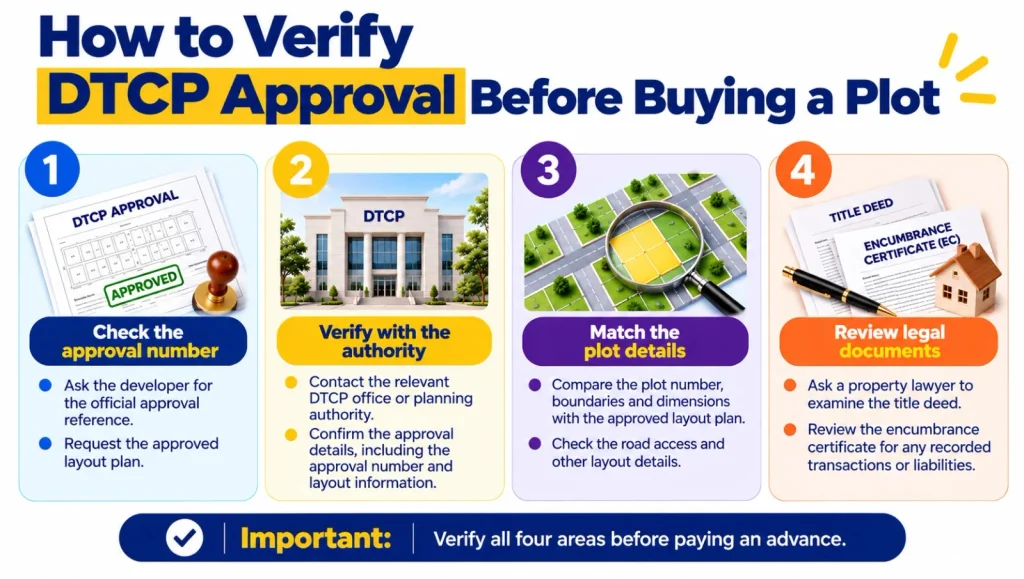
Before purchasing a residential plot, verify its planning approval to reduce the risk of legal complications. If you are considering a DTCP approved real estate developer in Chennai, follow these steps:
- Check the approval number: Ask the developer for the official approval reference and approved layout plan.
- Verify with the authority: Contact the relevant DTCP office or planning authority to confirm the approval details.
- Match the plot details: Compare the plot number, boundaries, road access and layout plan.
- Review legal documents: Ask a property lawyer to examine the title deed and encumbrance certificate.
Important: Verify all four areas before paying an advance.
Check the DTCP Approval Number and Layout Plan
Before purchasing a residential plot, ask the developer for the official DTCP approval number and a copy of the approved layout plan. These documents help you verify whether the relevant planning authority has approved the plotted development.
Check these 4 essential details:
- Approval number: Record the reference number and verify it with the relevant planning authority.
- Plot number: Confirm that your chosen plot appears in the approved layout plan.
- Road access: Check the approved road widths and access routes.
- Plot boundaries: Compare the plot dimensions with the approved plan and property documents.
For example, if a developer offers Plot No. 25, confirm that the approved plan identifies the same plot and dimensions. A reliable DTCP approved real estate developer in Chennai should help you access relevant approval records. Always verify them independently before paying an advance. To review the documents required before purchasing land, refer to our detailed DTCP-approved plot checklist.
Verify Land Ownership and Legal Documents
Before purchasing a residential plot, confirm that the seller legally owns the land and has the right to sell it. Even when you choose a DTCP-approved real estate developer in Chennai, planning approval alone does not establish clear ownership. Ask a property lawyer to review these 4 essential documents before you pay an advance.
| Document | What to verify |
| Parent documents | Trace the land’s ownership history. |
| Sale deed | Confirm the seller’s ownership and property details. |
| Encumbrance Certificate (EC) | Check recorded transactions and registered liabilities. |
| Patta | Verify revenue records and relevant land details. |
Compare the survey number, plot boundaries and ownership details across the documents. Ask the relevant authorities to clarify discrepancies. Never rely solely on photocopies or verbal assurances; verify records independently before signing the agreement or transferring money.
Consult the Relevant Planning Authority
Before investing in a residential plot, verify its approval with the relevant planning authority. In Tamil Nadu, DTCP handles planning matters in its jurisdiction, while CMDA oversees planning within the Chennai Metropolitan Planning Area.
Follow these three steps:
- Check approval records: Visit the Tamil Nadu DTCP official portal to find planning information and approval resources.
- Search approved layouts: Use the official approved-plan list to look for relevant layout approval details.
- Verify Chennai properties: Visit the Chennai Metropolitan Development Authority (CMDA) website if the property falls within its jurisdiction.
Example: If a developer advertises a plot near Chennai as DTCP-approved, compare its approval number, survey details and layout plan with the official records before paying an advance. Independent verification helps you make a more informed decision.
Looking for Residential Plots in Chennai?
Before choosing a plot, verify its approval details, ownership documents and location. Explore the residential plots and villas offered by Thiruttanikai Infra City to learn more about available options.
Explore the project: https://tiruthanikaiinfracity.com/
7 Things to Check Before Choosing a Real Estate Developer in Chennai
Choosing the right developer can make your plot-buying experience more transparent and informed. Before selecting a DTCP-approved real estate developer in Chennai, evaluate these seven essential factors to reduce avoidable risks.
- Track record: Review completed projects and customer feedback.
- DTCP approval: Verify the layout approval with the relevant authority.
- Land ownership: Check title deeds and ownership history.
- Location: Assess road connectivity and nearby facilities.
- Pricing: Compare plot prices and additional charges.
- Infrastructure: Examine roads, drainage and water access.
- Transparency: Request written agreements and clear payment terms.
Tip: Consult an independent property lawyer before signing an agreement or paying an advance.
Review the Developer’s Track Record
Before investing in a residential plot, research the developer’s experience, completed projects and reputation. A company’s marketing claims alone cannot prove its reliability. If you are considering a DTCP approved real estate developer in Chennai, examine its project history and verify important details independently.
Use these 4 checks to evaluate the developer:
- Completed projects: Visit at least 2 completed projects, if available, to assess layout quality and infrastructure.
- Customer feedback: Read reviews and speak with previous buyers about their experience.
- Legal records: Check project approval documents and investigate any reported property disputes.
- Company background: Review the developer’s official website, business history and contact information.
For example, ask previous buyers whether the developer delivered the promised road access and facilities. Confirm every important claim with documentary evidence before making your investment decision. For more guidance, read our article on choosing a reliable real estate developer before comparing project claims and documentation.
Evaluate Location and Road Connectivity
Location directly affects your daily convenience and the long-term usefulness of a residential plot. When choosing a DTCP approved real estate developer in Chennai, examine the surrounding infrastructure instead of relying solely on promises about future development. A low-priced plot may cost you more time and money if essential services remain far away.
Check these 5 location factors before making your decision:
- Road access: Confirm that the plot has legal, practical access through the approved road network.
- Public transport: Check nearby bus stops, railway stations and metro connectivity.
- Essential services: Identify schools, hospitals, supermarkets and banks.
- Workplace connectivity: Estimate your daily commuting time during peak hours.
- Future development: Check official infrastructure plans rather than relying on marketing claims.
Example: Compare two plots by travel time to your workplace and essential services, not just their prices. You can explore our residential plots in Chennai to compare available projects and review their location-specific details.
Compare Plot Prices and Infrastructure Facilities
Before choosing a plot, compare its total cost and available infrastructure with similar properties in the same locality. A low advertised price may exclude registration charges, development fees or essential facilities. When evaluating a DTCP approved real estate developer in Chennai, request a detailed cost breakdown and inspect the site personally.
Check these 4 important factors:
- Plot price: Compare the price per square foot across at least 3 comparable plots.
- Additional charges: Ask about registration, documentation and other applicable fees.
- Road infrastructure: Check road width, surface quality and legal access.
- Basic amenities: Assess water availability, drainage, electricity and street lighting.
Example: If one 1,200-square-foot plot costs ₹18 lakh and another costs ₹20 lakh, compare their infrastructure and additional charges before deciding. The lower price alone does not guarantee better value.
Essential Documents to Check Before Buying DTCP-Approved Plots
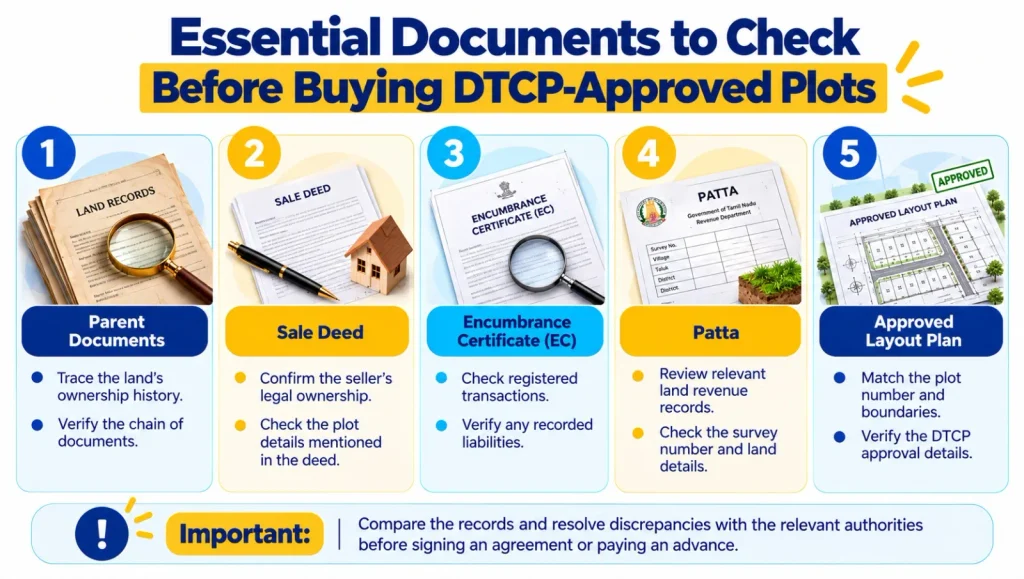
Before investing in a residential plot, verify the legal documents alongside the layout approval. A DTCP-approved layout does not automatically guarantee clear ownership or freedom from legal disputes. If you are considering a DTCP approved real estate developer in Chennai, ask an independent property lawyer to review these five essential records:
- Parent documents: Trace the land’s ownership history.
- Sale deed: Confirm the seller’s legal ownership and plot details.
- Encumbrance Certificate (EC): Check registered transactions and recorded liabilities.
- Patta: Review relevant land revenue records.
- Approved layout plan: Match the plot number, boundaries and approval details.
Compare the records and resolve discrepancies with the relevant authorities before signing an agreement or paying an advance.
Parent Documents and Sale Deed
Before buying a residential plot, examine the parent documents and sale deed to establish the seller’s ownership and the property’s transaction history. These documents help you identify ownership gaps, inconsistencies and potential legal disputes. Even when purchasing from a DTCP approved real estate developer in Chennai, verify the land title independently.
Check these 3 essential details:
- Ownership history: Review previous title documents to understand how ownership passed from one person to another.
- Sale deed details: Match the seller’s name, survey number, plot dimensions and property boundaries against the supporting records.
- Legal consistency: Ask a property lawyer to investigate discrepancies, missing documents or competing ownership claims.
Example: If the sale deed lists a different survey number from the parent documents, resolve the mismatch before proceeding. Never rely solely on the developer’s assurances; obtain independent legal verification before paying an advance.
Encumbrance Certificate and Patta
Before purchasing a residential plot, check the Encumbrance Certificate (EC) and Patta to understand its registered transaction history and land revenue records. These documents serve different purposes, so review both when evaluating a DTCP approved real estate developer in Chennai. Ask a property lawyer to examine the records and identify any inconsistencies before you pay an advance.
| Document | What you should check |
| Encumbrance Certificate (EC) | Review registered transactions, mortgages and other recorded encumbrances for the relevant period. |
| Patta | Check the recorded landholder, survey number and relevant land details. |
| Supporting records | Compare both documents with the sale deed and parent documents. |
Example: If the Patta shows a different survey number from the sale deed, seek clarification from the relevant revenue authority. Remember, neither document alone guarantees clear ownership. Verify the complete title before purchasing.
DTCP-Approved Layout Plan and Relevant Permissions
Before purchasing a residential plot, request the approved layout plan and verify the relevant planning permissions with the appropriate authority. These records help you confirm whether the developer’s project follows the applicable planning requirements. When evaluating a DTCP approved real estate developer in Chennai, compare the documents with the actual plot details instead of relying on marketing materials.
Check these 3 essential details:
- Approval number: Confirm the reference with the relevant planning authority.
- Plot dimensions: Match the plot number, boundaries and measurements with the approved layout plan.
- Road access and land use: Check the approved road network and permitted land use.
Example: If a developer advertises a 1,200-square-foot plot, compare its dimensions and plot number with the approved plan. If the details differ, seek clarification before paying an advance. Ask a property lawyer to review all relevant permissions.
Conclusion
Choosing a DTCP approved real estate developer in Chennai requires more than comparing plot prices or selecting an attractive location. You need to verify layout approval, examine land ownership documents, review the Encumbrance Certificate and Patta, and assess road access and essential infrastructure. These checks help you identify potential risks and make a more informed property investment decision.
Before committing your money, verify the approval details with the relevant planning authority and seek independent legal advice. A transparent developer should provide the necessary project documents and explain the costs clearly.
Ready to Explore Residential Plots and Villas in Chennai?
Take the next step towards finding a property that suits your needs. Visit Thiruttanikai Infra City to explore its residential plots and villas, enquire about current availability and pricing, and request relevant project approval documents before making your decision.
Visit the official website: https://tiruthanikaiinfracity.com/
FAQs: DTCP-Approved Real Estate Developers in Chennai
1. What does DTCP approval mean when buying a plot?
DTCP approval indicates that the relevant planning authority has approved a plotted layout under applicable planning regulations. Before buying, verify the approval details, approved layout plan and land ownership documents. Approval alone does not guarantee clear title or eliminate every legal risk.
2. How can I verify DTCP approval in Chennai?
Visit the Tamil Nadu Directorate of Town and Country Planning website and check the available approval records. You can also contact the relevant planning authority with the approval number, survey number and layout details. Compare the official records with the developer’s documents before paying an advance.
3. Is DTCP approval enough to confirm clear land ownership?
No. DTCP approval relates to planning permission for the layout; it does not independently establish clear land ownership. Review the parent documents, sale deed, Encumbrance Certificate (EC) and relevant revenue records. Consult a property lawyer to verify the title and identify potential legal issues.
4. What documents should I check before buying a residential plot?
Check these essential documents before purchasing:
- DTCP-approved layout plan and approval details
- Parent documents and sale deed
- Encumbrance Certificate (EC)
- Patta and relevant land records
- Survey details and plot boundaries
- Applicable planning permissions and other required clearances
Ask a property lawyer to review the documents and resolve any discrepancies before signing the agreement.
5. What is the difference between DTCP and CMDA approval?
DTCP and CMDA are planning authorities with different jurisdictions in Tamil Nadu. DTCP oversees planning in areas under its jurisdiction, while CMDA handles planning within the Chennai Metropolitan Planning Area. The appropriate authority depends on the property’s location. Verify which authority governs the specific plot before purchasing it.
6. Can I buy a plot without DTCP approval?
You should not assume that a plot without DTCP approval is automatically illegal or automatically safe to purchase. The applicable authority and approval requirements depend on the location, layout and development. Verify the planning status and any required permissions with the relevant authority before committing your money.
7. Does DTCP approval guarantee legal ownership?
No. DTCP approval does not guarantee legal ownership, a clear title or freedom from disputes. Verify the ownership history, sale deed, Encumbrance Certificate and relevant land records independently. A qualified property lawyer can assess whether the seller has the legal right to transfer the property.
8. Is RERA registration required for DTCP-approved layouts?
DTCP approval and RERA registration serve different purposes. Certain real estate projects must register with the Tamil Nadu Real Estate Regulatory Authority (TNRERA), subject to the applicable provisions and exemptions under RERA. Check the project’s registration status on the official TNRERA website rather than assuming every approved layout requires registration.
9. How do I choose a reliable real estate developer in Chennai?
Evaluate the developer’s track record, approval documents, land ownership records, project location, infrastructure and pricing. Visit completed projects where possible, speak with previous buyers and request written details of all charges. Before investing with a DTCP-approved real estate developer in Chennai, verify the relevant approvals and obtain independent legal advice.
10. What should I check before investing in DTCP-approved residential plots?
Before investing, verify the layout approval, land title, Encumbrance Certificate, Patta, plot boundaries and legal access roads. Assess nearby infrastructure, transport connectivity, total costs and applicable permissions. Ask a property lawyer to review the documents before paying an advance or signing the sale agreement.