Enquire Now for a free site visit – call

Introduction
Land investment success is often determined by one key factor location. Investors who understand how to identify high-growth plot locations are more likely to benefit from long-term land appreciation. As cities expand and infrastructure continues to develop, certain areas begin to attract residential and commercial growth, turning previously overlooked regions into valuable real estate opportunities.
The demand for residential plots has increased significantly in recent years due to urban population growth and expanding housing needs. Investors and homebuyers are now looking beyond established city centers and focusing on emerging regions with strong development potential. Factors such as new highways, transport connectivity, and upcoming residential projects often play a major role in shaping these opportunities.
Identifying requires careful research and strategic planning. Investors typically analyze infrastructure developments, economic growth corridors, and government urban planning initiatives before choosing where to invest. Understanding these indicators helps buyers make informed decisions and select plot locations that have the potential for strong long-term appreciation.
Why Location Determines Plot Investment Success
Location plays a decisive role in determining whether a plot investment will appreciate over time. While factors such as price and plot size are important, the surrounding environment and future development potential often influence long-term returns. Investors who understand how high-growth plot locations emerge can better evaluate which areas may experience strong property demand in the future.
One of the primary reasons location matters is its connection to infrastructure development. Regions that benefit from new highways, metro systems, or industrial corridors often attract residential and commercial development. As connectivity improves, these areas become more accessible, increasing demand for plots and driving land values upward.
Another important factor is proximity to expanding cities. As urban centers grow, nearby regions often evolve into residential suburbs or development zones. Investors who identify these locations early may benefit from long-term appreciation as housing demand increases.
Several location-related factors typically influence plot investment success:
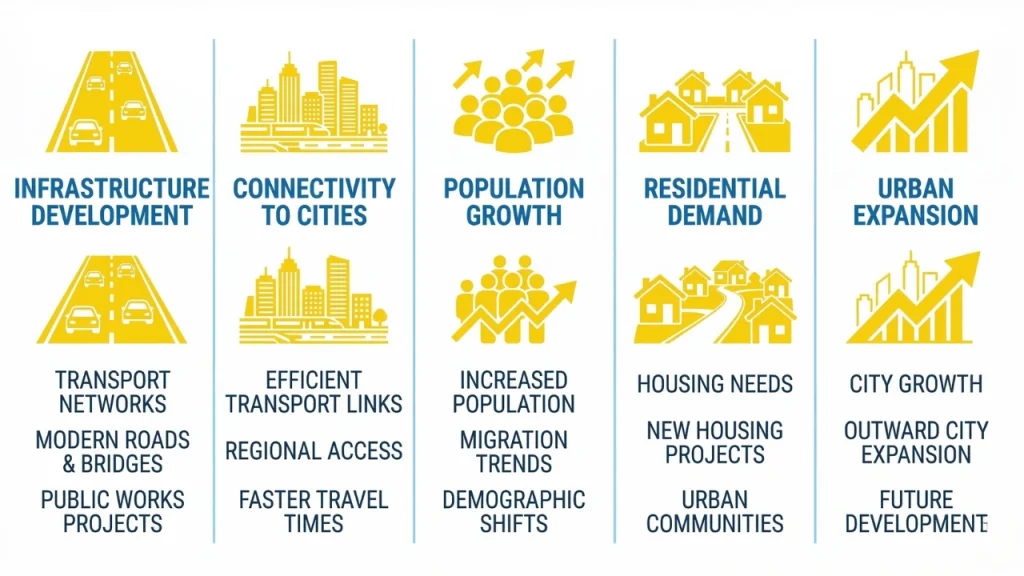
- Infrastructure growth, including roads, transport networks, and utilities
- Connectivity to employment hubs and major urban centers
- Population growth creating new housing demand
- Planned residential or commercial developments
Research discussed in this growth areas article highlights how geographic data and urban planning tools help identify locations with strong real estate growth potential.
By focusing on these location indicators, investors can better identify plot areas likely to experience sustained development and rising property values.
Key Indicators of High-Growth Plot Locations
Requires more than simply observing current property prices. Investors who successfully choose profitable land opportunities usually analyze several indicators that signal future development potential. These indicators help buyers understand whether a particular location is likely to experience increasing demand and long-term land appreciation.
One of the strongest indicators is infrastructure development. Major projects such as highways, metro lines, airports, and industrial corridors often transform nearby regions into residential and commercial hubs. As connectivity improves, these areas attract both developers and homebuyers, increasing the value of surrounding plots.
Another important indicator is population movement toward developing regions. As cities expand and housing demand increases, emerging suburbs and nearby districts often become attractive alternatives for residential growth. Investors who monitor these demographic trends can identify locations with strong future demand.
Several indicators commonly signal high-growth plot opportunities:
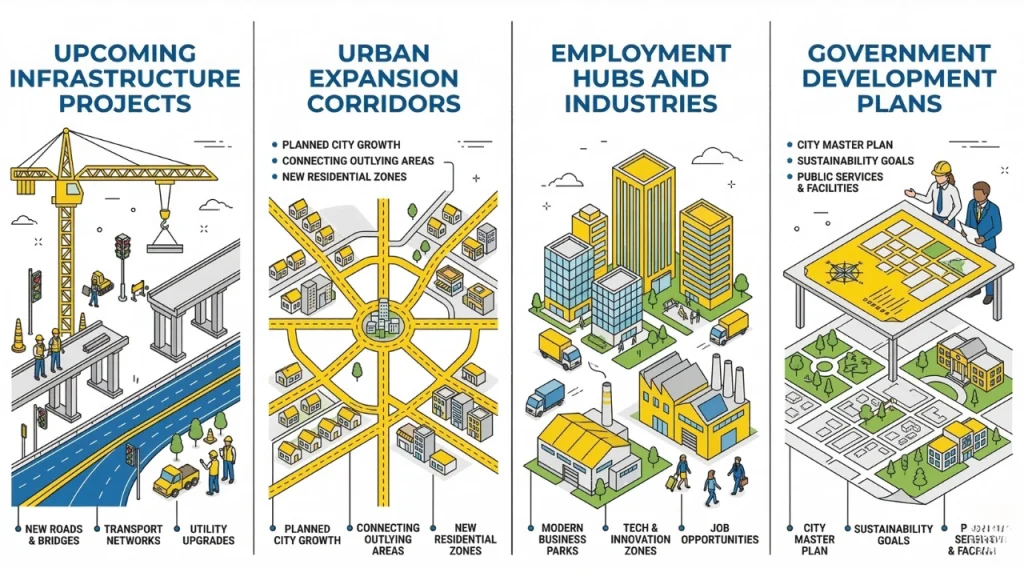
- Upcoming infrastructure projects improving accessibility
- Urban expansion corridors extending beyond city limits
- Employment hubs or industrial zones attracting population growth
- Government development plans supporting regional growth
Strategies discussed in this roi plots article explain how experienced investors evaluate these indicators before choosing plot investment locations.
By analyzing these factors carefully, investors can identify plot areas that have the potential to develop into high-value real estate markets.
How Investors Research Emerging Plot Markets
Successful land investors rarely rely on assumptions when selecting locations. Instead, they conduct careful research to identify areas that show signs of long-term development. Understanding high-growth plot locations often begins with studying market patterns, infrastructure plans, and regional economic growth before making an investment decision.
One of the first steps investors take is analyzing local development plans. Government infrastructure projects, such as highways, metro networks, or industrial corridors, often influence where residential expansion will occur. Regions located near these developments frequently experience increased demand for plots as connectivity and economic activity improve.
Investors also study property demand trends within emerging areas. Growing residential demand, rising population levels, and increasing business activity can signal that a region may experience real estate growth in the future. By examining these trends early, investors can identify opportunities before prices increase significantly.
Smart Research Methods for Plot Investment
Investors often apply structured research methods when evaluating plot markets. These methods include studying regional development plans, reviewing real estate market data, and consulting industry professionals to understand growth patterns.
Some common research approaches include:
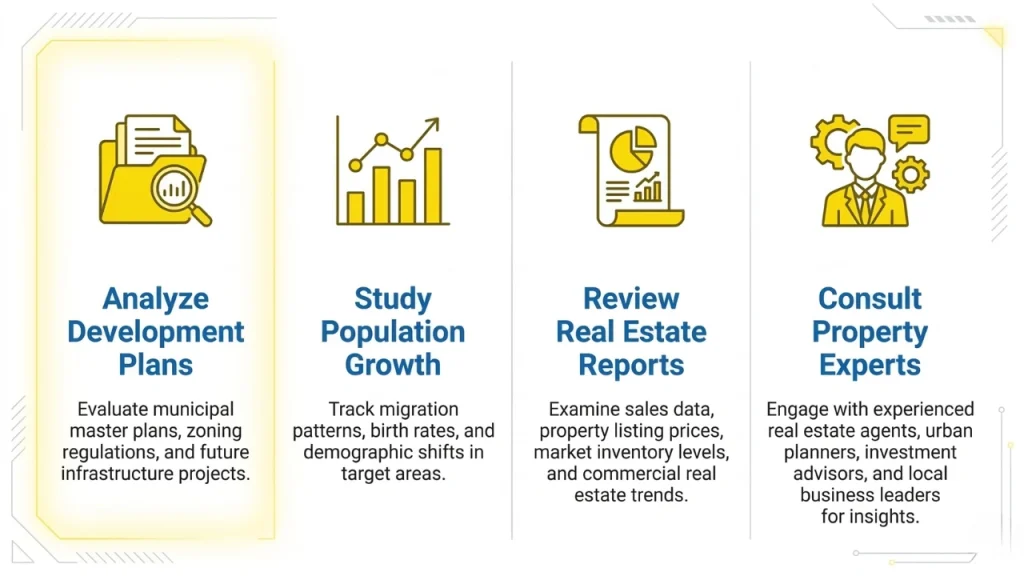
- Analyzing infrastructure and urban development plans
- Studying population growth and housing demand trends
- Reviewing real estate market reports and property data
Strategies discussed in this smart locations article highlight how experienced investors identify promising land investment opportunities.
High-Growth Plot Locations vs Low-Growth Areas
When evaluating land investments, understanding the difference between promising regions and stagnant locations is essential. Investors who focus on high-growth plot locations typically analyze development indicators that signal strong future demand. In contrast, areas with limited infrastructure, poor connectivity, or slow population growth often struggle to generate significant property appreciation.
High-growth locations usually emerge in regions experiencing rapid urban expansion or infrastructure development. Projects such as highways, metro lines, industrial zones, and new residential communities often attract investors and homebuyers. As accessibility and economic activity improve, land demand rises and property values begin to increase steadily.
Low-growth areas, on the other hand, often lack these development drivers. Locations that are isolated, poorly connected, or far from economic activity may experience slower property demand. While land prices in such regions may initially appear attractive, long-term appreciation may remain limited.
Investors who carefully evaluate growth indicators can distinguish between these types of locations before making investment decisions. Factors such as connectivity, infrastructure investment, and demographic growth patterns often reveal which areas are likely to evolve into strong real estate markets.
The comparison below highlights key differences between high-growth and low-growth plot locations.
| Location Factor | High-Growth Plot Locations | Low-Growth Locations |
| Infrastructure | Rapid development | Limited development |
| Connectivity | Strong transport links | Poor connectivity |
| Population growth | Increasing demand | Stable or declining |
| Investment potential | High appreciation | Limited value growth |
Common Mistakes When Choosing Plot Locations
Investing in land can be highly rewarding, but selecting the wrong location can significantly reduce the chances of long-term appreciation. Many investors fail to properly analyze growth indicators before purchasing property, which leads to slower returns. Understanding these common mistakes can help investors make better decisions when evaluating high-growth plot locations.
One frequent mistake is focusing only on the current price of the plot. Low-priced land may appear attractive, but if the surrounding area lacks development potential, the property may take many years to appreciate. Investors should look beyond price and evaluate long-term growth factors.
Another common error is ignoring infrastructure and development plans. Regions without planned transportation networks, residential projects, or industrial growth may struggle to attract property demand. Investors who overlook these factors may miss opportunities in emerging growth corridors.
Lack of market research is also a major challenge. Without studying regional development trends, investors may choose locations that do not show strong future potential.
Some common mistakes include:
- Buying land in isolated or poorly connected areas
- Ignoring future infrastructure and urban development plans
- Failing to analyze local property demand trends
- Making decisions based only on short-term price advantages
The table below highlights common investment mistakes and better approaches when selecting plot locations.
| Investment Mistake | Impact | Better Approach |
| Choosing remote locations | Slow appreciation | Evaluate growth corridors |
| Ignoring development plans | Missed opportunities | Study infrastructure projects |
| Lack of market research | Poor investment decisions | Analyze local demand |
| Overlooking connectivity | Reduced demand | Prioritize transport access |
Learn from Real Investor Experiences and Market Insights
Investors often gain valuable knowledge by observing real estate market activity and learning from the experiences of other property buyers. Understanding how experienced investors identify high-growth plot locations can provide practical insights that help new buyers make more informed decisions.
Industry networks and investor communities frequently share information about emerging property markets, infrastructure developments, and potential investment opportunities. These discussions allow buyers to understand which regions are attracting interest and why certain locations are experiencing stronger property demand.
Working with experienced property professionals and partner networks can also help investors evaluate plot opportunities more effectively. Industry collaborations often provide access to local market knowledge, property insights, and development updates that may not always be visible through general research. Investors can explore these connections through partner network resources that highlight industry collaborations and property expertise.
Another useful source of information comes from feedback shared by property buyers who have already invested in land projects. These real-world experiences can reveal valuable details about location growth, infrastructure development, and investment outcomes. Reviewing buyer feedback can help potential investors understand how plot investments perform over time.
By learning from investor experiences and market insights, buyers can approach plot investments with better knowledge and improved decision-making strategies.
Final Thoughts
Identifying high-growth plot locations is one of the most important steps in making successful land investments. Investors who carefully study infrastructure development, urban expansion, and regional growth trends are more likely to choose locations that offer strong long-term appreciation.
Key takeaways for selecting high-growth plot locations include:
- Evaluating infrastructure projects such as highways, transport corridors, and utilities
- Analyzing urban expansion patterns and future development zones
- Studying population growth and housing demand in emerging regions
- Conducting thorough research before making property investment decisions
By focusing on these factors, investors can improve their chances of selecting plot locations that benefit from sustained development and rising property values over time.
Discover High-Growth Plot Opportunities with Trusted Guidance
Strategic plot investments start with choosing the right location and understanding future development potential.
To explore reliable property opportunities and professional investment support, learn more about our Real Estate Services.