Enquire Now for a free site visit – call

Introduction
Real estate investors often focus on strategies that create long-term value rather than quick returns. One such approach gaining attention, where investors purchase land in areas expected to grow and hold it until its value increases. Understanding helps investors see why this strategy is commonly used by experienced property buyers who prioritize long-term asset growth.
Unlike traditional real estate investments that involve developed properties, focuses on acquiring undeveloped land before major development begins. As cities expand and infrastructure projects develop, land in emerging locations often experiences significant appreciation. Investors who identify these opportunities early can benefit from this long-term growth potential.
Because of increasing urban expansion and infrastructure development, land banking is becoming a strategic investment choice. In the following sections, we will explore, including how the strategy works, why investors use it, and the key factors that influence successful land investment decisions.
What Is Land Banking and Why Investors Use It
It is a real estate investment strategy where investors purchase undeveloped or underdeveloped land and hold it for a long period until its value increases. The concept becomes easier to understand when is viewed as a long-term investment approach focused on future development potential rather than immediate returns.
Unlike buying ready-to-use property, It involves identifying locations that are expected to grow due to infrastructure development, population expansion, or urban planning projects. Investors purchase land at a relatively lower price and wait for surrounding development to increase its market value.
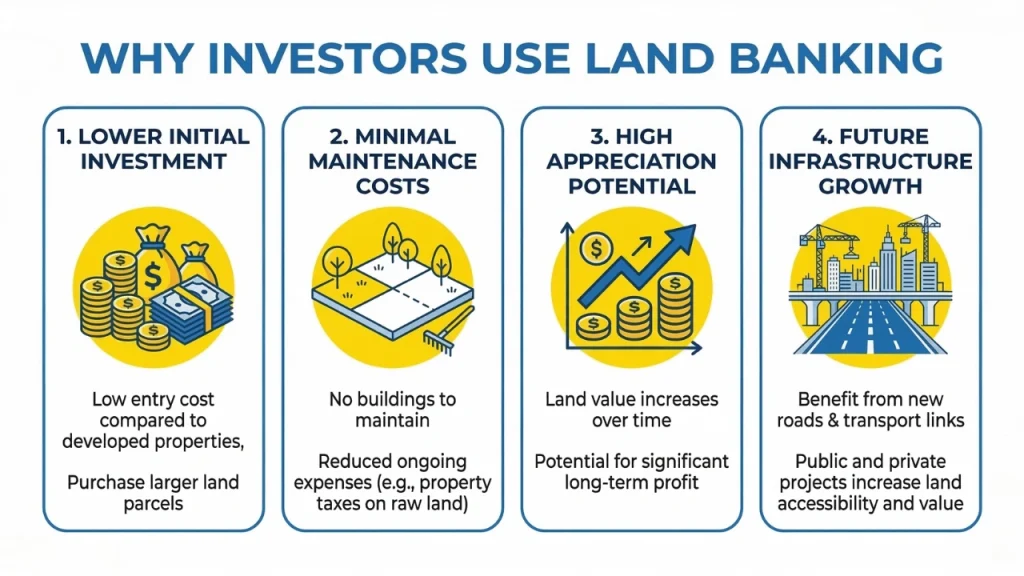
Several factors make attractive to long-term investors:
- Lower initial investment compared to developed properties
- Minimal maintenance costs since the land remains undeveloped
- High appreciation potential in developing areas
- Opportunity to benefit from future infrastructure projects
As cities expand, previously undeveloped regions often become attractive for residential and commercial projects. This transformation can significantly increase land value over time. Investors who research future development plans, infrastructure growth, and urban expansion trends are more likely to identify strong land banking opportunities.
To better understand the concept and its role in long-term real estate investment, this guide on provides insights into how the strategy works and why it is used by experienced investors.
Why Land Banking Is Becoming a Popular Investment Strategy
In recent years, land banking has gained attention among investors looking for long-term real estate opportunities. Instead of focusing only on ready-to-use properties, many investors now consider undeveloped land as a strategic asset. Understanding helps investors recognize why this approach is increasingly used for building long-term wealth.
One major reason behind the growing popularity of land banking is urban expansion. As cities grow, nearby regions often become new residential or commercial zones. Land that was once considered remote may gain significant value once infrastructure and development reach the area.
Several factors contribute to the rising interest in land banking investments:
- Rapid infrastructure development, including highways and transport networks
- Population growth, increasing demand for housing and commercial spaces
- Limited land availability in established urban areas
- Long-term appreciation potential in emerging locations
Another advantage of is the ability to invest with a long-term perspective. Investors who carefully analyze development patterns and government infrastructure plans can identify areas likely to grow in value.
Many investors and financial experts consider a strong long-term investment strategy, especially when the land is located near expanding urban zones or planned development corridors.
By understanding these growth drivers, investors can make more informed decisions about long-term land investments.
How Smart Investors Identify High-Potential Land Opportunities
Successful is not just about purchasing land and waiting for its value to increase. Investors who benefit from this strategy usually conduct detailed research before selecting a location. Understanding also involves recognizing how experienced investors evaluate land with strong future growth potential.
One of the most important factors is location analysis. Investors often look for land in areas close to expanding cities or regions where new infrastructure projects are planned. Locations near highways, transport corridors, industrial zones, or upcoming residential developments often show strong appreciation potential over time.
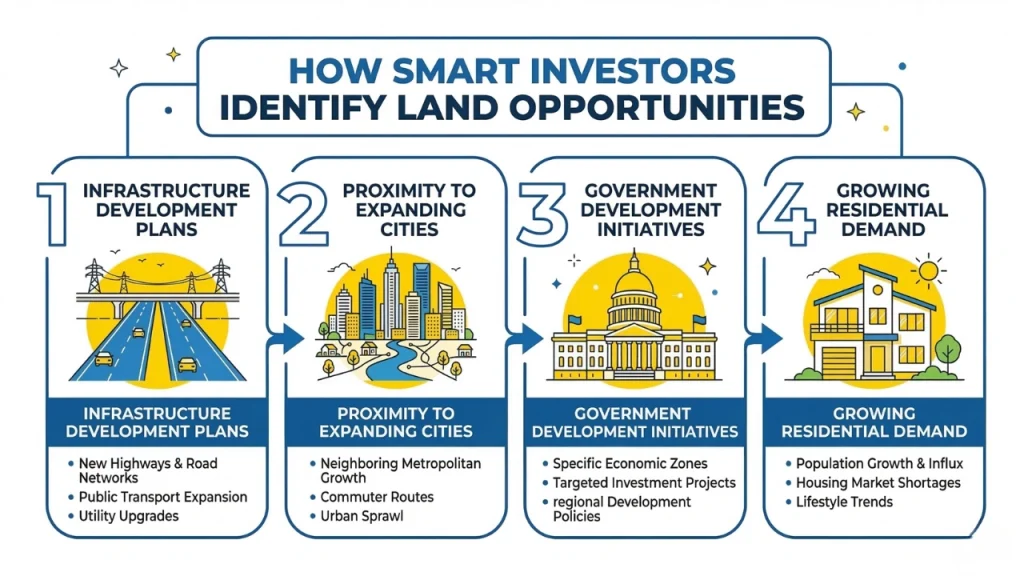
Smart investors typically evaluate several indicators before purchasing land:
- Infrastructure development plans, such as new roads or transportation projects
- Proximity to growing urban centers
- Government development initiatives in surrounding regions
- Demand for residential or commercial expansion
Key Indicators That Signal Future Land Value Growth
Experienced investors also track indicators that suggest future land appreciation. These indicators may include upcoming township projects, industrial growth, improved connectivity, or public infrastructure expansion.
By monitoring such developments, investors can identify locations where land values are likely to increase over the long term. Strategies discussed in this wealth strategy article highlight how experienced investors analyze market trends and development patterns before investing in land.
Careful research and long-term planning play a crucial role in identifying successful land banking opportunities.
Investment Comparison: Land Banking vs Traditional Real Estate
Investors often compare different real estate options before deciding where to allocate their money. While traditional real estate investments involve buying developed properties such as houses or apartments, focuses on acquiring undeveloped land with future growth potential. Understanding becomes clearer when comparing it with conventional property investments.
Traditional real estate investments usually generate returns through rental income and gradual property appreciation. However, these investments often require higher initial capital and ongoing maintenance expenses. Property owners may also need to manage tenants, repairs, and operational costs.
The other hand, is typically viewed as a long-term appreciation strategy. Investors purchase land in areas expected to experience development in the future. As infrastructure projects, urban expansion, and population growth increase demand for land, its value may rise significantly.
| Investment Factor | Land Banking | Traditional Real Estate |
| Initial investment | Often lower | Usually higher |
| Development stage | Undeveloped land | Ready property |
| Return timeline | Long-term appreciation | Rental + appreciation |
| Maintenance | Minimal | Regular maintenance |
Both approaches have their advantages, but is particularly attractive for investors who prioritize long-term asset growth and are willing to wait for development-driven value appreciation.
Risks and Considerations in Land Banking Investments
While offers strong long-term appreciation potential, investors must carefully evaluate several risks before making a purchase. Understanding also involves recognizing the challenges that may affect the success of a land investment. Careful planning and research can help investors reduce these risks and make more informed decisions.
One important consideration is location selection. Land in areas without clear development prospects may take many years to appreciate in value. Investors should evaluate nearby infrastructure projects, connectivity improvements, and urban expansion plans before purchasing land.
Legal verification is another critical factor. Land transactions require proper documentation and ownership verification to avoid disputes or legal complications. Conducting due diligence on land titles and approvals helps ensure the investment is secure.
Investors should also consider the long holding period associated. Unlike rental properties, undeveloped land does not generate immediate income. Returns usually depend on future development and increasing demand in the surrounding area.
The table below highlights some common risks associated with land banking investments and how investors can approach them carefully.
| Risk Factor | Potential Impact | Investor Consideration |
| Poor location choice | Limited appreciation | Conduct location research |
| Legal documentation issues | Investment risk | Verify land titles |
| Infrastructure delays | Slower growth | Assess development plans |
| Long holding period | Delayed returns | Plan long-term investment |
By carefully evaluating these risks, investors can make smarter land investment decisions.
Explore Resources for Strategic Land Investment
For investors interested, understanding real estate developments and market activity can provide valuable insights. Successful investors often research previous projects, market trends, and community developments before making long-term land investments. These resources help investors understand how fits into broader real estate growth strategies.
Reviewing completed projects can help investors analyze how land investments have performed over time. By examining past developments, investors gain a clearer understanding of how infrastructure improvements, residential demand, and regional growth can influence property value. Exploring a company’s project portfolio can provide useful insights into development patterns and successful real estate initiatives.
In addition to project insights, staying informed about industry events and property-related activities can also help investors understand market trends. Real estate events and community initiatives often highlight emerging opportunities, infrastructure developments, and investor engagement. Updates shared through community updates can provide useful perspectives on how property markets evolve in growing regions.
Accessing these types of resources allows investors to make more informed decisions when evaluating long-term land opportunities. By understanding project history, market activity, and development trends, investors can better identify locations where strategies may support long-term wealth creation.
Final Thoughts
It is a long-term real estate strategy used by investors who focus on future land value growth rather than immediate returns. When investors understand explained, they can better evaluate locations and identify opportunities that may benefit from urban expansion and infrastructure development.
Key takeaways from include:
- Purchasing land in developing areas before major growth begins
- Holding the land long-term until surrounding development increases its value
- Evaluating infrastructure and urban expansion plans before investing
- Using land as a strategic asset for long-term real estate wealth creation
With careful research and strategic planning, It can become an effective approach for investors looking to build long-term value through real estate assets.
Build Long-Term Wealth Through Strategic Land Investments
Strategic land investments can help investors benefit from future infrastructure growth and increasing land demand. With the right location research and long-term planning, land banking can become a valuable part of a real estate investment strategy.
Explore opportunities through our Real Estate Services to learn more about structured land investment solutions.
Frequently Asked Question
1. What is land banking?
It is a real estate investment strategy where investors purchase undeveloped land and hold it for a long period until its value increases. The appreciation usually happens when infrastructure development, urban expansion, or commercial growth occurs around the land.
2. How does land banking work as an investment strategy?
It works by identifying land in areas expected to grow in the future. Investors buy the land at a lower price and hold it until development increases its value. The strategy usually involves:
1. Researching future infrastructure projects
2. Selecting high-growth locations
3. Holding the land for long-term appreciation
This approach helps investors benefit from rising land demand.
3. Why do smart investors use land banking?
Smart investors use because it offers long-term appreciation potential with relatively low maintenance. By purchasing land before development begins, investors can benefit from future growth when infrastructure and urban expansion increase land value.
4. What factors influence land value growth?
Several factors influence land value growth, including:
Infrastructure development such as highways or metro lines
1. Urban expansion and population growth
2. Government development plans
3. Increasing demand for residential or commercial spaces
These factors often determine how quickly land appreciates over time.
5. Is land banking a long-term investment?
Yes, It is typically considered a long-term investment. Investors usually hold the land for several years until surrounding development increases its value, making patience an important part of the strategy.
6. What are the benefits of land banking?
It offers several benefits for investors:
1. Potential for long-term appreciation
2. Lower maintenance compared to developed properties
3. Opportunity to invest early in growing locations
4. Portfolio diversification in real estate
5. These benefits make land banking attractive for long-term investors.
7. What risks should investors consider in land banking?
Some risks include choosing the wrong location, delays in infrastructure development, and legal documentation issues. Proper research and verification of land titles can help reduce these risks.
8. How do investors identify good opportunities?
Investors usually analyze several indicators before buying land, such as:
1. Upcoming infrastructure projects
2. Proximity to expanding cities
3. Government development initiatives
4. Connectivity improvements
These indicators help investors find locations with strong growth potential.
9. Can land banking help build long-term wealth?
Yes, land banking can help build long-term wealth if the land is located in a high-growth area. As infrastructure and development expand, land values often increase, allowing investors to benefit from long-term appreciation.
10. Is suitable for new real estate investors?
It can be suitable for new investors if they conduct proper research and understand the long-term nature of the investment. Beginners should focus on:
1. Verifying legal documentation
2. Studying development plans
3. Choosing locations with strong growth potential
With careful planning, It can become a valuable real estate investment strategy.