Enquire Now for a free site visit – call

Building a house is a major milestone, but for many owners, it unexpectedly turns into a legal and financial headache. What begins as a dream project often faces delays, penalties, or structural problems not because of poor construction quality, but because of overlooked technical rules. Some of the most serious legal issues in house construction arise from skipping basic steps like soil testing and ignoring setback regulations.
In many cases, owners assume approvals and structural checks can be handled later or left entirely to contractors. However, failing to verify soil conditions or comply with setback rules can lead to rejected building approvals, fines, demolition notices, or long-term structural risks. These issues often surface only after construction has already started – when fixing them becomes expensive and stressful.
This article explains why soil testing and setback compliance are critical before construction begins, how ignoring them creates legal complications, and what smart homeowners do differently to build without future disputes or penalties.
The Most Ignored Rules in House Construction
When building a home, most owners focus on design, budget, and construction timelines. Legal and technical compliance often receives attention only when approvals are required or when a problem arises. This is why some of the most important construction rules are also the most frequently ignored.
Two of the biggest oversights happen before construction even begins soil testing and setback compliance. These may seem like technical formalities, but they directly affect structural safety, legal approval, and long-term property value. Ignoring them doesn’t always cause immediate issues, which is why many owners underestimate their importance.
Commonly ignored construction rules include:
- Conducting a proper soil test before foundation work
- Following setback distances as per local building regulations
- Verifying building plan approval before construction
- Checking layout and zoning compliance
- Ensuring documentation matches actual site measurements
There are several reasons why owners skip these steps:
- Assumption that contractors will handle everything
- Pressure to start construction quickly
- Attempt to reduce upfront costs
- Lack of awareness about long-term legal implications
Unfortunately, these shortcuts often lead to delays, penalties, or disputes later. What seems like a small omission during planning can become a major legal or structural problem once construction progresses. Understanding these commonly ignored rules is the first step toward avoiding unnecessary legal stress and financial loss during house construction.
Why Skipping a Soil Test Can Become a Legal & Structural Problem
A soil test is one of the first technical steps recommended before starting construction, yet many homeowners skip it to save time or cost. What seems like a minor shortcut can later turn into serious structural and legal complications. Soil quality determines how strong and stable a building’s foundation will be, and ignoring it increases the chances of cracks, uneven settling, and long-term safety concerns.
Different areas have different soil compositions clay, sand, rock, or mixed soil and each reacts differently to weight, moisture, and weather. Without proper testing, engineers cannot accurately design the foundation. This can result in structural weaknesses that become visible months or years after construction.
Insights on soil testing importance show that soil analysis helps determine foundation depth, load bearing capacity, and drainage behavior all of which directly affect building safety and approval processes.
Soil Test vs No Soil Test
| Factor | With Soil Test | Without Soil Test |
| Foundation safety | Strong & stable | Uncertain |
| Structural durability | Long-term reliability | Risk of cracks |
| Approval process | Easier compliance | Possible delays |
| Repair cost later | Minimal | Potentially high |
| Legal safety | Lower risk | Higher risk |
Skipping a soil test can also create legal complications. If structural problems arise later and affect neighboring properties or violate safety norms, owners may face disputes or reconstruction costs. Banks and approval authorities also prefer documented soil reports before sanctioning certain construction loans.
A proper soil test isn’t just a technical formality it’s a preventive step that protects both the building and the owner from avoidable structural and legal issues.
Understanding Setback Rules Most Owners Overlook
Setback rules are among the most commonly misunderstood aspects of house construction. Many owners assume they can build across the entire plot they purchased, only to later discover that local regulations require specific open spaces around the building. These spaces, known as setbacks, must be maintained from the front, sides, and rear of the property.
Setbacks are not optional guidelines they are mandatory building regulations enforced by local authorities. They ensure proper ventilation, access for emergency services, drainage management, and overall urban planning balance. When these rules are ignored, construction approvals can be delayed or rejected, and completed structures may face legal complications.
According to setback regulations, setback requirements vary depending on plot size, road width, and zoning classification. This means a plan suitable for one plot may violate rules for another, even within the same locality.
Common mistakes homeowners make regarding setbacks
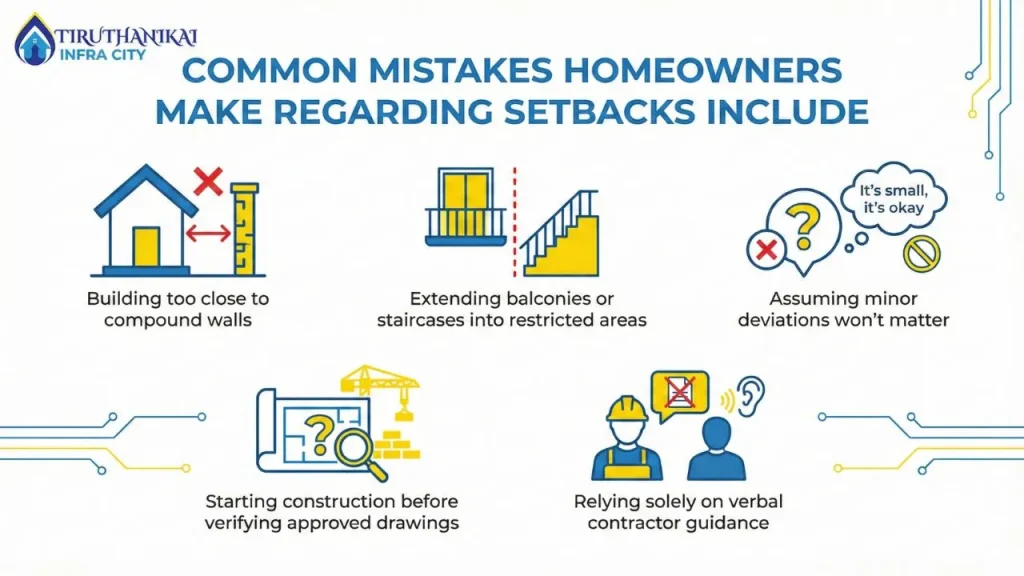
- Building too close to compound walls
- Extending balconies or staircases into restricted areas
- Assuming minor deviations won’t matter
- Starting construction before verifying approved drawings
- Relying solely on verbal contractor guidance
These mistakes often occur because setback rules feel technical and restrictive. However, ignoring them can lead to serious consequences from approval rejection to fines or resale complications. Understanding setback requirements before construction begins ensures that the building remains compliant and free from avoidable legal issues.
How Setback Violations Lead to Legal Issues
Setback violations often begin as small deviations but can quickly grow into serious legal and financial complications for homeowners. Many owners assume that a few extra feet of construction or minor design changes won’t attract attention. In reality, even slight deviations from approved setback distances can lead to compliance issues once inspections or documentation checks begin.
Local authorities treat setback compliance as a critical part of building approval because it affects urban planning, safety access, drainage systems, and neighboring properties. When a constructed building does not match the approved plan, it becomes a regulatory violation regardless of whether the mistake was intentional or accidental. This is why some of the most frequent legal issues in house construction arise from setback deviations discovered during or after construction.
In many cases, violations surface during:
- Building inspections by local authorities
- Application for completion or occupancy certificates
- Property tax registration or utility connection requests
- Home loan processing or resale documentation checks
Once a violation is identified, correcting it becomes far more difficult than preventing it during planning. Owners may be required to submit revised plans, pay penalties, or modify the constructed structure. In extreme cases, unauthorized portions of the building may need to be removed to meet regulations.
Setback violations also affect long-term property value. Buyers and banks prefer legally compliant buildings with clear approvals. If a property has unresolved deviations, resale transactions can become complicated or delayed, reducing liquidity and buyer confidence.
What happens when your building violates rules
When setback rules are not followed, the consequences extend beyond paperwork delays. Homeowners often face multiple operational and financial challenges before the issue is resolved.
Common outcomes of setback violations include:
- Rejection of completion or occupancy certificates
- Penalties and regularization charges from authorities
- Difficulty obtaining water, electricity, or drainage approvals
- Legal notices requiring structural modification
- Reduced resale value and buyer hesitation
Guidelines on building setback rules emphasize that even unintentional deviations are treated as violations under building regulations. Because of this, verifying measurements and approvals before construction begins is essential.
Ensuring setback compliance at the planning stage protects homeowners from future disputes, unexpected expenses, and delays in documentation. Preventing violations early is far simpler and far less costly than resolving them after construction is completed.
Financial Risks of Ignoring Construction Compliance
Legal and structural issues caused by skipped soil tests or setback violations don’t just create stress they create significant financial strain. Many homeowners initially ignore compliance steps to save time or reduce upfront costs, but the long-term financial impact of non-compliance is often far higher than the cost of doing things correctly from the start.
Once construction moves forward without proper verification, correcting mistakes becomes expensive. Rework, penalties, legal consultation, and approval delays can quickly inflate the total construction budget. In some cases, owners end up spending far more on fixing problems than they would have spent on preventive checks.
Key financial risks homeowners face when compliance is ignored
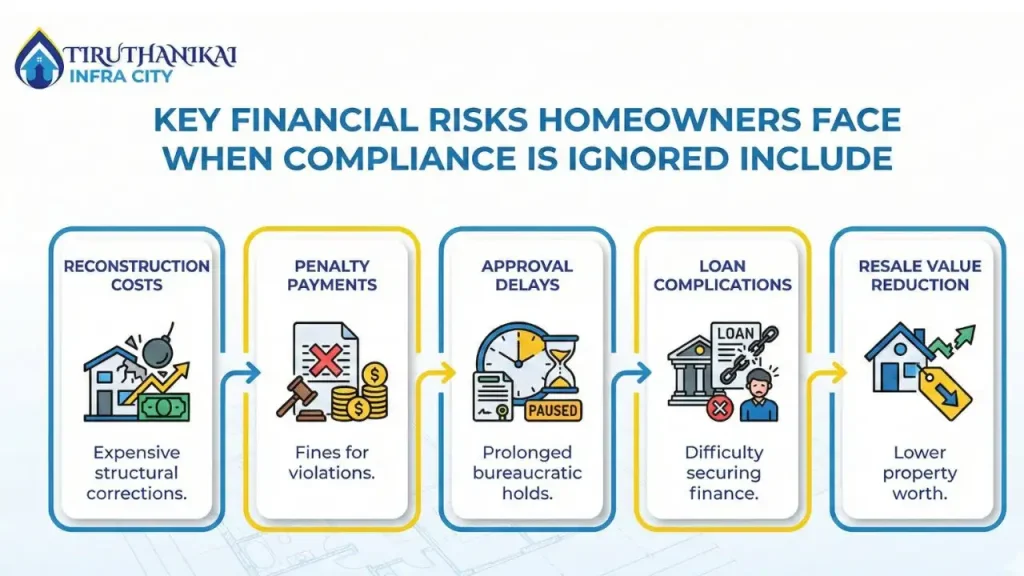
- Reconstruction costs: Modifying foundation or structural elements after errors are found
- Penalty payments: Fines for violating building regulations or approved plans
- Approval delays: Extended timelines leading to increased labor and material costs
- Loan complications: Banks may delay or reject funding without proper compliance documents
- Resale value reduction: Properties with unresolved legal issues attract fewer buyers
There are also indirect financial impacts. Delays in obtaining completion certificates can postpone occupancy or rental income. Legal disputes with neighbors or authorities may involve additional documentation and legal fees. Over time, these cumulative expenses can significantly affect the overall return on investment.
Ignoring construction compliance rarely saves money in the long run. Instead, it shifts costs into the future often at a much higher level. By addressing soil testing, setback rules, and approval checks early, homeowners protect both their investment and their peace of mind.
How Smart Owners Avoid Legal Construction Problems
Homeowners who avoid legal and structural issues during construction usually follow a clear process before building begins. Instead of rushing into construction, they treat planning and compliance as part of the investment itself. This approach reduces uncertainty and prevents costly corrections later.
Smart owners understand that legal safety starts long before the first brick is laid. They verify soil quality, confirm building approvals, and ensure setback measurements match official guidelines. By doing so, they protect both the structural integrity of the house and its future resale value.
Key practices followed by careful homeowners include:
- Conducting a professional soil test before foundation planning
- Verifying approved building plans and layout measurements
- Ensuring setback distances comply with local regulations
- Working with qualified architects and engineers
- Maintaining proper documentation for approvals and inspections
Careful Owner vs Careless Owner
| Stage | Careful Owner | Careless Owner |
| Soil testing | Conducted early | Skipped |
| Building approval | Verified | Assumed |
| Setback compliance | Checked | Ignored |
| Documentation | Properly maintained | Incomplete |
| Legal risk | Low | High |
Experienced developers and planners often emphasize the importance of following structured guidance before construction begins. Insights shared through leadership guidance highlight how early planning and compliance checks prevent long-term disputes and structural concerns.
Taking these steps does not significantly increase project cost or time. Instead, it ensures the house remains legally compliant, structurally safe, and easier to finance or sell in the future. Preventive planning always costs less than post construction correction.
Building a House Without Legal Stress
Constructing a home should be a rewarding experience, not one filled with legal notices, structural worries, or unexpected expenses. Most legal complications arise not because homeowners intend to violate rules, but because critical checks are skipped during the early planning stage. When soil testing, setback compliance, and approvals are handled properly from the start, the entire construction process becomes smoother and more predictable.
A legally compliant construction process protects homeowners in multiple ways. It ensures structural safety, simplifies approvals, and prevents future disputes with authorities or buyers. More importantly, it allows the property to retain its value and remain easy to finance, insure, or resell.
Homeowners who build without legal stress usually follow a disciplined approach:
- Confirming all technical and legal requirements before construction
- Working with qualified professionals for planning and execution
- Maintaining proper documentation at every stage
- Reviewing approvals and measurements before structural work begins
- Avoiding shortcuts that can lead to long-term complications
Many property owners who followed a structured process from the beginning report fewer delays and smoother approvals, as reflected in real client experiences. Their projects progressed without major legal interruptions because compliance was treated as a priority rather than an afterthought.
Building a house with proper planning may require a little more attention in the early stages, but it saves significant time, money, and stress later. A compliant, well documented construction process ensures that the home remains secure legally, structurally, and financially for years to come.
Final Thoughts
Many homeowners encounter avoidable complications simply because key compliance steps are overlooked during planning. Skipping soil testing or ignoring setback requirements may seem like minor shortcuts at the start, but they often lead to serious legal issues in house construction later. From approval delays and penalties to structural concerns and resale difficulties, these problems can significantly affect both finances and peace of mind.
The safest and most cost-effective approach is always preventive. Verifying soil conditions, following setback regulations, and ensuring proper approvals before construction begins helps homeowners avoid disputes, unexpected expenses, and long-term risks. When compliance becomes part of the planning process rather than an afterthought, the entire construction journey becomes smoother and more secure.
Building a home is a long-term investment. Taking the time to get technical and legal details right at the beginning ensures that the property remains structurally sound, legally compliant, and valuable for years to come.
Build Your Home Without Legal Surprises
A well planned construction process protects your investment from future disputes and costly corrections. With the right technical checks, approvals, and expert guidance, homeowners can build confidently without worrying about compliance issues later.
Explore our construction services to ensure your home is planned, approved, and built with complete legal and structural clarity from day one.
FAQs – Legal Issues in House Construction
1. Why do many house owners face legal issues during construction?
Most legal issues in house construction arise from skipping essential steps like soil testing, ignoring setback rules, or starting construction without proper approvals.
2. Is a soil test mandatory before building a house?
While not always legally mandatory in small residential projects, a soil test is strongly recommended. It ensures structural safety and supports proper foundation design.
3. What happens if I skip a soil test?
Skipping a soil test can lead to weak foundations, structural cracks, uneven settling, and costly repairs. In severe cases, it may also create safety or legal concerns.
4. What are setback rules in house construction?
Setback rules require homeowners to leave mandatory open space around the building from plot boundaries. These rules ensure ventilation, safety access, and urban planning compliance.
5. Can I build on my entire plot without setbacks?
No. Local authorities mandate setback distances based on plot size, zoning, and road width. Violating these rules can lead to penalties or rejection of approvals.
6. What legal problems can setback violations cause?
Setback violations can result in fines, rejection of occupancy certificates, loan delays, legal notices, or even demolition of unauthorized portions.
7. Do banks check soil tests and setback compliance?
Yes. Banks and financial institutions often verify approved building plans, compliance documents, and structural reports before sanctioning construction loans.
8. Can setback violations be regularized later?
In some cases, minor deviations can be regularized by paying penalties. However, major violations may require structural changes or demolition to comply with regulations.
9. How can homeowners avoid legal construction issues?
Homeowners should conduct soil testing, verify building approvals, confirm setback measurements, hire qualified professionals, and maintain complete documentation.
10. Is it expensive to follow construction compliance rules?
No. Compliance costs are usually minimal compared to the financial loss caused by penalties, reconstruction, legal disputes, or resale complications.