Enquire Now for a free site visit – call

Land has long been considered one of the most reliable forms of asset ownership. Unlike many other investments that fluctuate with market conditions, land ownership often represents stability, long-term value, and the potential for steady appreciation. For generations, individuals and families have viewed land not only as a financial investment but also as a foundation for long-term wealth.
In modern real estate markets, the role of land has expanded beyond simple ownership. Investors increasingly see land as a strategic asset that can grow in value as cities expand, infrastructure develops, and residential demand increases. This shift has transformed land from a basic investment into a long-term financial tool that supports wealth preservation.
Today, many investors recognize that land offer more than short-term returns. When approached with careful planning and long-term thinking, it can become a powerful asset that supports financial stability and even creates opportunities to pass wealth across generations. In the following sections, we will explore how evolves from a simple investment into a lasting legacy.
Why Land Ownership Has Always Been a Valuable Asset
Land has traditionally been regarded as one of the most dependable forms of asset ownership. Unlike many financial instruments that fluctuate with market cycles, It provides a tangible asset that often retains value over long periods. This stability is one of the key reasons land has historically been associated with wealth preservation and long-term financial security.
One major reason land remains valuable is its limited supply. As populations grow and urban areas expand, the demand for land continues to increase while the availability remains fixed. This imbalance between supply and demand often contributes to steady land value appreciation, especially in developing regions.
Another advantage is the relatively low maintenance requirement compared to developed properties. Landowners do not typically face ongoing operational expenses such as building maintenance or tenant management. This allows land to function as a long-term asset that can appreciate without requiring continuous management.
Several factors explain why maintained its importance across generations:
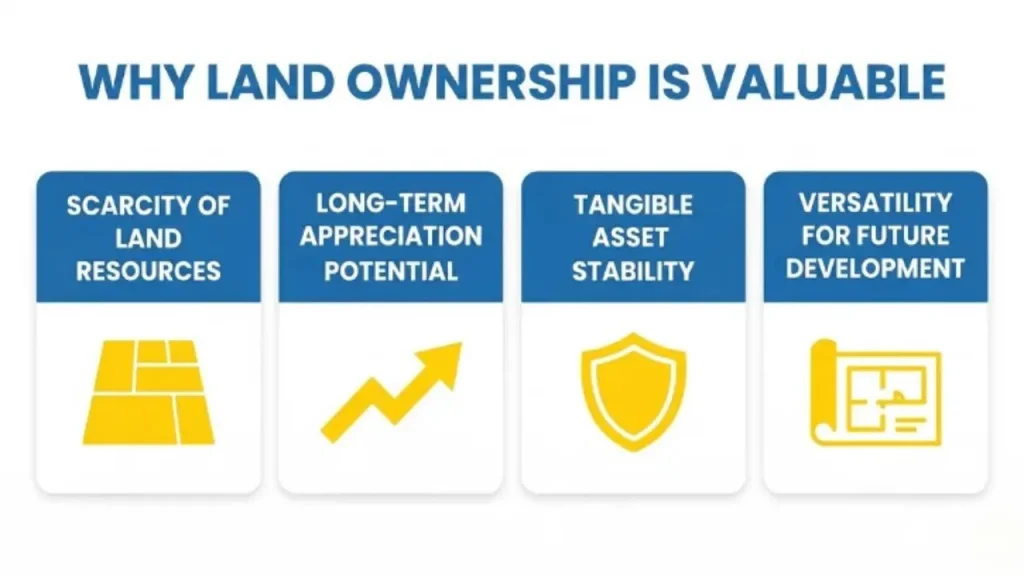
- Scarcity of land resources, especially near expanding urban areas
- Long-term appreciation potential as infrastructure develops
- Tangible asset security, offering stability in uncertain markets
- Versatility, allowing land to be developed or held for future growth
Insights shared in this land benefits article highlight how residential land ownership continues to play a key role in long-term investment strategies.
These characteristics explain why land ownership has remained a trusted asset for investors seeking lasting financial value.
How Land Ownership Supports Long-Term Wealth Creation
For many investors, land represents more than just a physical asset it is a long-term financial tool that can support wealth creation over time. Unlike short-term investments that depend heavily on market fluctuations, land ownership often benefits from gradual appreciation driven by urban expansion, infrastructure development, and increasing demand for residential and commercial spaces.
One of the main advantages of its potential for steady value growth. As cities expand and new infrastructure projects are introduced, surrounding land often becomes more attractive for development. Investors who purchase land in growing regions may benefit from this increase in demand over time.
It can also help diversify an investment portfolio. While assets like stocks or mutual funds may fluctuate frequently, land often follows a different growth pattern that is influenced by location, economic activity, and long-term development plans.
Several factors contribute to land’s ability to support long-term wealth creation:
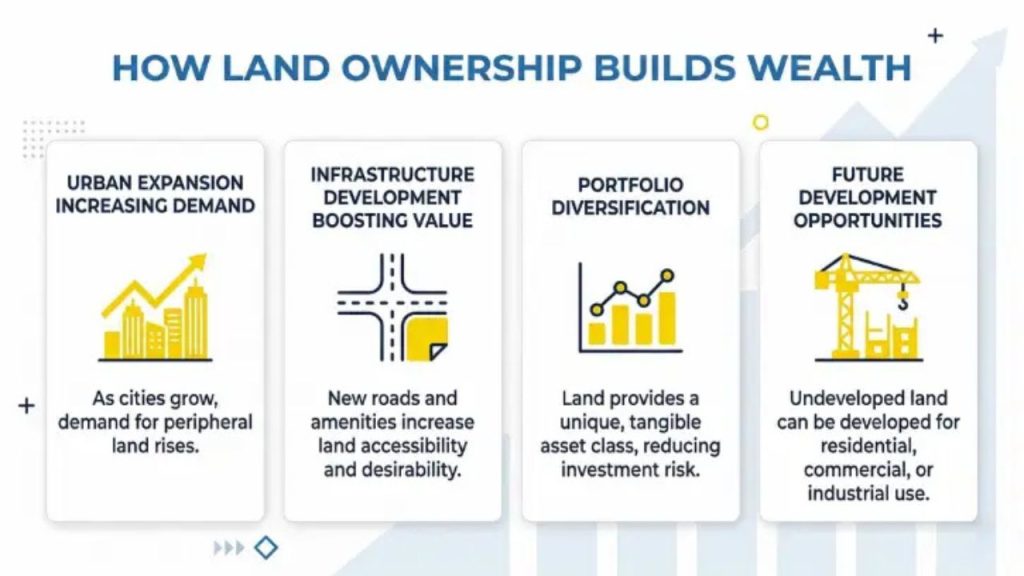
- Appreciation driven by urban expansion and infrastructure growth
- Lower maintenance costs compared to developed properties
- Portfolio diversification through tangible real estate assets
- Potential development opportunities in the future
Discussions highlighted in this financial growth article explain how can contributes to financial stability and long-term investment planning.
By combining strategic location selection with long-term planning, It can play a meaningful role in building lasting financial value.
From Investment to Legacy: The Generational Value of Land
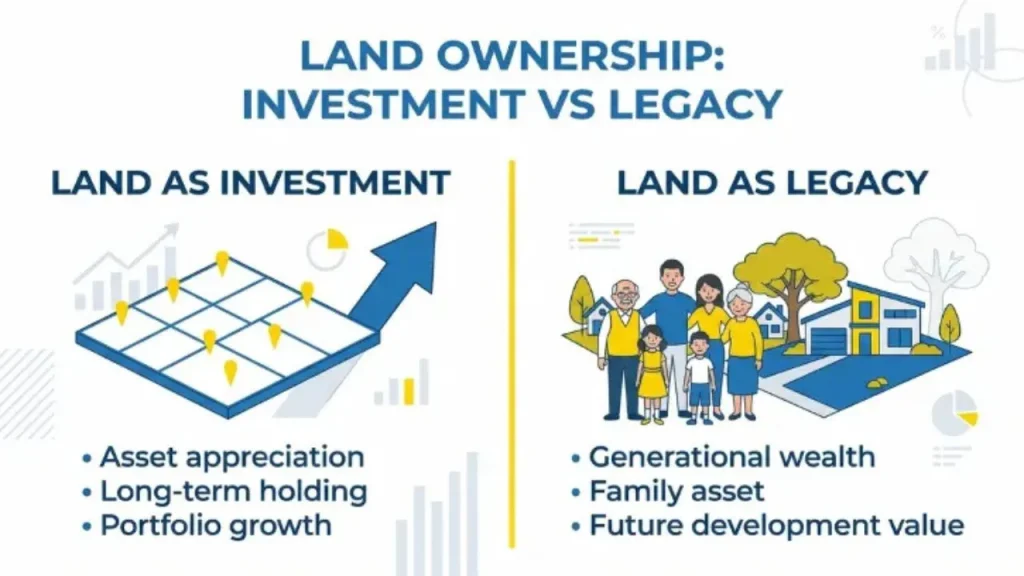
Land ownership often carries significance beyond immediate financial returns. For many families, land represents a long-term asset that can be passed down through generations, gradually transforming a single investment into a lasting legacy. Understanding the broader impact helps investors recognize its role in long-term financial planning and wealth preservation.
Unlike assets that may depreciate or lose relevance over time, land often maintains its value and can even appreciate significantly as surrounding regions develop. This long-term growth potential allows land to serve as a stable foundation for generational wealth. Families who hold land for extended periods may benefit from rising property values and expanding development opportunities.
Another advantage of is its flexibility. Land can remain undeveloped as a stored asset, be developed in the future, or be transferred to family members as part of estate planning. This versatility allows land to support financial security across multiple generations.
How Land Ownership Creates Generational Wealth
When land is retained over long periods, its value may increase due to population growth, infrastructure expansion, and urban development. This gradual appreciation allows families to pass on assets that may hold greater financial value in the future.
Insights discussed in this safe investment article highlight how land has historically been considered a reliable long-term investment for wealth preservation.
By holding land strategically, investors can transform a simple purchase into a legacy asset that supports future generations.
Land Ownership vs Other Long-Term Investments
Investors often compare different asset classes when planning for long-term financial growth. While options such as stocks, savings instruments, and precious metals remain popular, It continues to attract investors who prioritize stability and long-term appreciation. Each investment type offers different benefits, but land has unique characteristics that distinguish it from other financial assets.
One important advantage of land is its tangible nature. Unlike digital or paper-based financial instruments, land is a physical asset that cannot disappear due to market volatility. Its value is largely influenced by location, development potential, and infrastructure growth rather than short-term market movements.
Another key factor is long-term appreciation. As cities expand and infrastructure improves, land in developing areas often becomes more valuable over time. Investors who hold land in strategic locations may benefit from this gradual increase in value.
The comparison below highlights how differs from other long-term investment options.
| Investment Type | Stability | Long-Term Potential |
| Land ownership | High | Strong appreciation |
| Stocks | Market dependent | Variable returns |
| Savings | Very stable | Limited growth |
| Gold | Moderate stability | Inflation hedge |
While each investment type has its own advantages, It often appeals to investors seeking long-term asset stability combined with the potential for significant value growth.
Challenges and Considerations in Long-Term Land Ownership
While land ownership offers strong long-term potential, investors should carefully evaluate certain factors before making a purchase. Like any investment, It requires thoughtful planning and research to ensure that the asset contributes to long-term financial goals. Understanding these considerations helps investors make informed decisions and reduce potential risks.
One important factor is location analysis. The future value of land often depends on surrounding development such as infrastructure projects, transportation connectivity, and residential expansion. Land in areas with strong development prospects may experience higher appreciation over time.
Another key consideration is legal verification. Ensuring that land titles, approvals, and documentation are properly verified is essential for secure ownership. Investors should review land records and confirm that the property complies with local regulations before completing a transaction.
Investors should also recognize that land ownership typically involves a long holding period. Unlike rental properties that may generate immediate income, undeveloped land often increases in value gradually as development occurs in the surrounding area.
The table below highlights important considerations investors should evaluate when planning long-term land ownership.
| Consideration | Impact | Investor Action |
| Location analysis | Growth potential | Research development plans |
| Legal documentation | Ownership security | Verify land titles |
| Infrastructure growth | Value appreciation | Monitor development projects |
| Holding period | Long-term returns | Plan investment horizon |
By evaluating these factors carefully, investors can approach with greater confidence and strategic clarity.
Explore Insights from Real Estate Leadership and Investors
For individuals considering long-term property investments, learning from experienced professionals and market participants can provide valuable perspective. Insights from industry leaders and investor experiences often highlight how contributes to long-term financial planning and asset growth.
Leadership perspectives within real estate organizations can help investors understand how land investments are evaluated from a development and planning standpoint. Strategic decisions related to location selection, infrastructure growth, and long-term property development often influence how land assets evolve in value. Investors interested in these perspectives can explore leadership insights to understand how experienced professionals approach real estate investment strategies.
Another useful source of information comes from investor experiences. Testimonials and feedback from property buyers can provide real-world insights into how land investments perform over time. Reading client experiences can help prospective investors understand the long-term benefits and practical considerations involved in property ownership.
These insights allow individuals to view land ownership from multiple perspectives, including development planning, investor expectations, and long-term asset growth. By exploring leadership viewpoints and investor experiences, potential buyers can gain a clearer understanding of how land investments can support lasting financial value.
Final Thoughts
The long-term value of land ownership extends far beyond a simple real estate purchase. Over time, land can grow into a stable asset that supports financial security and future wealth creation. When investors approach with long-term planning, it often becomes a powerful tool for preserving and building value.
Key takeaways from the long-term power include:
- Land as a tangible asset that offers stability compared to many financial investments
- Potential appreciation over time as infrastructure and urban expansion increase land demand
- Opportunity to build generational wealth through long-term property ownership
- Strategic investment potential when land is chosen in developing locations
By combining careful research with long-term vision, It1 can evolve from a simple investment into a lasting financial legacy.
Secure Your Future Through Strategic
Strategic land investments can help create long-term financial value and stability. Investors who carefully evaluate location potential and future development trends often benefit from the lasting.
To explore professional guidance and opportunities in land investment, learn more about our Real Estate Services.
Frequently Asked Questions
1. What is land ownership in real estate investment?
It refers to purchasing and legally holding land as a financial asset. Investors often buy land for long-term appreciation, future development, or wealth preservation. Over time, land can increase in value as infrastructure and urban development expand in surrounding areas.
2. Why is land considered a strong long-term investment?
Land is often viewed as a reliable long-term investment because it has limited supply and increasing demand. Several factors support its long-term value:
1. Growing urban expansion
2. Infrastructure development
3. Rising housing demand
4. Long-term appreciation potential
These factors make land a stable asset in many real estate portfolios.
3. How does land ownership help build generational wealth?
It can help build generational wealth because land often appreciates over time. Families can pass land assets to future generations, allowing them to benefit from long-term property value growth and financial security.
4. What factors influence land value growth?
Several factors influence how land value increases over time:
1. Infrastructure development such as highways or transportation networks
2. Population growth and housing demand
3. Economic expansion in developing regions
4. Urban development plans by governments
These factors often determine long-term appreciation potential.
5. What are the advantages of owning land compared to developed property?
It typically involves lower maintenance costs compared to developed properties. Investors do not need to manage buildings, repairs, or tenants, making land easier to hold as a long-term investment asset.
6. What risks should investors consider before buying land?
Before investing in land, buyers should evaluate several factors:
1. Legal documentation and land title verification
2. Infrastructure development timelines
3. Location growth potential
4. Local regulatory approvals
Proper research and due diligence can reduce these risks.
7. Can land ownership provide financial stability?
Yes, It can contribute to financial stability because it is a tangible asset that often retains value over long periods. As surrounding regions develop, land values may increase, strengthening long-term financial security.
8. Why do investors prefer land as a long-term asset?
Many investors prefer land because it combines stability with long-term growth potential. Benefits include:
1. Limited supply of land resources
2. Potential for appreciation as cities expand
3. Lower management requirements compared to buildings
4. Portfolio diversification
These advantages make land attractive for long-term investment strategies.
9. How can investors choose the right land for investment?
Investors should focus on locations with strong growth potential, infrastructure development, and future residential demand. Studying regional development plans and connectivity improvements can help identify promising land investment opportunities.
10. Is land ownership suitable for new real estate investors?
Land ownership can be suitable for beginners if they conduct proper research and understand the long-term nature of the investment. New investors should focus on:
1. Verifying land titles and legal approvals
2. Evaluating infrastructure plans
3. Choosing locations with development potential
This approach helps ensure safer land investments.