Enquire Now for a free site visit – call

Introduction
Owning a home is a major dream for many Indian middle-class families, but rising property prices have made it increasingly challenging. In fact, the average property price in India is now about 7.5 times the annual household income, exceeding the ideal affordability benchmark and putting pressure on homebuyers’ budgets. Additionally, the EMI-to-income ratio has risen to around 61% in major cities, meaning a large portion of income goes toward housing expenses.
This is why many families are now exploring low budget house ideas that offer comfort without heavy financial stress. Smart planning, efficient design, and cost-effective materials can make homeownership achievable.
A well-planned low budget house can provide:
- Affordable construction costs for first-time homebuyers
- Lower EMIs and financial pressure for middle-class families
- Efficient use of small spaces through smart layouts
- Future expansion options as income grows
With the right approach, building a turn the dream of owning a home into a practical and achievable reality.
What is a Low Budget House?
A low budget house refers to a home designed and built with cost efficiency, smart planning, and practical design. Instead of focusing on luxury features, these homes prioritize affordability, functionality, and efficient space usage. Many middle-class families choose low budget houses because they reduce financial pressure while still providing a comfortable living environment.
In India, housing affordability remains a major concern. According to industry reports, over 60% of homebuyers look for affordable housing options, especially in growing cities and suburban areas. This trend shows that practical, budget-friendly homes are becoming more popular among first-time buyers.
Key Features of a Low Budget House
- Compact Design: Smaller layouts like 1BHK or 2BHK reduce construction costs.
- Simple Architecture: Straightforward shapes such as rectangular designs use fewer materials.
- Cost-Effective Materials: Builders often use fly ash bricks, concrete blocks, or prefabricated panels.
- Efficient Space Utilization: Open living areas and multi-purpose rooms maximize usable space.
- Lower Maintenance: Smaller homes require less upkeep and fewer repair expenses.
Typical Low Budget House Types
| House Type | Approximate Size | Estimated Budget | Example |
| 1BHK Small House | 400–600 sq.ft | ₹5 – ₹10 Lakhs | Ideal for couples or small families |
| Compact 2BHK | 600–900 sq.ft | ₹8 – ₹18 Lakhs | Suitable for middle-class families |
| Ground + 1 Budget Home | 800–1200 sq.ft | ₹12 – ₹25 Lakhs | Allows future expansion |
Example
For instance, a 600 sq.ft 2BHK house with simple design and standard materials can cost significantly less than a luxury apartment. By avoiding unnecessary decorative elements and focusing on functional spaces, families can build a comfortable home without exceeding their budget.
Why Middle-Class Families Prefer Low Budget Houses
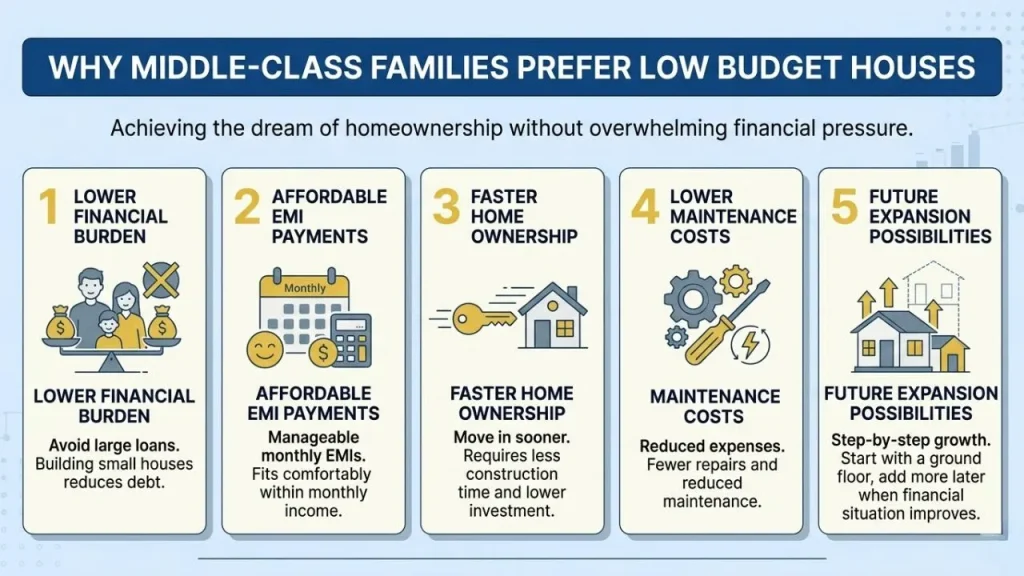
For many middle-class families, owning a home represents financial security and long-term stability. However, rising property prices and increasing construction costs make luxury homes difficult to afford. According to housing market reports, nearly 65–70% of homebuyers in India actively search for affordable housing options, especially first-time buyers [Linkedin]. This growing demand explains why low budget houses have become a popular choice among middle-income families.
It allow families to achieve their dream of homeownership without taking on overwhelming financial pressure. Instead of spending large amounts on luxury features, families focus on practical design and essential living space.
Key Reasons Families Choose Low Budget Houses
- Lower Financial Burden
Affordable construction and lower property prices help families avoid large loans. For example, building a small 2BHK house instead of buying a luxury apartment significantly reduces loan amounts. - Affordable EMI Payments
Smaller home loans result in manageable monthly EMIs. Many middle-class families prefer homes that fit comfortably within their monthly income. - Faster Home Ownership
Budget-friendly homes often require less construction time and lower investment, allowing families to move into their own house sooner. - Lower Maintenance Costs
Smaller houses require fewer repairs, less electricity, and reduced maintenance expenses. - Future Expansion Possibilities
Many families start with a ground-floor house and later add another floor when their financial situation improves.
Example
A young couple might start with a 600–700 sq.ft 1BHK or compact 2BHK home in a developing area. As their income increases, they can renovate or expand the property. This flexible approach allows families to balance comfort, affordability, and long-term financial planning.
Why Middle-Class Families Prefer Low Budget Houses
For many middle-class families, owning a home represents financial security and long-term stability. However, rising property prices and increasing construction costs make luxury homes difficult to afford. According to housing market reports, nearly 65–70% of homebuyers in India actively search for affordable housing options, especially first-time buyers. This growing demand explains why have become a popular choice among middle-income families.
It allow families to achieve their dream of homeownership without taking on overwhelming financial pressure. Instead of spending large amounts on luxury features, families focus on practical design and essential living space.
Key Reasons Families Choose Low Budget Houses
- Lower Financial Burden
Affordable construction and lower property prices help families avoid large loans. For example, building a small 2BHK house instead of buying a luxury apartment significantly reduces loan amounts. - Affordable EMI Payments
Smaller home loans result in manageable monthly EMIs. Many middle-class families prefer homes that fit comfortably within their monthly income. - Faster Home Ownership
Budget-friendly homes often require less construction time and lower investment, allowing families to move into their own house sooner. - Lower Maintenance Costs
Smaller houses require fewer repairs, less electricity, and reduced maintenance expenses. - Future Expansion Possibilities
Many families start with a ground-floor house and later add another floor when their financial situation improves.
Example
A young couple might start with a 600–700 sq.ft 1BHK or compact 2BHK home in a developing area. As their income increases, they can renovate or expand the property. This flexible approach allows families to balance comfort, affordability, and long-term financial planning.
Overall, low budget houses provide a practical path to homeownership for middle-class families, combining affordability with smart living solutions.
Planning to build a low budget house but unsure where to start? Get expert insights from the leadership team at Tiruthanikai Infra City. Visit the Tiruthanikai Infra City to learn how smart planning and the right property choices can help you build your dream home within budget.
Smart Low Budget House Ideas for Middle-Class Families
Building a does not mean compromising on comfort or functionality. With smart planning and simple design choices, middle-class families can create a home that looks modern while staying within budget. The key lies in choosing space-efficient layouts, practical designs, and affordable materials.
Here are some smart house ideas that help reduce construction costs while maintaining a comfortable living space.
Practical Low Budget House Ideas
- Compact 1BHK or 2BHK Layouts
Smaller homes reduce construction costs and require fewer materials.
Example: A 650 sq.ft 2BHK home works well for a small family. - Open Floor Plan Design
Combining the living room and dining area eliminates unnecessary walls and creates a spacious feel. - Simple Rectangular House Design
Straight walls and basic shapes reduce labor costs and material wastage. - Multi-Purpose Rooms
A single room can function as a guest room, study, or home office, saving space and money. - Vertical Expansion Planning
Families can build a ground-floor home first and add another floor later when finances improve.
Budget-Friendly House Design Options
| House Idea | Benefit | Example |
| Open Living + Dining Area | Reduces wall construction cost | Small modern homes |
| Ground + 1 Future Design | Allows expansion later | Growing families |
| Under-Stair Storage | Saves space and furniture cost | Duplex houses |
| Foldable Furniture | Maximizes small spaces | Studio homes |
Example
For instance, a 700 sq.ft compact house with an open living area, simple rectangular structure, and multi-functional furniture can significantly reduce overall construction costs while still providing a comfortable home.
Smart Low Budget House Ideas for Middle-Class Families
Building a becomes easier when families focus on practical layouts and cost-efficient design choices. Many middle-class families prefer simple structures, smart space utilization, and affordable materials instead of expensive architectural features. With the right planning, even a small home can look modern and comfortable while staying within budget.
Below are some smart low budget house ideas that help reduce construction costs and maximize space.
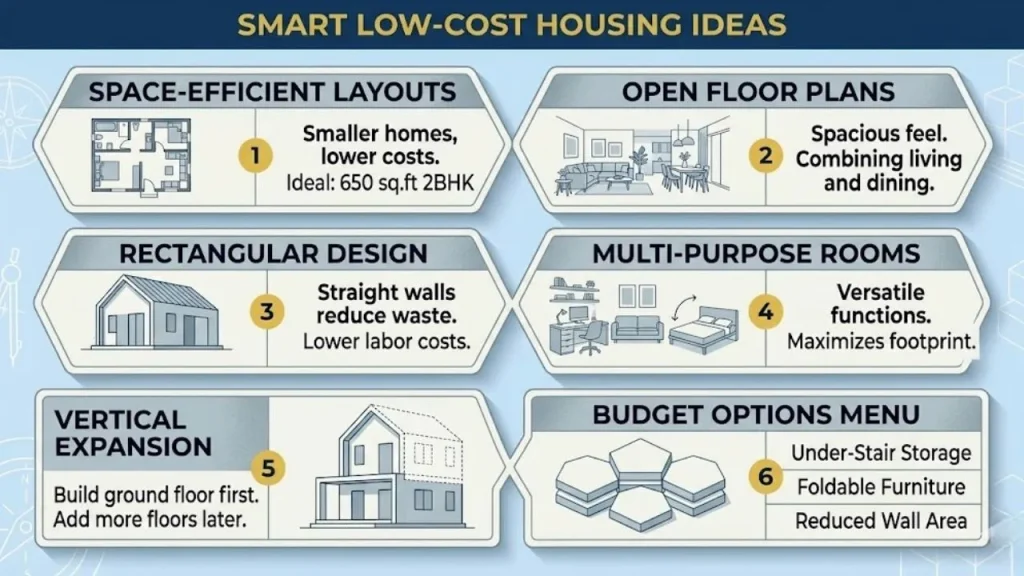
Compact 1BHK or 2BHK Layouts
Smaller homes reduce material usage and construction expenses.
Example: A 600–700 sq.ft 2BHK house works well for a small family while keeping building costs manageable.
Open Living and Dining Spaces
Combining the living room and dining area eliminates unnecessary walls and makes the house appear larger. This design also improves airflow and natural lighting.
Simple Rectangular House Design
Straightforward rectangular or square designs reduce structural complexity. Builders complete these designs faster and use fewer materials compared to complex architectural shapes.
Multi-Purpose Rooms
Rooms that serve multiple purposes help save space and money.
Example: A bedroom can also function as a study room or workspace during the day.
Vertical Expansion Planning
Many homeowners start with a ground-floor house and later add another floor when their financial situation improves. This approach spreads construction costs over time.
Smart Storage Solutions
Built-in storage areas reduce the need for additional furniture.
Example: Under-stair storage, wall shelves, and modular cabinets help maximize small spaces.
Benefits of Owning a Low Budget House
Owning a offers several advantages for middle-class families who want financial stability and long-term security. Instead of spending large amounts on luxury homes, many families prefer practical houses that meet their needs without creating financial pressure. A well-planned budget home provides comfort, ownership, and flexibility while keeping expenses under control.
According to housing market studies, affordable homes make up a large portion of property demand in India, especially among first-time buyers. This trend shows that many families value practical and cost-effective housing solutions.
Key Benefits of Owning a Low Budget House
- Lower Financial Stress
Budget-friendly homes reduce the need for large home loans. Families can manage their finances better without heavy debt. - Affordable EMI Payments
Smaller loans lead to manageable monthly payments. This helps families maintain a stable monthly budget. - Lower Maintenance Costs
Smaller homes require fewer repairs and lower utility expenses.
Example: A *700 sq.ft house uses less electricity and water compared to a large villa. - Faster Home Ownership
Many low budget homes require less construction time. Families can move into their own house sooner. - Better Financial Planning
Lower housing costs allow families to save money for education, travel, or investments. - Opportunity for Future Expansion
Homeowners can expand the house later.
Example: A family can build a ground-floor house first and add another floor later when income increases.
Example
A young couple might start with a compact 2BHK house in a developing area. Over time, they can renovate the house or expand the structure. This approach provides both affordability and long-term growth.
Expert Tips for First-Time Homebuyers
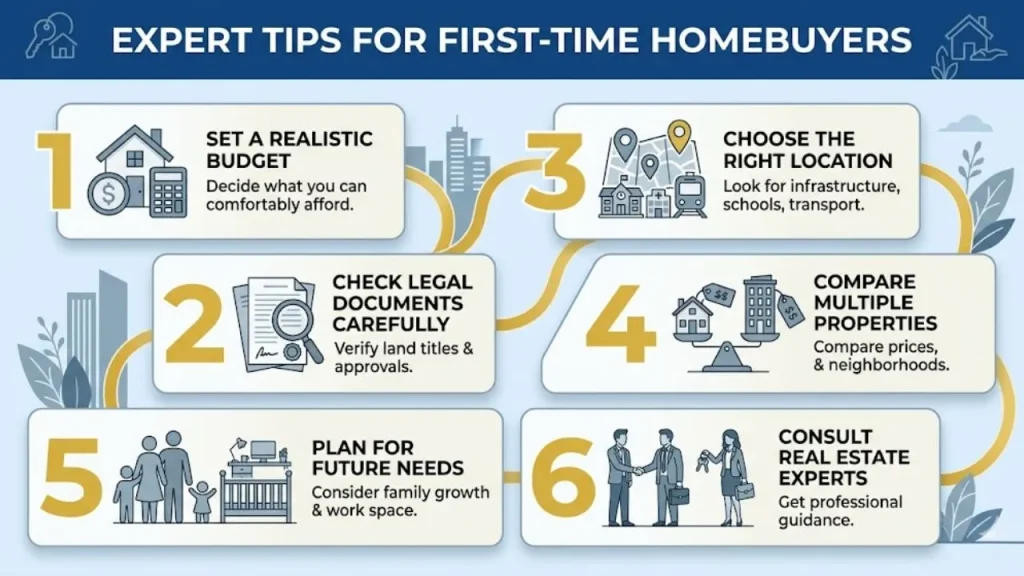
Buying your first home is an exciting milestone, but it also requires careful planning and informed decisions. Many first-time buyers, especially middle-class families, face challenges such as budgeting, legal verification, and choosing the right location. With the right guidance, you can avoid common mistakes and make a smart investment.
Experts recommend that buyers focus on financial planning, property verification, and long-term value before making a purchase. Taking time to research and plan can save both money and stress in the future.
Important Tips for First-Time Homebuyers
- Set a Realistic Budget
Decide how much you can comfortably afford before searching for a property.
Example: If your monthly income allows a safe EMI of ₹20,000, choose a property that fits within that range. - Check Legal Documents Carefully
Verify property documents such as land titles, approvals, and ownership records to avoid legal complications. - Choose the Right Location
Look for areas with good infrastructure, schools, hospitals, and transport connectivity.
Example: Developing suburbs often offer affordable land prices and future property value growth. - Compare Multiple Properties
Never finalize the first property you see. Compare prices, amenities, and neighborhood advantages before deciding. - Plan for Future Needs
Consider factors like family growth or work-from-home space.
Example: A compact 2BHK house may provide more flexibility than a small 1BHK. - Consult Real Estate Experts
Professional agents or property consultants can help you understand market prices and legal procedures.
Example
A first-time buyer who researches locations, verifies documents, and compares property options often makes a safer and more profitable investment.
Buying land today can secure your future tomorrow. Discover promising real estate opportunities at Tiruthanikai Infra City and plan your affordable dream home with the right investment.
Conclusion
Owning a home does not always require a huge budget. With the right planning, smart design choices, and careful financial management, many middle-class families can successfully build or buy a low budget house. Instead of focusing on expensive features, practical layouts and cost-effective materials can create a comfortable and functional living space.
A well-planned budget home offers several long-term benefits. It reduces financial stress, allows manageable EMIs, and provides an opportunity to expand the house in the future. Many homeowners start with a compact 1BHK or 2BHK home and gradually upgrade the property as their financial situation improves.
Choosing the right location, verifying legal documents, and planning construction wisely can make a big difference in overall costs. When families prioritize functionality and smart space utilization, even a small house can feel spacious and comfortable.
In the end, It is not just about saving money it is about building a stable, secure, and practical home for the future.
Frequently Asked Question
1. What is a low budget house?
It house is a home designed and built using cost-effective materials, simple layouts, and efficient space planning to reduce construction and purchase costs.
2. How much does it cost to build a low budget house in India?
The cost depends on location, materials, and house size. Small budget homes in India can range from ₹5 lakh to ₹20 lakh or more.
3. What size house is ideal for a low budget home?
Compact homes such as 1BHK or small 2BHK houses (500–900 sq.ft) are ideal for budget-friendly construction.
4. How can I reduce the construction cost of my house?
You can reduce costs by choosing simple designs, using affordable materials, avoiding unnecessary decorative elements, and planning space efficiently.
5. Is it possible to build a house under ₹10 lakh?
Yes, in some locations a small house with basic design and affordable materials can be built under ₹10 lakh.
6. Which materials are best for low budget house construction?
Common cost-effective materials include fly ash bricks, concrete blocks, prefabricated panels, and locally available materials.
7. Are low budget houses durable?
Yes. If builders use quality materials and proper construction methods, budget homes can remain durable for many years.
8. Can a low budget house be expanded later?
Yes. Many homeowners start with a ground-floor house and add additional floors later when finances improve.
9. Is buying land cheaper than buying a ready house?
In some cases, buying land and building a house can be more affordable because homeowners control design and construction costs.
10. Is a low budget house a good investment?
Yes. Affordable houses often attract strong demand from buyers and renters, making them a practical long-term investment option.