Enquire Now for a free site visit – call

Introduction
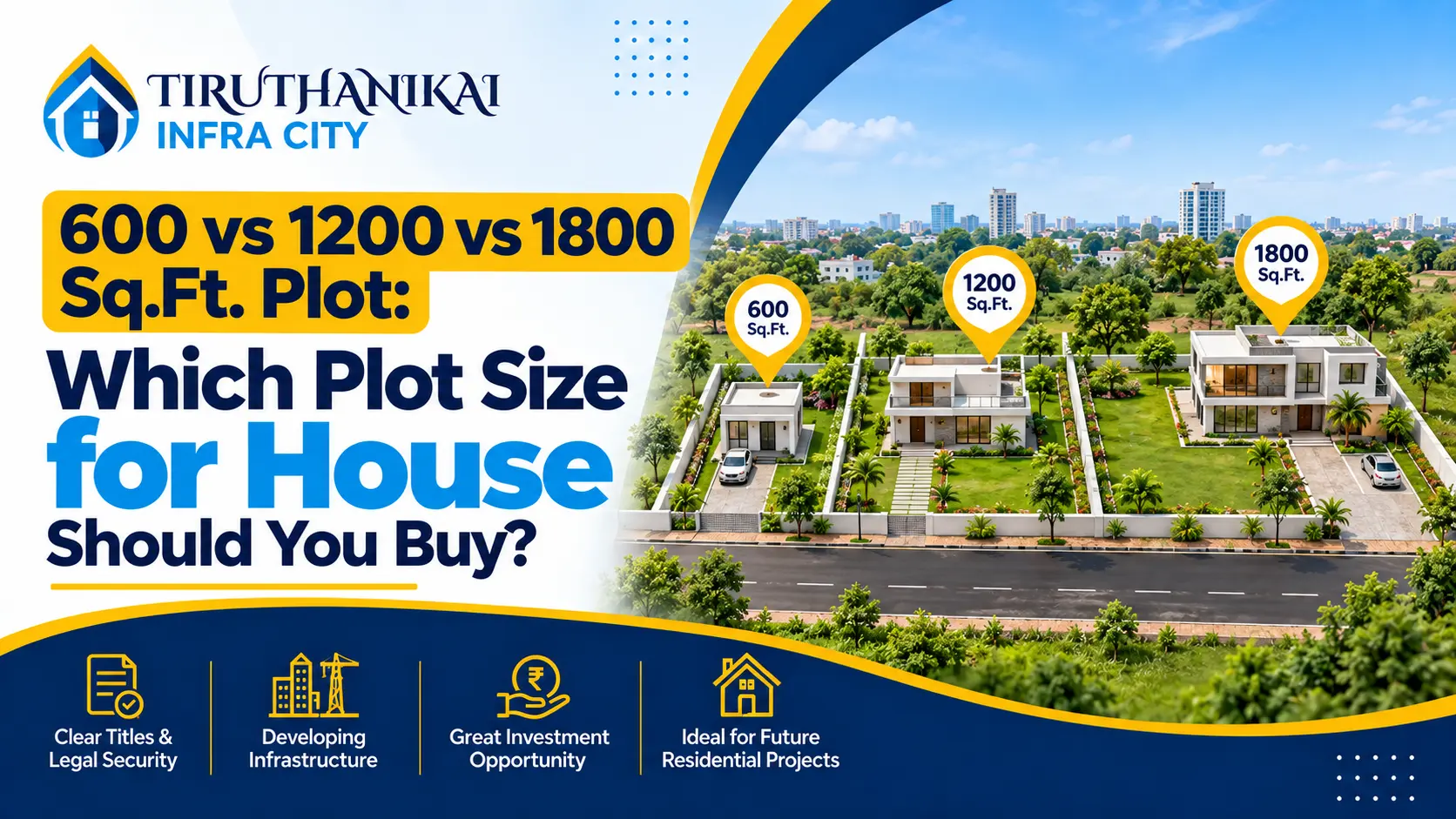
Buying a residential plot in Chennai is a major decision, but choosing the right plot size for house can be surprisingly confusing. Should you choose a compact 600 sq. ft. plot, a more flexible 1200 sq. ft. plot, or a spacious 1800 sq. ft. option?. The answer depends on more than your budget. Our experience in helping property buyers make informed decisions also shows why plot dimensions can influence your house layout, number of bedrooms, parking, open space, construction costs, and future expansion. Household needs also vary significantly across India. The Census of India provides household-size data across categories from one member to seven or more, highlighting that housing requirements are not one-size-fits-all. In this guide, we compare 600, 1200, and 1800 sq.ft. plots to help you choose based on your space, family, budget, and future plans.
What Is the Ideal Plot Size for a House?
There is no single ideal plot size for a house because requirements vary by family, budget and lifestyle. A 600 sq. ft. plot can suit a couple or compact home, while a 1200 sq. ft. plot offers more flexibility for bedrooms, parking and open space. An 1800 sq. ft. plot provides greater room for larger families and future expansion. If you’re exploring different plot sizes, you can also view our ongoing residential projects to compare available options. Plot dimensions, setbacks and local building regulations also affect the usable space. For example, two 1,200 sq.ft. plots can have different layouts depending on their frontage and depth. Choose a plot that supports your current needs without stretching your overall budget.
Does Bigger Plot Size Always Mean a Better House?
No, a bigger plot does not always mean a better house. A larger plot size for house gives you more space, but good planning matters more than area alone. For example, a 600 sq.ft. plot can support a compact home, while a 1200 sq.ft. plot can provide more flexibility for bedrooms, parking and open space. An 1800 sq.ft. plot offers even more room, but it also increases land cost, construction potential and maintenance needs. Plot dimensions matter too. A 30 × 40 ft plot and a 20 × 60 ft plot both measure 1,200 sq.ft., yet their layouts can differ significantly. Choose a plot based on your family size, budget, lifestyle, parking needs and future plans—not simply the largest available area.
What Factors Should You Consider Before Choosing a Plot?
Choosing the right plot size for house involves more than comparing the price per sq.ft. Before you buy, look at the plot’s size, dimensions, location and long-term suitability. A 1,200 sq.ft. plot, for example, can offer very different planning options depending on whether it measures 30 × 40 ft or 20 × 60 ft.
Consider these key factors:
- Family size: Plan space for your current household and future needs.
- Budget: Include land cost, registration, construction and other project expenses.
- Plot dimensions: Check frontage, depth and plot shape before finalising.
- Building rules: Verify setbacks, road width and permitted construction.
- Parking: Ensure the plot can accommodate your required vehicles.
- Location: Check road access, drainage, water, electricity and nearby facilities.
- Future plans: Consider additional bedrooms, another floor or outdoor space.
If you also need support with planning and construction, you can explore our home construction support services. A well-planned plot size for house should match your lifestyle, budget and future goals.
Plot Area vs Built-Up Area vs Carpet Area
Understanding the difference between plot area, built-up area and carpet area helps you choose the right plot size for house. These three measurements describe different parts of your property.
- Plot Area: The total land you own. For example, a 30 × 40 ft plot has 1,200 sq.ft. of plot area.
- Built-Up Area: The floor space covered by the building, including the internal walls and other covered areas. For example, you might construct 900 sq.ft. on a 1,200 sq.ft. plot, depending on setbacks and local rules.
- Carpet Area: The usable floor space inside the home. For example, a 900 sq.ft. built-up area may provide around 700–800 sq.ft. of usable carpet area, depending on the wall thickness and layout.
So, 1,200 sq.ft. plot ≠ 1,200 sq.ft. house. Always check all three measurements before finalising your home plan.
How to Choose the Right Plot Size for Your Family
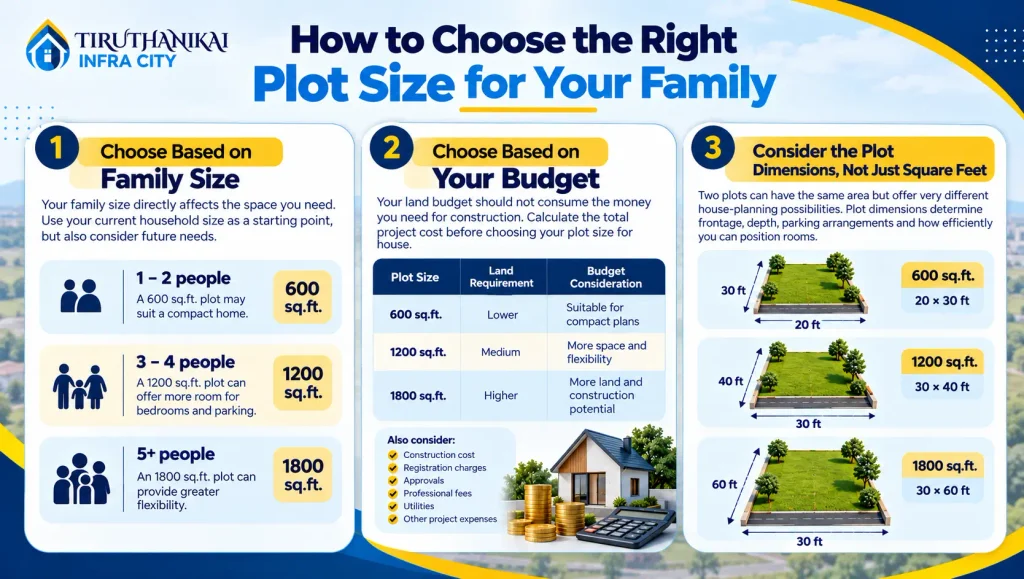
Choosing the right plot size for house starts with your family’s current needs and future plans. India’s Census 2011 groups households by size from one member to seven or more, showing how differently families can be structured. Instead of choosing a plot simply because it looks affordable, consider three things: family size, budget and plot dimensions. A couple may manage comfortably with a compact plot, while a growing family may need additional bedrooms, parking and open space. Your budget should cover both land and construction. Also, check whether the plot’s shape and dimensions support your planned house layout. These factors help you choose a plot that works for today without creating problems tomorrow.
Choose Based on Family Size
Your family size directly affects the space you need. Census 2011 records households across different sizes, including 1, 2, 3, 4, 5, 6 and 7+ members. Use your current household size as a starting point, but also consider future needs.
- 1–2 people: A 600 sq.ft. plot may suit a compact home.
- 3–4 people: A 1200 sq.ft. plot can offer more room for bedrooms and parking.
- 5+ people: An 1800 sq.ft. plot can provide greater flexibility.
For example, a couple may prioritise a bedroom, living area and parking, while a family with children may need extra bedrooms, storage and outdoor space. Think beyond today’s requirements before finalising your plot size for house.
Choose Based on Your Budget
Your land budget should not consume the money you need for construction. Calculate the total project cost before choosing your plot size for house.
| Plot Size | Land Requirement | Budget Consideration |
| 600 sq.ft. | Lower | Suitable for compact plans |
| 1200 sq.ft. | Medium | More space and flexibility |
| 1800 sq.ft. | Higher | More land and construction potential |
Remember that construction costs depend on the built-up area, materials, design and finishes. Add registration, approvals, professional fees, utilities and other project expenses to your calculation. A larger plot may offer more possibilities, but it also requires a larger overall budget.
Consider the Plot Dimensions, Not Just Square Feet
Two plots can have the same area but offer very different house-planning possibilities. Plot dimensions determine frontage, depth, parking arrangements and how efficiently you can position rooms.
For example:
- 600 sq.ft.: 20 × 30 ft
- 1200 sq.ft.: 30 × 40 ft
- 1800 sq.ft.: 30 × 60 ft
A 30 × 40 ft plot gives you a different layout opportunity from a 20 × 60 ft plot, even though both contain 1200 sq.ft. A narrow frontage may make parking or room placement more challenging. Always check the plot’s length, width, access, setbacks and applicable building rules before deciding your plot size for house.
Does Plot Shape Matter When Choosing a Plot Size for House?
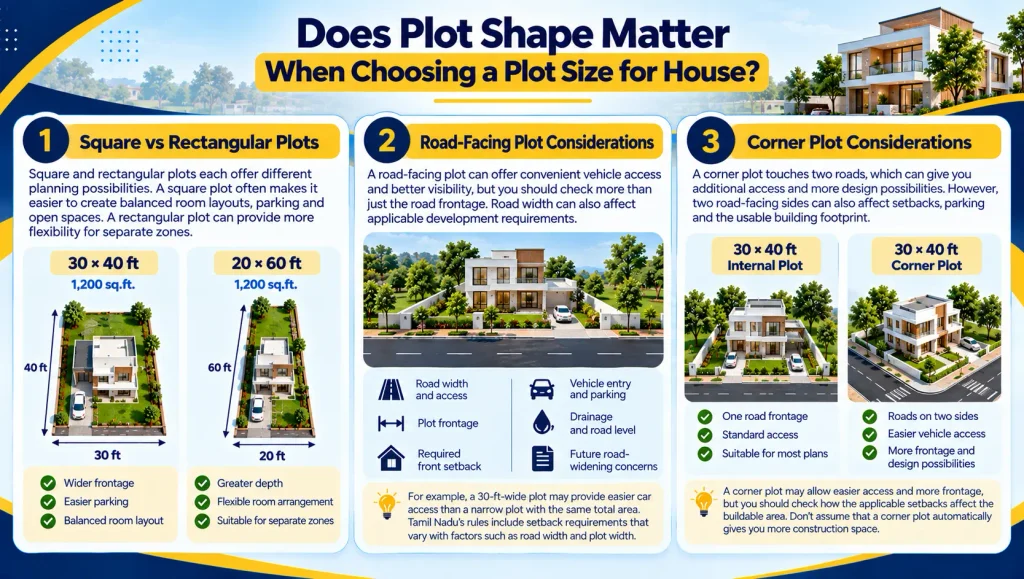
Yes. Plot shape matters almost as much as total area when planning a house. Two plots with the same square footage can offer very different layouts. For example, a 30 × 40 ft plot and a 20 × 60 ft plot both measure 1,200 sq. ft., but their frontage, parking and room-placement options differ. Plot dimensions also affect how setbacks and access requirements fit into your plan. Tamil Nadu’s development rules specify requirements linked to road width, plot width and setbacks, so you should check the applicable rules before finalizing a property.
Square vs Rectangular Plots
Square and rectangular plots each offer different planning possibilities. A square plot often makes it easier to create balanced room layouts, parking and open spaces. A rectangular plot can provide more flexibility when you want separate zones for bedrooms, living areas or a garden.
For example, both of these plots provide 1,200 sq.ft.:
- 30 × 40 ft
- 20 × 60 ft
The 30 × 40 ft plot provides wider frontage, while the 20 × 60 ft plot provides greater depth. That difference can change your parking position, room arrangement and ventilation options. Before buying, ask an architect to test your preferred house plan against the actual dimensions, setbacks and applicable local rules. These differences should be considered when evaluating the right plot size for house for your planned home.
Road-Facing Plot Considerations
A road-facing plot can offer convenient vehicle access and better visibility, but you should check more than just the road frontage. Road width can also affect applicable development requirements.
Before buying, check:
- Road width and access
- Plot frontage
- Required front setback
- Vehicle entry and parking
- Drainage and road level
- Future road-widening concerns
For example, a 30-ft-wide plot may provide easier car access than a narrow plot with the same total area. Tamil Nadu’s rules include setback requirements that vary with factors such as road width and plot width. These factors can affect whether the selected plot size for house works well for parking and home construction.
Corner Plot Considerations
A corner plot touches two roads, which can give you additional access and more design possibilities. However, two road-facing sides can also affect setbacks, parking and the usable building footprint.
For example, imagine two 1,200 sq.ft. plots:
- 30 × 40 ft internal plot: One road frontage
- 30 × 40 ft corner plot: Roads on two sides
The corner plot may allow easier vehicle access and more frontage, but you should check how the applicable setbacks affect the buildable area. Don’t assume that a corner plot automatically gives you more construction space. Get the site dimensions and applicable building rules checked before you purchase. Therefore, consider setbacks and access when choosing the right plot size for house.
Plot Size for House: Common Mistakes to Avoid
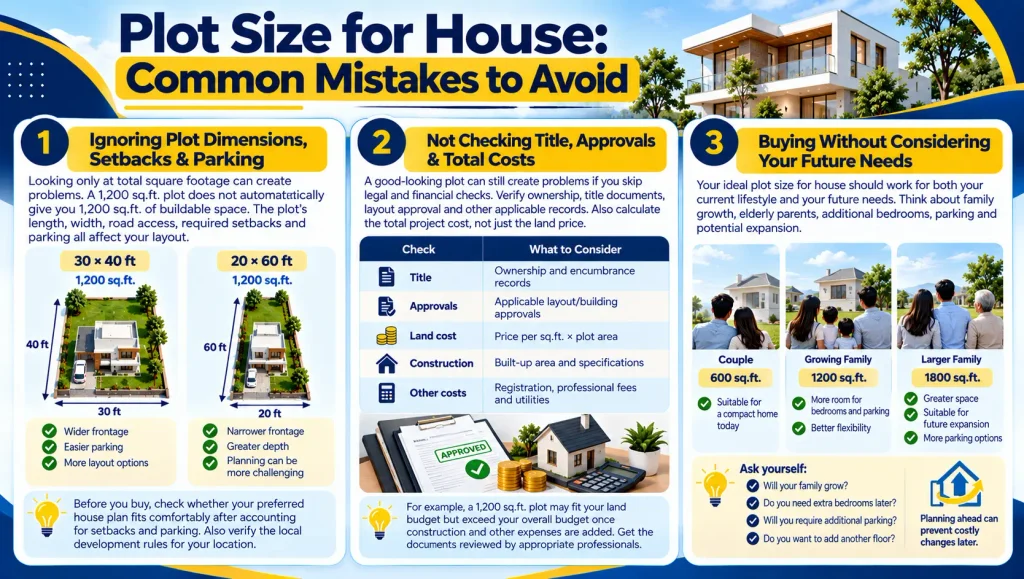
Choosing the right plot size for house involves more than comparing the price per sq.ft. Many buyers focus on land area and overlook dimensions, setbacks, parking, legal documents and future requirements. These details can affect how much space you can actually use and how comfortably your home will function. For example, a 1,200 sq.ft. plot may look spacious on paper, but a narrow frontage or required setbacks can reduce your practical building options. Before purchasing, check the plot dimensions, approvals, total project costs and future family needs. A little planning before buying can help you avoid expensive changes later.
Ignoring Plot Dimensions, Setbacks & Parking
Looking only at total square footage can create problems during house planning. A 1,200 sq.ft. plot does not automatically give you 1,200 sq.ft. of buildable space. The plot’s length, width, road access and required setbacks all affect your layout. Parking also needs dedicated space.
For example, two 1,200 sq.ft. plots can have very different dimensions:
- 30 × 40 ft: Wider frontage and potentially easier parking
- 20 × 60 ft: Narrower frontage with greater depth
Before you buy, check whether your preferred house plan fits comfortably after accounting for setbacks and parking. Local development rules also influence the permissible building footprint, so verify the applicable requirements for your location. These checks are essential when deciding whether a plot size for house will work for your planned layout.
Not Checking Title, Approvals & Total Costs
A good-looking plot can still create problems if you skip legal and financial checks. Verify ownership, title documents, layout approval and other applicable records before making a commitment. Also calculate the total project cost, not just the land price.
| Check | What to Consider |
| Title | Ownership and encumbrance records |
| Approvals | Applicable layout/building approvals |
| Land cost | Price per sq.ft. × plot area |
| Construction | Built-up area and specifications |
| Other costs | Registration, professional fees and utilities |
For example, a 1,200 sq. ft. plot may fit your land budget but exceed your overall budget once construction and other expenses enter the calculation. Get the documents reviewed by appropriate professionals before purchasing. These costs should be included when evaluating the overall affordability of your plot size for house.
Buying Without Considering Your Future Needs
Your ideal plot size for house should work for both your current lifestyle and your foreseeable future. Think about family growth, elderly parents, additional bedrooms, parking and potential expansion before choosing a plot. For example, a couple may find a 600 sq. ft. plot comfortable today. If they later need two additional bedrooms, more parking or a home office, that same space may feel restrictive. A 1,200 or 1,800 sq. ft. plot could offer more planning flexibility, depending on the budget and applicable regulations.
Ask yourself:
- Will your family grow?
- Do you need extra bedrooms later?
- Will you require additional parking?
- Do you want to add another floor?
Planning ahead can prevent costly changes later.
Conclusion
Choosing between a 600, 1200, or 1800 sq. ft. plot depends on more than the number on the property brochure. Consider your family size, budget, plot dimensions, parking needs, applicable building rules, and future plans before making a decision. A smaller plot can support compact living, while a larger plot can provide more flexibility for bedrooms, open space and future expansion. Most importantly, check the title, approvals, setbacks and total project cost before you commit. The right plot size for house is the one that fits your lifestyle today while giving you enough flexibility for tomorrow. Ready to find the right plot for your needs? Explore our ongoing residential projects and take the next step toward building your dream home. Ready to find the right plot for your needs? Explore approved residential plots in your preferred location and take the next step toward building your dream home.
Frequently Asked Questions
1.What is the best plot size for a house?
There is no single best plot size for house. The ideal size depends on your family, budget, house plan, parking needs, plot dimensions, and local regulations. Generally, 600 sq.ft. suits compact homes, 1200 sq.ft. offers greater flexibility for families, while 1800 sq.ft. provides more space for larger homes and future expansion.
2. Is 600 sq. ft. enough to build a house?
Yes, a 600 sq.ft. plot can suit a compact 1 BHK or 2 BHK with efficient planning. However, plot dimensions, setbacks, parking, road width and local regulations affect usable space. Before buying, consult an architect to confirm whether the plot size for house meets your requirements.
3. Is 1200 sq. ft. enough for a 3 BHK?
Yes, a 1200 sq.ft. plot can accommodate a 3 BHK with efficient planning. The final design depends on plot dimensions, setbacks, permitted floor area and room sizes. Check local regulations and consult an architect before finalising the plan to ensure the plot size for house meets your requirements.
4. Is an 1800 Sq. Ft. Plot Too Large for a Small Family?
Not necessarily. An 1800 sq.ft. plot can suit a small family if the budget allows. It provides extra space for parking, a garden, larger rooms or future expansion. However, a larger plot also means higher land costs and potentially higher maintenance expenses over time.
5. What Plot Size Is Suitable for a 2 BHK?
A 2 BHK can fit on different plot sizes depending on the layout and local rules. A 600 sq.ft. plot may support a compact 2 BHK, while 1200 sq.ft. offers more flexibility. Consider dimensions, setbacks, parking and future needs when choosing the right plot size for house.
6.What Plot Size Is Suitable for a 3 BHK?
A 3 BHK can fit on different plot sizes depending on the layout and local regulations. A 1200 sq.ft. plot may support a compact 3 BHK, while a larger plot offers greater flexibility. Consider plot dimensions, setbacks, parking, room sizes and future needs when choosing your plot size for house.
7.Does Plot Shape Matter?
Yes. Plot shape matters because two plots with the same area can offer very different house-planning options. For example, a 30 × 40 ft and a 20 × 60 ft plot both measure 1,200 sq.ft., but their frontage, room layout, parking and open-space options can differ. Always check the dimensions before buying.
8. Should I Buy a Bigger Plot or Build a Bigger House?
Land area and built-up area serve different purposes. A bigger plot provides more open space and future flexibility, while a bigger house offers more indoor living space. Consider your budget, family needs, parking, future plans and local regulations. A balanced plot size for house can help you use space efficiently.
9. How do I calculate the cost of a plot?
To calculate the basic plot cost, use this formula: Plot cost = Plot area × land price per sq.ft. For example, a 1,200 sq.ft. plot priced at ₹3,000 per sq.ft. would cost ₹36 lakh. Also consider registration, approval and other applicable charges.
10.What should I check before buying a plot?
Before buying a plot, check title, ownership, encumbrance records, approvals, road access, drainage, utilities, road width, dimensions and setbacks. Review construction feasibility, total project costs and local regulations. Get the documents verified by a qualified professional to ensure the plot size for house suits your construction plans.