Enquire Now for a free site visit – call

Introduction
Buying a property for sale is one of the biggest financial decisions you’ll make, yet many buyers end up paying more than necessary because they lack market knowledge, skip research, or make emotional decisions. Overpaying can reduce future returns and limit the overall value of your investment. The good news is that a strategic approach can help you identify the right property at the right price.
Before making a purchase, consider these market realities:
- Chennai’s residential market recorded over 22,000 housing sales in 2025, reflecting strong buyer demand and increasing competition.
- Infrastructure projects such as Metro Rail Phase II and industrial corridor developments continue to influence property prices.
- Properties with legal approvals and strong connectivity often deliver better long-term appreciation and resale value.
- Buyers who compare multiple properties and evaluate market trends typically make more cost-effective investment decisions.
This guide will help you choose the right property for sale without overpaying while maximizing your long-term investment potential.
Why Buyers Often Overpay for Property for Sale
Many buyers searching for a property for sale focus on securing a deal quickly, but this approach can lead to overpaying. Without proper research and market analysis, buyers may purchase properties at inflated prices, reducing their future returns and investment potential.
Several common factors contribute to overpaying in the real estate market:
Common Reasons Buyers Pay More Than Necessary
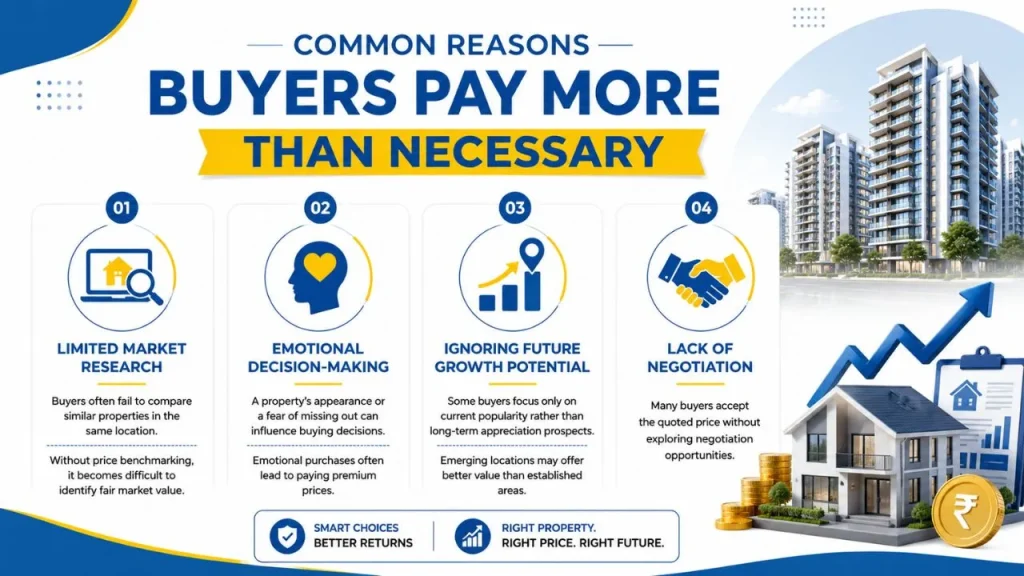
- Limited Market Research
- Buyers often fail to compare similar properties in the same location.
- Without price benchmarking, it becomes difficult to identify fair market value.
- Emotional Decision-Making
- A property’s appearance or a fear of missing out can influence buying decisions.
- Emotional purchases often lead to paying premium prices.
- Ignoring Future Growth Potential
- Some buyers focus only on current popularity rather than long-term appreciation prospects.
- Emerging locations may offer better value than established areas.
- Lack of Negotiation
- Many buyers accept the quoted price without exploring negotiation opportunities.
Factors That Lead to Overpayment
| Factor | Impact on Buyers |
| Poor Market Research | Higher purchase price |
| Emotional Buying | Reduced investment returns |
| Ignoring Comparable Properties | Difficulty assessing value |
| Lack of Negotiation | Missed savings opportunities |
| Overlooking Hidden Costs | Increased overall expenses |
Example
Imagine two buyers interested in a plot in the same locality. One buyer compares nearby properties, studies recent transactions, and negotiates the price. The other purchases immediately without research. Even a small difference in price per square foot can result in significant savings and better long-term returns.
How to Avoid Overpaying
- Compare multiple properties
- Research local market trends
- Verify legal approvals
- Assess future infrastructure developments
- Negotiate confidently
By understanding these common mistakes, buyers can identify a fairly priced property for sale and make smarter, more profitable real estate investments.
Don’t miss the opportunity to own a high-potential property in Chennai. Visit Tiruthanikai Infra City to explore well-planned developments in emerging investment corridors.
How to Verify the Legal Status of a Property for Sale
Before purchasing a property for sale, verifying its legal status is essential. A property may look attractive and offer a competitive price, but incomplete documentation or legal issues can create significant problems in the future. Proper verification helps protect your investment and ensures a smooth ownership experience.
Important Documents to Check
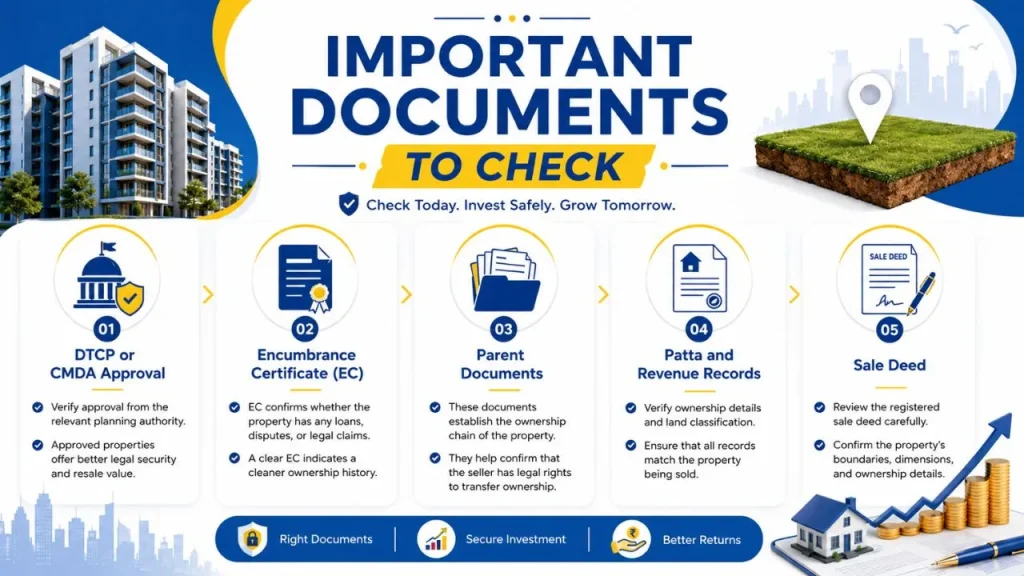
- DTCP or CMDA Approval
- Verify whether the property has received approval from the relevant planning authority.
- Approved properties generally offer better legal security and resale value.
- Encumbrance Certificate (EC)
- The(EC) confirms whether the property has any existing loans, disputes, or legal claims.
- A clear EC indicates a cleaner ownership history.
- Parent Documents
- These documents establish the ownership chain of the property.
- They help confirm that the seller has legal rights to transfer ownership.
- Patta and Revenue Records
- Verify ownership details and land classification.
- Ensure that all records match the property being sold.
- Sale Deed
- Review the registered sale deed carefully.
- Confirm the property’s boundaries, dimensions, and ownership details.
Example
Imagine purchasing a plot without checking the encumbrance certificate. Later, you discover that the property has an unresolved loan attached to it. A simple document verification process could have prevented this costly mistake.
Quick Legal Verification Checklist
- Verify DTCP or CMDA approval
- Check the Encumbrance Certificate
- Review parent documents
- Confirm Patta details
- Examine the registered sale deed
- Verify property tax receipts
A legally verified property for sale offers greater peace of mind, protects your capital, and helps ensure a secure and hassle-free real estate investment.
Key Factors to Evaluate Before Buying a Property for Sale
Purchasing a property for sale involves more than finding an attractive price. A successful investment depends on careful evaluation of several factors that influence both current value and future returns. Taking the time to assess these elements can help you avoid costly mistakes and make a more informed decision.
Important Factors to Consider
- Location and Connectivity
- Properties near major roads, metro stations, IT parks, and industrial hubs often experience higher demand.
- Good connectivity improves convenience and boosts appreciation potential.
- Legal Approvals and Documentation
- Always verify DTCP or CMDA approvals, ownership records, and encumbrance certificates.
- Legal clarity protects your investment and simplifies future resale.
- Developer Reputation
- Research the builder’s track record, completed projects, and customer reviews.
- Reputable developers generally deliver better quality and transparency.
- Infrastructure Development
- Upcoming metro projects, highways, and commercial developments can increase property values.
- Infrastructure growth often attracts new residents and businesses.
- Amenities and Neighborhood Facilities
- Schools, hospitals, shopping centers, and recreational facilities enhance a property’s desirability.
Example
Imagine choosing between two similarly priced plots. One is located near an upcoming metro corridor with DTCP approval, while the other sits in a remote area with limited development plans. The first property is likely to offer stronger appreciation and better resale opportunities over time.
Quick Buyer Checklist
- Verify legal approvals
- Evaluate connectivity
- Research future development plans
- Check developer credibility
- Assess nearby amenities
A well-researched property for sale can provide not only a secure investment but also strong long-term growth, helping buyers maximize value without paying more than necessary.
Red Flags That Indicate a Property May Be Overpriced
Not every property for sale offers fair value. Some properties carry inflated prices that do not align with market conditions, location advantages, or future growth potential. Recognizing these warning signs can help buyers avoid overpaying and make more profitable investment decisions.
Common Signs of an Overpriced Property
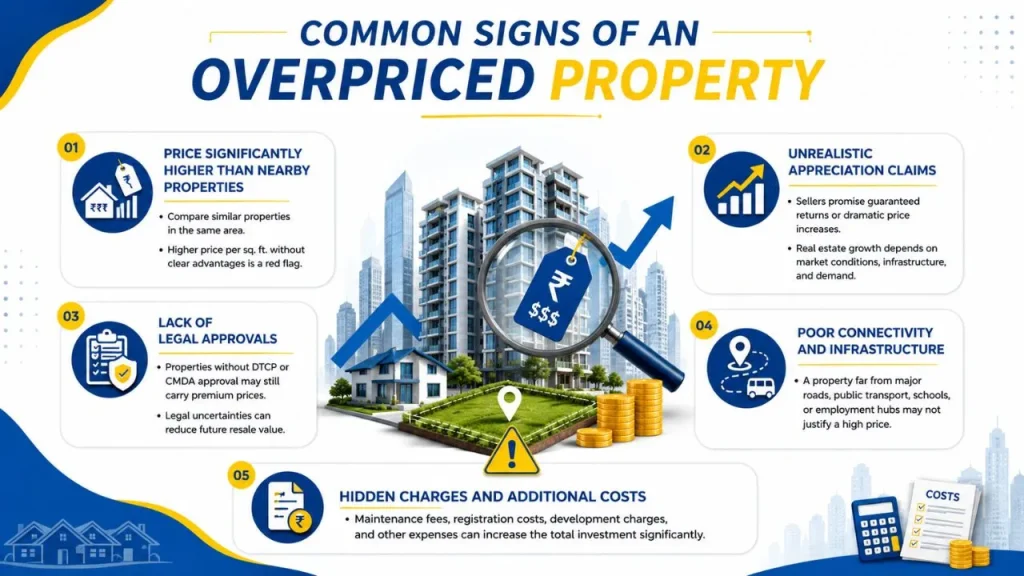
- Price Significantly Higher Than Nearby Properties
- Compare similar properties in the same area.
- If the price per square foot is noticeably higher without clear advantages, caution is necessary.
- Unrealistic Appreciation Claims
- Sellers sometimes promise guaranteed returns or dramatic price increases.
- Real estate growth depends on market conditions, infrastructure, and demand.
- Lack of Legal Approvals
- Properties without DTCP or CMDA approval may still carry premium price tags despite added risks.
- Legal uncertainties can reduce future resale value.
- Poor Connectivity and Infrastructure
- A property located far from major roads, public transport, schools, or employment hubs may not justify a high price.
- Hidden Charges and Additional Costs
- Maintenance fees, registration costs, development charges, and other expenses can increase the total investment significantly.
Example
Suppose a seller offers a plot in a developing area at a price similar to properties near an established industrial corridor such as Oragadam. If both locations do not share the same infrastructure, connectivity, or growth prospects, the higher-priced property may not represent good value.
Quick Overpricing Checklist
- Compare nearby property prices
- Verify legal approvals
- Evaluate infrastructure development
- Review price per square foot
- Assess future demand potential
A smart buyer looks beyond the advertised price and carefully evaluates the overall value of a property for sale. This approach helps avoid costly mistakes and ensures a stronger return on investment.
Common Mistakes Buyers Make When Purchasing Property for Sale
Buying a property for sale is a significant investment, but many buyers make avoidable mistakes that can affect their financial returns and ownership experience. While attractive pricing and promotional offers may seem tempting, overlooking critical factors can lead to costly consequences later.
Common Mistakes to Avoid
- Skipping Market Research
- Many buyers fail to compare similar properties in the same area.
- Without market analysis, it becomes difficult to determine whether the property is fairly priced.
- Ignoring Legal Verification
- Some buyers proceed without checking DTCP or CMDA approvals, ownership records, or encumbrance certificates.
- Legal issues can delay ownership transfers and reduce resale value.
- Focusing Only on Price
- A lower price does not always mean a better investment.
- Properties in developing locations often provide stronger long-term appreciation than cheaper alternatives in stagnant areas.
- Overlooking Future Infrastructure Projects
- Upcoming highways, metro lines, and industrial corridors can significantly influence property values.
- Buyers who ignore growth plans may miss valuable investment opportunities.
- Not Calculating Total Costs
- Registration charges, legal fees, maintenance expenses, and taxes can increase the overall investment amount.
Example
Imagine two buyers purchasing plots at similar prices. One chooses a DTCP-approved property near a future metro corridor, while the other buys a cheaper plot without researching the location. Over time, the approved property may experience stronger appreciation due to improved connectivity and higher demand.
Smart Buyer Checklist
- Research local market prices
- Verify all legal documents
- Evaluate location growth potential
- Consider future infrastructure developments
- Calculate total ownership costs
Avoiding these common mistakes can help buyers select the right property for sale, reduce risks, and maximize long-term investment returns.
How to Choose a Property Based on Your Investment Goals
Not every property for sale serves the same purpose. Some properties generate steady rental income, while others deliver strong long-term appreciation. Before investing, clearly define your financial objective and choose a property that aligns with your goals.
If Your Goal Is Long-Term Appreciation
Focus on emerging locations with strong infrastructure and employment growth.
Look for:
- DTCP-approved plots
- Areas near industrial corridors
- Locations with upcoming metro or highway projects
Example: Oragadam and Sriperumbudur have attracted investors due to expanding industries and increasing property demand.
If You Want Rental Income
Choose properties near business districts, IT parks, and educational institutions.
Ideal options:
- Apartments
- Villas in high-demand residential areas
- Properties near employment hubs
Example: Properties near OMR and Sholinganallur often attract IT professionals seeking rental accommodation.
If You Are a First-Time Homebuyer
Prioritize affordability, connectivity, and essential amenities.
Consider:
- Access to schools and hospitals
- Public transportation availability
- Future development potential
If You Prefer Land Banking
Invest in plotted developments that offer future growth opportunities.
Benefits include:
- Lower maintenance costs
- Flexibility for future construction
- Strong appreciation potential
Smart Property Selection Checklist
- Define your investment objective
- Evaluate location growth prospects
- Verify legal approvals
- Assess infrastructure development
- Compare long-term returns
Example
A buyer seeking rental income may benefit more from an apartment near an IT corridor, while an investor focused on capital appreciation may achieve better returns from a DTCP-approved plot in a rapidly developing suburb.
Why DTCP-Approved Property for Sale Offers Better Value
When evaluating a property for sale, many buyers focus primarily on price. However, true value comes from a combination of legal security, future appreciation, resale potential, and investment safety. This is where DTCP-approved properties stand out. They offer benefits that extend far beyond the initial purchase price, making them a preferred choice for both homebuyers and investors.
Key Reasons DTCP-Approved Properties Deliver Better Value
- Legal Security
- DTCP approval confirms that the property complies with government planning regulations.
- Buyers can invest with greater confidence and reduced legal risk.
- Easier Access to Home Loans
- Most banks and financial institutions readily finance DTCP-approved properties.
- Easier financing increases market demand and buyer interest.
- Stronger Resale Potential
- Future buyers often prefer approved properties because of their legal clarity.
- This demand can lead to better resale opportunities and higher property values.
- Better Infrastructure Planning
- Approved layouts generally include planned roads, drainage systems, and public utility spaces.
- Well-planned developments contribute to long-term appreciation.
- Lower Investment Risk
- Investors avoid many of the uncertainties associated with unapproved layouts and disputed land titles.
Example
Imagine two plots available at similar prices. One has DTCP approval, while the other lacks proper authorization. Over time, the approved property is likely to attract more buyers, qualify for bank financing, and achieve stronger appreciation due to its legal compliance and planned infrastructure.
Benefits at a Glance
- Clear ownership records
- Better financing options
- Higher resale value
- Improved buyer confidence
- Long-term appreciation potential
For buyers seeking a property for sale that combines security, growth, and long-term value, a DTCP-approved property often proves to be the smarter investment choice.
Property Market Trends Buyers Should Watch in 2026
The real estate market continues to evolve, and buyers looking for a property for sale should pay close attention to emerging trends in 2026. Infrastructure investments, changing buyer preferences, and economic growth are creating new opportunities for both homebuyers and investors. Understanding these trends can help buyers make smarter purchasing decisions and avoid overpaying.
Key Property Market Trends in 2026
- Growth of Emerging Locations
- Buyers are moving toward developing areas where prices remain affordable and appreciation potential remains high.
- Locations near industrial and IT corridors continue to attract strong demand.
- Infrastructure-Led Appreciation
- Metro rail expansions, highway projects, and industrial corridors are increasing property values in surrounding regions.
- Early investors often benefit the most from these developments.
- Rising Demand for Plotted Developments
- Many buyers prefer DTCP-approved plots because they offer flexibility, lower maintenance costs, and strong long-term appreciation.
- Increasing NRI Investments
- Non-Resident Indians continue to invest in Indian real estate, particularly in legally approved projects with strong growth prospects.
Major Trends and Their Impact
| Trend | Impact on Buyers |
| Emerging Growth Corridors | Better appreciation opportunities |
| Infrastructure Development | Increased property demand |
| DTCP-Approved Plots | Lower risk and higher confidence |
| NRI Investment Growth | Stronger market activity |
| Smart Township Projects | Improved lifestyle and amenities |
Example
Areas such as Oragadam and Sriperumbudur demonstrate how infrastructure and industrial growth can transform property markets. Buyers who invested in these locations before major developments often witnessed substantial value appreciation.
What Buyers Should Focus On
- Legally approved properties
- Infrastructure-driven locations
- Future growth corridors
- Long-term appreciation potential
- Developer credibility
By following these trends, buyers can identify a property for sale that offers better value, stronger growth potential, and greater investment security in 2026 and beyond.
Searching for a property for sale that delivers both security and strong returns? Explore the latest opportunities at Tiruthanikai Infra City and find the right investment for your needs.
Conclusion
Choosing the right property for sale is not just about finding the lowest price-it’s about identifying genuine value. Buyers who take the time to research market trends, compare properties, verify legal approvals, and evaluate future growth potential are far more likely to make profitable and secure real estate investments. Understanding factors such as location, infrastructure development, property valuation, and legal compliance can help you avoid overpaying and maximize long-term returns.
Whether you’re a first-time homebuyer, an investor seeking appreciation, or someone looking for a secure asset, a well-planned purchase can deliver significant financial benefits for years to come. The key is to focus on properties that offer a balance of affordability, legal security, and future growth opportunities.
Frequently Asked Questions (FAQs)
1.How can I determine if a property is fairly priced?
Compare nearby property prices, market trends, and the price per square foot.
2.What documents should I check before buying a property?
Verify the sale deed, encumbrance certificate, parent documents, and DTCP/CMDA approvals.
3.Why is location important when buying a property for sale?
A good location improves connectivity, demand, and future appreciation potential.
4.How do I negotiate a better property price?
Research market rates, compare properties, and negotiate based on market value.
5.Is a DTCP-approved property worth the investment?
Yes, it offers legal security, easier financing, and better resale value.