

Introduction
Property investment has long been considered one of the most reliable ways to build long-term wealth. However, many first-time investors struggle with questions like where to invest, what type of property to choose, and how to ensure profitable returns. With rising urbanization, infrastructure development, and increasing housing demand, real estate continues to attract investors worldwide. According to the National Association of Realtors, about 90% of millionaires have been created through real estate investment, highlighting its powerful wealth-building potential. Additionally, global real estate assets are valued at over $379 trillion, making property one of the largest investment sectors in the world.
Understanding the fundamentals can help investors reduce risks and maximize returns.
Key aspects of property investment include:
- Generating passive income through rental properties
- Benefiting from long-term property appreciation
- Protecting wealth against inflation and market volatility
- Building a diversified investment portfolio
What is Property Investment?
It means purchasing real estate with the goal of generating income or increasing wealth over time. Instead of buying property only to live in it, investors buy real estate to earn rental income, benefit from property appreciation, or both. Many investors choose property because it provides a tangible asset that often grows in value over the long term.
Real estate continues to attract investors worldwide. The long-term financial potential of property ownership. In addition, Global real estate assets are estimated to exceed $379 trillion, making property one of the largest asset classes in the world.
Property investment can take several forms depending on the investor’s financial goals.
Common types of property investments include:
- Residential properties – apartments, villas, or independent houses rented to tenants
- Commercial properties – office spaces, shops, or retail buildings generating business rent
- Land investment – buying plots in developing areas for future appreciation
- Rental properties – long-term or short-term rentals that generate monthly income
For example, an investor might purchase a 2BHK apartment in a growing suburb and rent it to working professionals. The property generates monthly rental income while its market value increases over time.
Offers multiple financial benefits:
- Regular passive income through rent
- Long-term capital appreciation
- Portfolio diversification
- Protection against inflation
With proper research, location analysis, and financial planning, It can become one of the most effective ways to build sustainable wealth.
Why Property Investment is Growing in 2026
It is gaining strong momentum in 2026 as economic growth, urban expansion, and infrastructure development continue to reshape real estate markets. Investors now view property as a stable, long-term asset that can generate both rental income and capital appreciation. Rapid urbanization and increasing housing demand have made real estate one of the most attractive investment options.
According to the United Nations, nearly 68% of the world’s population will live in urban areas by 2050, which increases demand for residential and commercial properties. In India, infrastructure projects such as metro expansions, expressways, and smart city initiatives have also boosted real estate investment opportunities.
Several key factors are driving the growth in 2026.
Major drivers behind property investment growth
- Urbanization: More people move to cities for employment and education, increasing housing demand.
- Infrastructure development: New highways, metro rail projects, and airports increase property value in surrounding areas.
- Growing rental demand: Young professionals and migrant workers prefer rental housing in urban centers.
- Technology in real estate: Online property platforms and virtual tours make property buying easier.
- Inflation protection: Property values and rental income often rise with inflation.
Example:
Areas located near metro corridors or IT hubs often experience rapid price appreciation because professionals prefer housing close to workplaces.
Key Factors Driving Growth
| Factor | Impact on Investment | Example |
| Urban Population Growth | Higher demand for housing | Expanding city suburbs |
| Infrastructure Projects | Property prices increase | Metro rail corridors |
| Rental Market Expansion | Steady monthly income | IT professionals renting apartments |
| Smart City Development | Planned urban growth | Government smart city projects |
| Digital Real Estate Platforms | Easier property transactions | Online property marketplaces |
These factors continue to create strong investment opportunities, especially in emerging residential zones and infrastructure-driven locations. Investors who identify growth corridors early often benefit from higher appreciation and stable rental income.
Top Property Investment Trends in 2026
It continues to evolve as technology, lifestyle changes, and urban development reshape the real estate market. Investors in 2026 focus on high-growth locations, smart infrastructure, and sustainable housing to maximize returns. Understanding these trends helps investors identify opportunities early and make smarter decisions.
Several key trends are shaping this year.
Major property investment trends in 2026
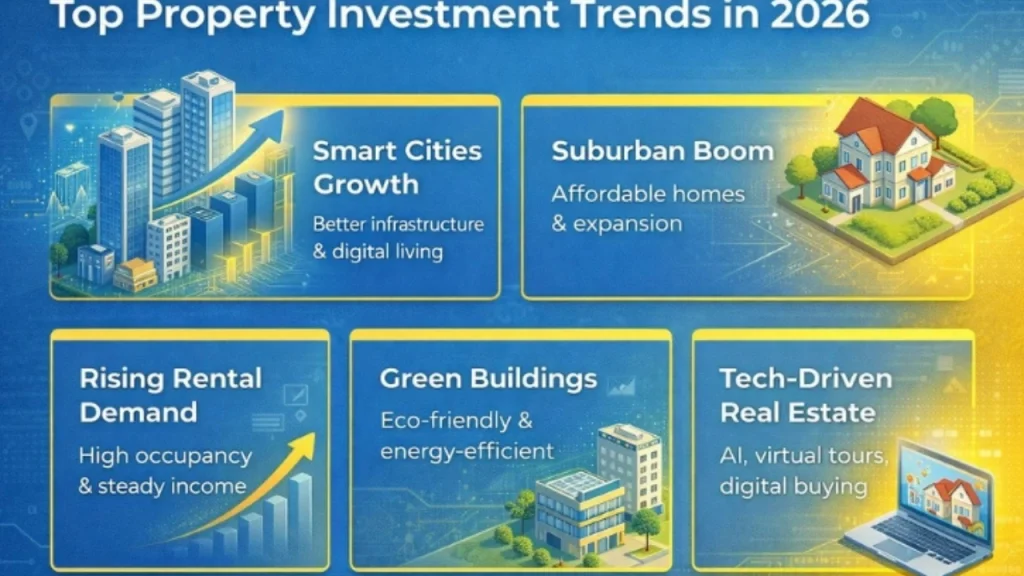
- Growth of Smart Cities
Governments and private developers are investing heavily in smart city projects. These cities offer better infrastructure, digital connectivity, and efficient public services.
Example: Areas around upcoming smart city zones often see rapid property price appreciation. - Suburban Investment Boom
Many buyers now prefer suburbs instead of crowded city centers. Suburban areas offer larger homes, cleaner environments, and lower property prices.
Example: Professionals working in IT hubs often choose homes in developing suburbs within commuting distance. - Rising Rental Demand
Young professionals and students prefer renting rather than buying property immediately. This trend creates strong rental income opportunities for investors.
Example: Apartments near universities or business districts usually maintain high occupancy rates. - Sustainable and Green Buildings
Eco-friendly homes with energy-efficient systems are attracting modern buyers. Developers now include solar panels, rainwater harvesting, and green construction materials. - Technology-Driven Real Estate
Real estate platforms now offer AI property valuation, virtual property tours, and digital documentation, making property transactions faster and more transparent.
Investors who follow these trends can identify emerging markets, profitable rental opportunities, and long-term appreciation zones, making property investment more strategic and future-ready in 2026.
Looking to start your property investment journey in 2026? Explore premium plots and real estate opportunities with Tiruthanikai Infra City. Their well-planned developments offer strategic locations, strong appreciation potential, and excellent connectivity for long-term investors.
Best Investment locations in 2026
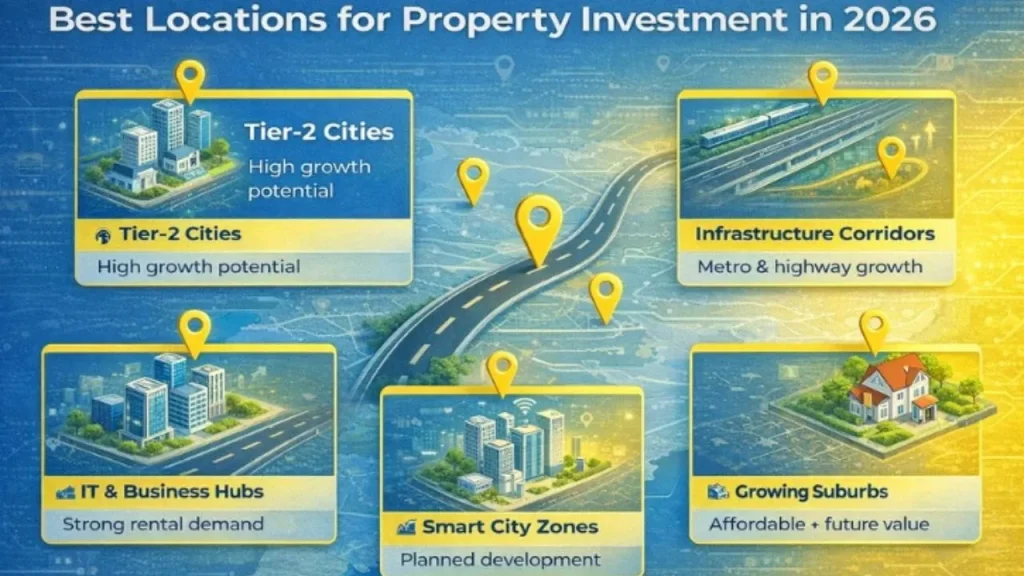
Choosing the right location plays a critical role in successful property investment. Even a well-built property may deliver poor returns if it sits in a slow-growth area. In 2026, investors focus on locations with strong infrastructure development, economic growth, and rising population demand. These factors directly influence property appreciation and rental income potential.
Many emerging areas now offer excellent opportunities for investors who enter the market early. Real estate experts often recommend focusing on developing corridors, smart city projects, and growing suburban regions.
Key factors that define a good investment location
- Infrastructure development – new highways, metro lines, and airports boost property demand
- Employment hubs – IT parks, industrial zones, and business districts attract working professionals
- Educational institutions – universities and colleges increase rental demand
- Connectivity – easy access to transportation, public services, and commercial centers
- Future development plans – government projects often increase long-term property value
Example:
Properties located near metro stations or IT corridors often see faster appreciation because professionals prefer living close to their workplaces.
High-Potential Locations
| Location Type | Why It Attracts Investors | Example |
| Emerging Tier-2 Cities | Lower property prices and strong growth potential | Coimbatore, Kochi, Indore |
| Infrastructure Corridors | Rapid appreciation due to new roads and metro lines | Highway expansion zones |
| IT and Business Hubs | High rental demand from professionals | Areas near tech parks |
| Smart City Developments | Planned urban growth and modern infrastructure | Government smart city projects |
| Growing Suburbs | Affordable homes and future expansion potential | Suburban residential zones |
Investors who identify these high-growth locations early often gain higher appreciation, steady rental income, and long-term wealth creation through strategic.
Types of Property Investments That Perform Best
Not all real estate investments deliver the same returns. Successful investors choose property types that match market demand, location growth, and long-term financial goals. In 2026, several property categories consistently perform well because they generate steady rental income and strong appreciation potential.
Understanding these investment types helps investors build a more profitable and balanced real estate portfolio.
Top-performing property investment types
- Residential Properties
Apartments, villas, and gated community homes remain the most common investments. These properties attract families, working professionals, and students.
Example: A 2BHK apartment near an IT park can generate stable monthly rental income from tech employees. - Commercial Real Estate
Office spaces, retail shops, and business centers often produce higher rental yields than residential properties. Businesses typically sign longer lease agreements, which provides predictable income.
Example: A retail shop in a busy commercial street can deliver strong monthly rent. - Land Investments (Plots)
Buying land in developing areas often delivers significant long-term appreciation. Land requires minimal maintenance compared to buildings.
Example: Plots near upcoming highways or metro corridors often double in value as infrastructure develops. - Rental Properties
Properties designed specifically for rental income perform well in cities with large working populations or universities.
Example: Studio apartments near colleges attract students and maintain high occupancy rates.
Investors often combine multiple property types to reduce risk and increase income opportunities. By choosing properties in high-demand locations with future growth potential, investors can maximize both rental income and long-term capital appreciation.
Benefits of Property Investment
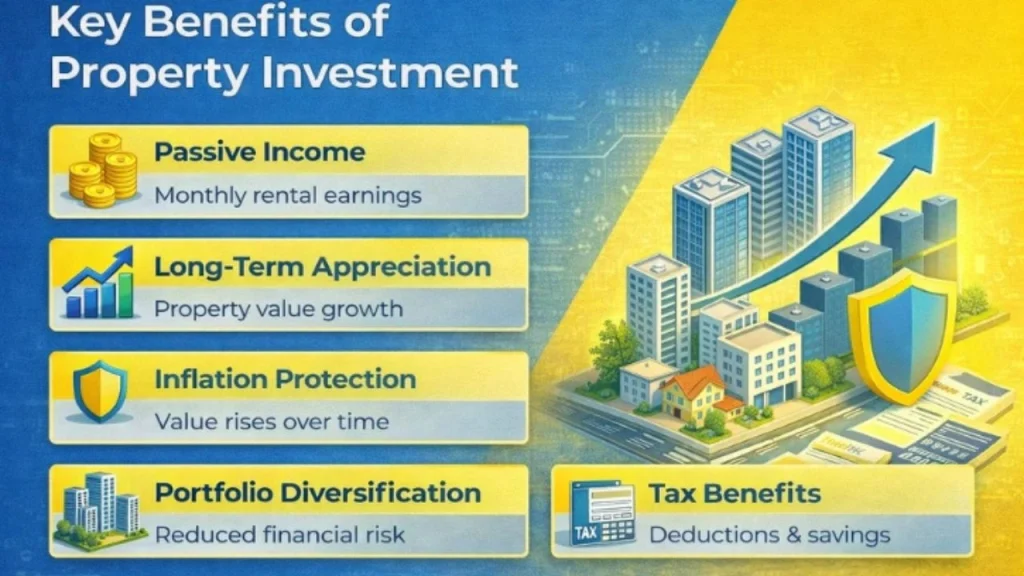
It offers several financial advantages that make it one of the most trusted ways to build long-term wealth. Unlike many other investments, real estate provides both regular income and asset appreciation. Investors often choose property because it offers stability, tangible value, and long-term financial security.
Many successful investors include real estate in their portfolios because it performs well over time and helps diversify risk.
Steady Passive Income
Rental properties generate consistent monthly income. Investors can use this income to cover loan payments, maintenance costs, or personal expenses.
Example: A residential apartment rented to working professionals can produce reliable monthly rent every month.
Long-Term Property Appreciation
Property values usually increase as cities expand and infrastructure develops. Investors who hold property for several years often benefit from significant value growth.
Example: Land purchased near a future highway or metro project may increase in value once development begins.
Protection Against Inflation
Real estate often performs well during inflation because property prices and rental income typically rise over time. This helps investors maintain their purchasing power.
Portfolio Diversification
Adding property to an investment portfolio reduces overall risk. Real estate often behaves differently from stocks or mutual funds, which helps balance financial investments.
Tax Benefits for Investors
Property owners can often claim deductions on home loan interest, property taxes, and maintenance costs depending on local regulations.
Because of these advantages, continues to attract both beginner and experienced investors looking for stable income and long-term wealth growth.
Future of Property Investment
It continues to evolve as technology, urban development, and changing buyer preferences reshape the real estate market. Investors in the coming years will rely more on data-driven insights, smart infrastructure, and sustainable developments to make profitable decisions. These changes will create new opportunities for both beginner and experienced investors.
Several emerging trends are expected to define the future.
Technology-Driven Real Estate
Technology is transforming how investors buy, sell, and manage properties. Digital platforms now allow investors to analyze market data, compare prices, and complete transactions online.
Example: Virtual property tours allow buyers to inspect homes remotely before making investment decisions.
Smart Homes and Smart Cities
Modern buyers prefer homes with advanced technology and smart infrastructure. Smart homes include automated lighting, energy-efficient systems, and advanced security features.
Example: Properties in smart city developments often attract higher demand and faster appreciation.
Sustainable and Eco-Friendly Housing
Environmental awareness is influencing real estate development. Many buyers now prefer properties that use green construction materials and energy-efficient designs.
Example: Homes with solar panels or rainwater harvesting systems often attract environmentally conscious buyers.
Rise of Fractional Property Ownership
Fractional ownership allows multiple investors to share ownership of high-value properties. This model makes premium real estate accessible to smaller investors.
Data-Driven Investment Decisions
Investors increasingly rely on real estate analytics, AI-based property valuation, and market forecasting tools to identify profitable opportunities.
As these trends continue to grow, It will become more technology-driven, sustainable, and accessible, creating new opportunities for investors seeking long-term financial growth.
Looking to start your property investment journey in 2026? Explore premium plotted developments and high-growth investment opportunities with Tiruthanikai Infra City. Connect with their team to discover locations with strong appreciation potential.
Conclusion
It continues to stand as one of the most reliable strategies for building long-term wealth. In 2026, the real estate market is evolving rapidly due to urbanization, smart infrastructure projects, and technology-driven property platforms. Investors who understand these changes can identify profitable opportunities and make smarter decisions.
Successful depends on choosing the right location, understanding market trends, and selecting the right type of property. Areas with strong infrastructure development, growing employment hubs, and increasing population demand often deliver better appreciation and rental income.
Key takeaways for investors include:
- Focus on high-growth locations and emerging suburbs
- Evaluate rental demand and infrastructure development
- Diversify investments across residential, commercial, and land assets
- Monitor technology and sustainability trends in real estate
By researching the market carefully and planning investments strategically, investors can build stable income streams and long-term financial security through property investment.
Frequently Asked Questions
1. What is property investment?
It refers to purchasing real estate with the goal of generating income through rent or gaining profit from property value appreciation over time.
2. Is property investment a good option in 2026?
Yes. Growing urbanization, infrastructure development, and increasing housing demand make a promising opportunity in 2026.
3. What types of properties are best for investment?
Residential apartments, commercial spaces, rental properties, and land in developing areas often provide strong long-term returns.
4. How can beginners start property investment?
Beginners should start by researching locations, setting a budget, understanding legal documentation, and consulting real estate experts.
5. Which locations offer the best opportunities?
Areas with infrastructure projects, IT hubs, metro connectivity, and smart city developments usually offer high growth potential.
6. What are the main benefits of property investment?
It provides rental income, long-term appreciation, portfolio diversification, and protection against inflation.
7. Is land a good investment compared to apartments?
Land often delivers strong long-term appreciation and requires minimal maintenance, while apartments provide steady rental income.
8. How does infrastructure development affect property prices?
Infrastructure projects like highways, metro rail, and airports increase accessibility, which often raises property demand and value.
9. Can property investment generate passive income?
Yes. Rental properties can generate consistent monthly income while the property value increases over time.