Enquire Now for a free site visit – call

Residential land markets have undergone significant transformation over the past few decades, especially in developing economies. Earlier, land purchases were primarily driven by personal housing needs or local demand. Today, residential land buying has evolved into a strategic investment activity influenced by urban expansion, infrastructure development, and rising population growth in emerging markets.
As cities continue to expand, previously underdeveloped areas are becoming attractive for residential development. Improved connectivity, new infrastructure projects, and economic growth are encouraging investors and homebuyers to explore opportunities beyond traditional city centers. This shift has gradually changed how individuals and investors approach residential land investments.
The evolution of residential land buying reflects broader changes in real estate markets. Modern buyers now focus on future growth potential, long-term appreciation, and strategic location analysis rather than immediate usability alone. In the following sections, we will explore how residential land buying has evolved in emerging markets and the key factors shaping this transformation.
How Residential Land Buying Has Changed Over the Years
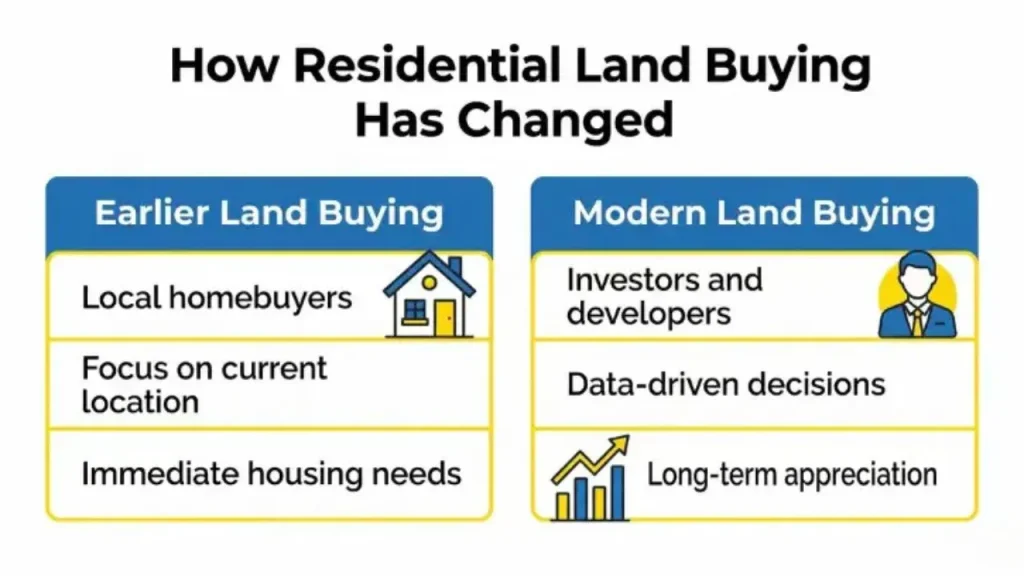
Residential land buying in emerging markets has experienced a noticeable shift over the years. In earlier decades, land purchases were often driven by immediate housing needs or local community expansion. Buyers typically focused on locations close to city centers or areas where residential development had already started. However, as urban populations have grown and cities have expanded outward, the dynamics of residential land buying have gradually evolved.
Today, investors and homebuyers are increasingly looking beyond established city limits. Emerging suburbs and developing regions are attracting attention because of their long-term growth potential. Infrastructure development such as highways, public transport systems, and industrial corridors has opened new areas for residential expansion.
Modern buyers now approach land investments with a more strategic mindset. Instead of focusing only on current location advantages, they analyze several factors before making a purchase.
Common factors influencing modern land buying decisions include:
- Future infrastructure development in surrounding areas
- Connectivity to major cities and employment hubs
- Government urban development plans
- Population growth and housing demand
Industry insights highlighted in this market outlook report show how infrastructure investment and economic expansion are influencing property demand in emerging markets.
As a result, residential land buying has shifted from simple land ownership toward strategic real estate investment focused on long-term value growth.
Key Drivers Behind the Growth of Residential Land Markets
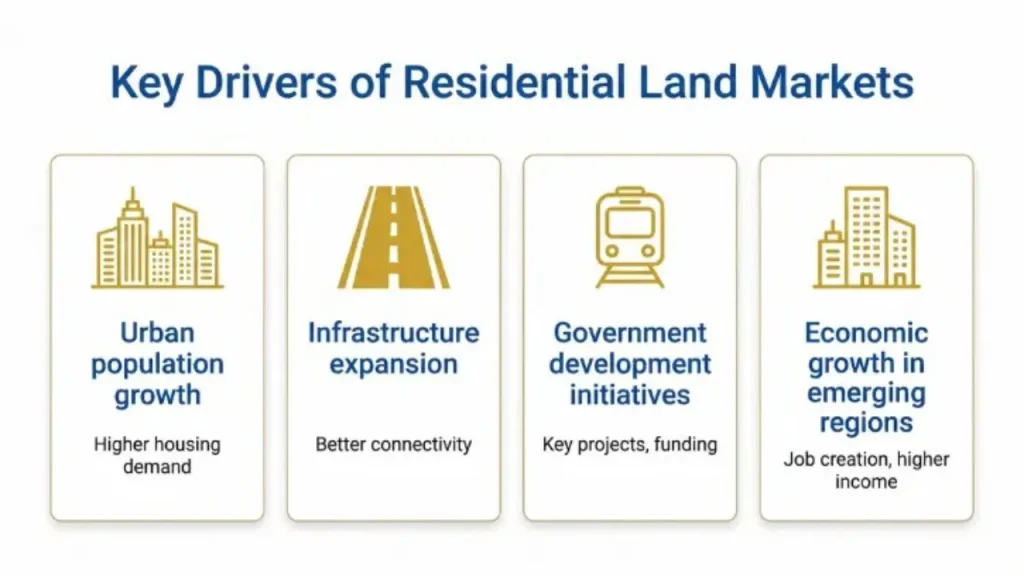
The rapid growth of residential land markets in emerging economies is largely driven by structural changes in urban development and housing demand. As populations grow and cities become more crowded, developers and investors are increasingly exploring new regions for residential expansion. This shift has played a major role in transforming residential land buying into a strategic investment opportunity rather than just a housing necessity.
One of the most significant drivers is urban population growth. As more people move toward cities for employment and better living standards, the demand for housing continues to increase. When city centers become saturated, nearby regions often emerge as attractive locations for residential development.
Another important factor is the expansion of infrastructure. New highways, metro systems, and transportation corridors often connect developing areas to major cities. This improved connectivity increases the value of land in those regions and encourages residential construction.
Several factors continue to support the growth of residential land markets:
- Infrastructure development projects improving accessibility
- Economic growth in emerging regions creating housing demand
- Expansion of residential communities beyond traditional city limits
- Government development initiatives encouraging urban growth
Industry discussions highlighted in this real estate trends report show how evolving property markets are influencing residential investment decisions.
These drivers collectively explain why residential land markets are expanding rapidly in emerging economies.
How Emerging Markets Are Shaping Land Investment Strategies
Emerging markets are significantly influencing how investors approach residential land opportunities. In many developing regions, rapid economic growth and expanding infrastructure are creating new areas for residential development. These changes have reshaped residential land buying, encouraging investors to focus on long-term growth potential rather than only current property demand.
In the past, many buyers preferred land in already developed urban areas. However, increasing property prices in established cities have pushed investors to explore developing regions where land is still affordable and expected to appreciate over time. As infrastructure expands into surrounding regions, these areas often become new residential zones.
Investors now analyze multiple factors before purchasing land in emerging markets. Strategic land investment decisions usually involve evaluating:
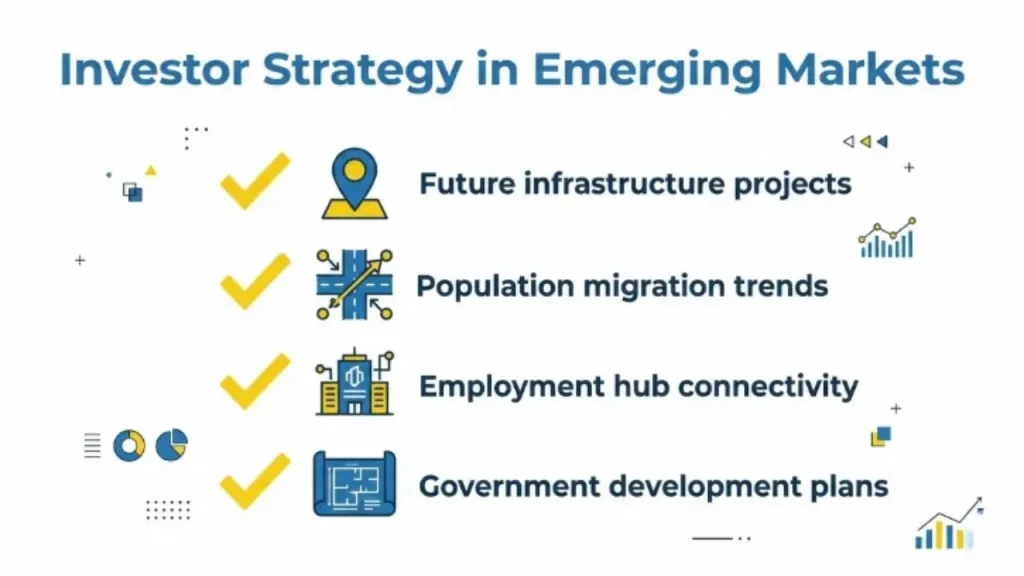
- Future infrastructure projects that improve connectivity
- Population migration patterns toward developing areas
- Economic growth and job opportunities in emerging regions
- Government development plans that encourage residential expansion
Why Investors Focus on Future Growth Locations
Investors often look for locations that may experience strong development in the coming years. Areas close to transportation corridors, industrial developments, or new residential communities tend to attract early investors seeking long-term appreciation.
Insights shared in this emerging trends report highlight how evolving property markets and infrastructure expansion are shaping real estate investment strategies in emerging economies.
Residential Land Buying: Then vs Now
The approach to purchasing residential land has changed considerably as property markets have evolved. In earlier years, land buying decisions were often based on immediate needs such as building a home or securing land near existing communities. Buyers usually focused on convenience, proximity to city centers, and current residential demand. However, the modern approach to residential land buying is far more strategic and data-driven.
Today, investors and homebuyers evaluate long-term factors before purchasing land. Rapid urban expansion and infrastructure development have encouraged buyers to consider locations that may experience growth in the future. Instead of focusing only on present-day advantages, modern buyers analyze future connectivity, economic development, and potential appreciation.
This shift has also increased the role of market research. Buyers now rely on development plans, infrastructure projects, and regional economic trends to make informed land investment decisions.
The comparison below highlights how residential land buying has evolved over time.
| Land Buying Factor | Earlier Approach | Modern Investment Approach |
| Buyer focus | Local homebuyers | Investors & developers |
| Decision factors | Immediate location | Future growth potentia |
| Investment horizon | Short-term ownership | Long-term appreciation |
| Market research | Limited analysis | Data-driven planning |
As emerging markets continue to expand, the transformation of residential land buying is likely to continue evolving alongside infrastructure growth and changing housing demand.
Challenges and Opportunities in Emerging Land Markets
Emerging real estate markets offer strong potential for residential development, but they also present certain challenges that investors and buyers must consider. As urban expansion continues, residential land buying in these markets requires careful analysis of both opportunities and risks. Investors who understand these factors are better positioned to make informed land investment decisions.
One of the biggest opportunities in emerging land markets is infrastructure-led growth. New transportation networks, industrial corridors, and commercial developments often transform underdeveloped regions into residential hubs. As these projects progress, land values in nearby areas may increase significantly.
At the same time, buyers must evaluate certain challenges before investing. Regulatory requirements, land documentation verification, and development timelines can influence the success of a land investment. Understanding these factors helps investors avoid potential risks and choose locations with strong future growth potential.
Several opportunities and considerations typically shape emerging land markets:
- Infrastructure expansion that increases accessibility
- Urban population growth driving housing demand
- Government development initiatives supporting planned development
- Legal verification and approvals required for secure transactions
The table below highlights how opportunities and considerations interact in emerging residential land markets.
| Market Factor | Opportunity | Investor Consideration |
| Infrastructure growth | Higher land demand | Track development plans |
| Urban expansion | Rising housing needs | Choose growth corridors |
| Regulatory policies | Structured development | Verify approvals |
| Economic growth | Investment opportunities | Evaluate long-term potential |
Explore Insights on Developing Property Markets
Understanding market activity is essential for investors and buyers interested in emerging residential land opportunities. As property markets evolve, staying informed about ongoing developments and industry activities can help individuals better understand how residential land buying continues to change in growing regions.
One useful way to evaluate land investment potential is by observing how real estate communities interact with market trends. Events, investor meetups, and property discussions often highlight emerging development patterns, infrastructure projects, and new residential opportunities. Following industry discussions through community updates can provide valuable insights into how property markets evolve over time.
Another important step for investors is reviewing active real estate developments. Ongoing projects often reveal how developers identify high-potential locations and respond to housing demand in expanding markets. Observing these developments through current developments can help investors understand where residential growth is taking place.
These types of insights allow buyers and investors to make more informed decisions about land purchases. By studying project activity, infrastructure expansion, and market discussions, individuals can better evaluate which emerging areas may offer long-term residential investment potential.
Staying informed about real estate developments and market activity ultimately helps investors navigate the evolving landscape of residential land markets.
Final Thoughts
The transformation of residential land buying in emerging markets reflects how real estate investment strategies are evolving alongside urban expansion and infrastructure development. Buyers today focus more on future growth potential rather than only immediate location benefits.
Key takeaways from this evolution include:
- Urban expansion is creating new residential development zones
- Infrastructure growth is increasing land value in emerging areas
- Strategic research is becoming essential before purchasing land
- Long-term investment thinking is shaping modern land buying decisions
As emerging markets continue to develop, residential land investments are likely to play a larger role in shaping future housing and real estate opportunities.
Explore Opportunities in Emerging Residential Land Markets
Emerging markets offer strong potential for long-term residential land investments, especially in regions experiencing rapid development and infrastructure expansion.
To learn more about structured property investment opportunities, explore our Real Estate Services.
Frequently Asked Questions
1. What is residential land buying?
Residential land buying refers to purchasing land for housing development or long-term real estate investment. Buyers may acquire land to build homes, develop residential projects, or hold it as an asset that may increase in value over time as urban areas expand.
2. Why is residential land buying growing in emerging markets?
Residential land buying is increasing in emerging markets due to rapid urban development and rising housing demand. Several factors contribute to this growth:
1. Expansion of cities into nearby regions
2. Infrastructure development such as highways and metro projects
3. Increasing population and housing demand
4. Economic growth in developing regions
These factors create new opportunities for residential development.
3. How has residential land buying evolved over the years?
Residential land buying has evolved from a simple housing requirement to a strategic investment activity. Earlier, buyers focused mainly on location convenience, whereas modern buyers evaluate future development potential, infrastructure growth, and long-term appreciation before purchasing land.
4. What factors influence residential land value in emerging markets?
Several factors influence land value in developing markets:
1. Infrastructure development and transportation connectivity
2. Population growth and housing demand
3. Government urban development policies
4. Economic expansion in surrounding regions
These elements often determine how quickly residential land appreciates.
5. What are the benefits of investing in residential land?
Residential land investments can offer long-term appreciation and lower maintenance costs compared to developed properties. Land can also provide diversification in a real estate portfolio and may increase in value as nearby areas experience urban growth.
6. What challenges do investors face when buying residential land?
Investors may encounter several challenges when purchasing land, including:
1. Legal documentation verification
2. Delays in infrastructure development
3. Regulatory approvals and zoning rules
4. Identifying locations with genuine growth potential
Proper research and due diligence can help minimize these risks.
7. Why do investors focus on emerging real estate markets?
Investors focus on emerging markets because land prices are often lower compared to developed cities, while the potential for future appreciation is higher due to infrastructure development and population growth.
8. How does infrastructure impact residential land demand?
Infrastructure projects often increase the demand for residential land. Important developments include:
1. New highways and transportation networks
2. Metro and railway connectivity
3. Industrial and commercial developments
4. Improved public utilities
These projects make surrounding areas more attractive for residential growth.
9. Is residential land a good long-term investment?
Residential land can be a strong long-term investment if it is located in a developing area with good infrastructure prospects. Over time, land values often increase as cities expand and housing demand grows.
10. How can investors choose the right residential land location?
Investors should evaluate several factors before selecting a location:
1. Proximity to developing urban centers
2. Planned infrastructure projects
3. Connectivity to employment hubs
4. Long-term regional development plans
These factors help identify locations with strong growth potential.