
Buying a property in Chennai is a major financial decision, but choosing the wrong developer can lead to legal complications, construction delays, and unexpected expenses. How can you distinguish a reliable developer from one making attractive promises? When evaluating trusted property developers in Chennai, start by verifying project approvals, ownership documents, construction quality, and delivery records. The Real Estate (Regulation and Development) Act, 2016, established a regulatory framework to improve transparency and protect homebuyers. However, buyers must still conduct independent checks before investing. This guide explains how to evaluate developer credibility, compare residential plots in Chennai, verify essential legal documents, and assess location suitability so you can make a well-informed property decision.
What Makes a Property Developer Trustworthy in Chennai?
Choosing trusted property developers in Chennai requires more than comparing prices and attractive brochures. A reliable developer maintains a strong project history, follows legal requirements, delivers quality construction, and communicates clearly with buyers. Check the developer’s completed projects, customer feedback, and applicable Tamil Nadu RERA (TNRERA) registration before investing. The Real Estate (Regulation and Development) Act, 2016, strengthens transparency and accountability in the property market. Verify planning approvals, ownership documents, construction specifications, and possession timelines independently. Visit completed properties and speak with existing residents to understand their experiences. These practical checks help you assess credibility and make a confident property decision.
Check the Developer’s Track Record and Completed Projects
Before choosing trusted property developers in Chennai, examine their project history and delivery performance. Start by checking how many projects the developer has completed, how closely they followed promised timelines, and whether buyers report recurring issues. Visit completed properties to assess construction quality, drainage, road access, and maintenance. Speak with residents to understand their experience with handover, amenities, and customer support.
Check the developer’s project details on the Tamil Nadu Real Estate Regulatory Authority (TNRERA) website, where applicable. Compare the declared completion date with the actual handover date and review available project records. Evaluate at least three completed projects, where possible, to identify consistent patterns rather than relying on a single success story. These checks help you assess the developer’s credibility before investing your money.
Verify RERA Registration and Applicable Project Approvals
Before investing with trusted property developers in Chennai, verify the project’s registration and legal approvals. The Real Estate (Regulation and Development) Act, 2016, established RERA to improve transparency and protect property buyers. For eligible projects in Tamil Nadu, check registration details through the Tamil Nadu Real Estate Regulatory Authority (TNRERA) website.
Review these essential details before making a payment:
- RERA registration: Confirm the project registration number and declared completion date.
- Planning approval: Verify the applicable CMDA, DTCP, or local planning authority approval.
- Building approval: Check whether the project meets relevant building regulations.
- Land documents: Review ownership records and the Encumbrance Certificate.
- Project details: Compare the approved plans with the developer’s promises.
Important: RERA registration does not guarantee construction quality or investment returns. Consult an independent property lawyer to verify documents before signing an agreement or paying an advance.
Evaluate Construction Quality and Delivery Transparency
When comparing trusted property developers in Chennai, examine construction quality and their ability to meet promised deadlines. Visit completed projects to inspect wall finishes, flooring, ventilation, drainage, water supply, and common areas. Ask the developer for construction specifications, the project schedule, and regular progress updates.
For example, if a developer promises to hand over an apartment in December 2027, compare the actual construction progress with the published schedule. Check the project’s Tamil Nadu RERA (TNRERA) records, where applicable, to review its declared completion date and available updates.
Look for these key indicators:
- Material quality: Check the specifications for cement, steel, flooring, and electrical fittings.
- Timeline transparency: Request a clear construction schedule and written possession terms.
- Quality assurance: Ask about inspections, defect liability, and post-handover support.
How to Evaluate Property Developers in Chennai Before Investing
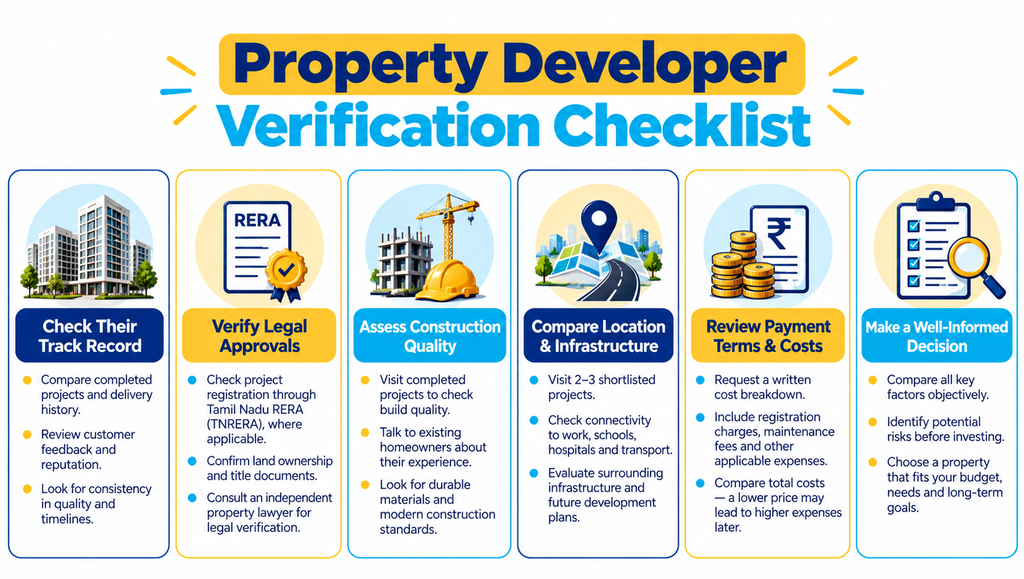
Before investing, compare trusted property developers in Chennai using verified information rather than advertisements alone. Review their completed projects, customer feedback, legal approvals, construction quality, and payment terms. Check project registration through Tamil Nadu RERA (TNRERA), where applicable, and consult an independent property lawyer to verify ownership documents. Visit at least 2–3 shortlisted projects to compare location, infrastructure, and construction standards. Request a written cost breakdown that includes registration charges, maintenance fees, and other applicable expenses. For example, a lower-priced apartment may cost more overall if it requires expensive repairs or offers limited connectivity. Careful comparisons help you identify potential risks and choose a property that suits your budget and needs.
Research Online Reviews and Customer Feedback
Before choosing trusted property developers in Chennai, research customer reviews across Google, real estate portals, and independent discussion forums. Look for repeated complaints about construction quality, delayed handovers, hidden charges, or poor customer support. Pay attention to how the developer responds to complaints and resolves problems.
Follow these three practical steps:
- Compare multiple sources: Check at least 3 platforms to identify consistent feedback patterns.
- Speak with residents: Ask 2–3 existing homeowners about construction quality, maintenance, and handover experiences.
- Verify claims: Visit completed projects and compare customer experiences with the developer’s promises.
For example, if several residents report repeated water supply issues, investigate the property’s infrastructure before paying an advance. Treat online ratings as useful clues, not definitive proof. Combine customer feedback with legal checks and site visits to make a more informed decision.
Compare Property Prices, Payment Terms, and Hidden Costs
When comparing trusted property developers in Chennai, look beyond the advertised price. Calculate the total purchase cost, review the payment schedule, and identify additional charges before signing an agreement. Compare at least three similar properties in the same locality to understand the price differences.
| Cost factor | What to check |
| Base price | Total property cost and price per sq. ft. |
| Registration | Applicable stamp duty and registration charges |
| Taxes | GST, where legally applicable |
| Maintenance | Advance maintenance fees and deposits |
| Amenities | Parking, clubhouse, and additional facility charges |
| Payment terms | Instalment dates, cancellation terms, and late-payment penalties |
Example: If one apartment costs ₹50 lakh and another costs ₹48 lakh, compare their additional charges before deciding. Request a written cost breakdown from each developer to avoid unexpected expenses and plan your budget accurately.
Assess Communication and After-Sales Support
When choosing trusted property developers in Chennai, evaluate how clearly they communicate and support buyers after a sale. A reliable developer answers questions promptly, shares project updates, explains payment terms, and provides written commitments. Ask about maintenance arrangements, defect liability, and the process for reporting construction issues.
Use these three checks before making a decision:
- Response time: Track how quickly the sales team answers your queries.
- Written communication: Request documented details about possession dates, amenities, and payment schedules.
- After-sales service: Check how the developer handles complaints and maintenance concerns.
Example: If you report a plumbing leak after taking possession, a dependable developer should explain the complaint process and clarify applicable defect liability obligations. Speak with at least two existing homeowners to understand their experience with customer service. Clear communication helps you identify potential concerns before investing.
Looking for Residential Plots in Chennai?
Choosing the right property starts with finding a location that suits your budget and future plans. Explore residential plot opportunities with Tiruthanikai Infra City and take the next step towards your property investment journey.Explore Our Projects Today!🌐 https://tiruthanikaiinfracity.com/
Essential Legal Documents to Check Before Buying a Property
Before purchasing a property, verify the legal documents to protect your investment and avoid future disputes. Even trusted property developers in Chennai must provide relevant documents that establish ownership, approvals, and compliance with applicable regulations. Ask an independent property lawyer to review the records before signing an agreement or paying an advance.
Focus on these 5 essential checks:
- Title Deed: Confirms the property’s ownership history.
- Encumbrance Certificate (EC): Shows registered transactions and certain encumbrances for the period searched.
- RERA Registration: Verify eligible projects through Tamil Nadu RERA.
- Planning Approval: Check applicable CMDA, DTCP, or local authority approvals.
- Sale Agreement: Review payment terms, possession dates, and cancellation clauses.
Verify every document against official records to make an informed buying decision.
Verify the Title Deed and Ownership History
Before purchasing a property, check the title deed to confirm the seller’s legal ownership and right to transfer the property. When evaluating trusted property developers in Chennai, ask an independent property lawyer to examine the ownership history and identify potential disputes or claims.
Follow these three essential steps:
- Review previous title documents: Examine the chain of ownership, ideally covering the legally relevant period.
- Check the Encumbrance Certificate (EC): Review registered transactions and certain encumbrances for the period covered by the certificate.
- Verify property details: Match the survey number, plot boundaries, land extent, and owner’s name against relevant records.
Example: If the title deed lists a different survey number from the approved layout, investigate the discrepancy before paying an advance. Remember, an EC alone cannot establish clear title. Seek independent legal advice before completing the purchase.
Check CMDA, DTCP, and Local Planning Approvals
Before buying a residential property, verify the relevant planning approvals to confirm that the project complies with applicable regulations. Trusted property developers in Chennai should provide clear documentation for the specific plot, apartment, or building. The responsible authority depends on the property’s location and the type of development.
Check these essential details:
- CMDA approval: Verify applicable planning permissions for properties within the Chennai Metropolitan Area.
- DTCP approval: Check relevant layout or planning approvals where the Directorate of Town and Country Planning has jurisdiction.
- Building approval: Confirm that the approved building plan matches the actual construction.
- Land use: Ensure the property permits residential development.
- Approval details: Match the survey number, plot number, boundaries, and project details with official records.
For example, an attractive residential plot may still present legal risks if its layout lacks the required approval. Verify documents with the relevant authority and consult a property lawyer before investing.
Confirm RERA Details and Sale Agreement Conditions
Before investing with trusted property developers in Chennai, verify the project’s registration details through the Tamil Nadu Real Estate Regulatory Authority (TNRERA) website, where applicable. Check the registration number, declared completion date, approved plans, and project details. The Real Estate (Regulation and Development) Act, 2016, establishes a framework for transparency and accountability in eligible real estate projects.
Review these important sale agreement conditions:
- Possession date: Confirm the promised handover date and applicable delay provisions.
- Payment schedule: Match instalments with the agreed terms and construction milestones.
- Cancellation policy: Understand refund conditions and applicable charges.
- Project specifications: Verify the promised amenities, layout, and facilities.
Example: If a developer promises possession by December 2027, ensure the agreement clearly states the timeline and applicable remedies for delays. Ask an independent property lawyer to review the agreement before signing or paying an advance.
How to Choose the Right Residential Property in Chennai
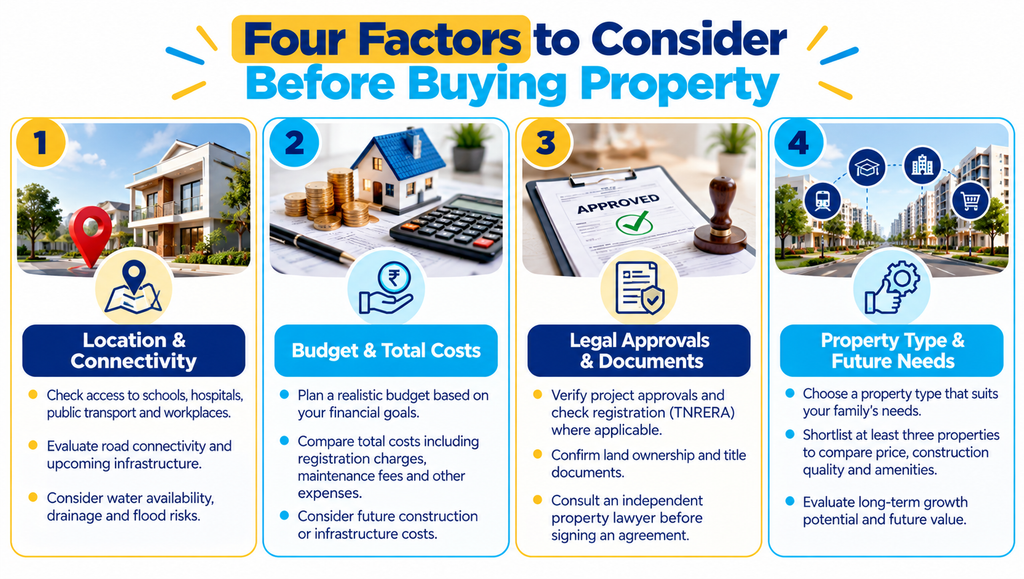
Choosing the right residential property requires careful planning, realistic budgeting, and location research. When comparing trusted property developers in Chennai, consider your family’s needs, daily commute, preferred property type, and long-term financial goals. Shortlist at least three properties to compare prices, construction quality, legal approvals, and nearby amenities. Check access to schools, hospitals, public transport, and workplaces. Evaluate water availability, drainage, road connectivity, and flood risks before making a decision. For example, a lower-priced plot may require additional spending on infrastructure or future construction. Visit the property, verify essential documents, and consult an independent property lawyer before signing an agreement or paying an advance.
Compare Location, Connectivity, and Essential Infrastructure
Location plays a major role in property value, daily convenience, and long-term suitability. When evaluating trusted property developers in Chennai, compare neighbourhoods based on your workplace, family needs, and budget. Check access to public transport, schools, hospitals, supermarkets, and major roads before choosing a property.
Use this 5-point checklist to evaluate each location:
- Connectivity: Check road access, bus routes, and nearby railway or metro stations.
- Essential services: Look for schools, hospitals, and grocery stores within convenient reach.
- Water supply: Confirm the availability and reliability of water sources.
- Drainage: Examine stormwater drainage and local flood history.
- Future development: Verify proposed infrastructure projects through official sources.
For example, visit your shortlisted property during peak traffic hours and after heavy rain. These practical checks help you assess everyday convenience and potential location-related risks.
Match the Property Type to Your Budget and Needs
Before selecting trusted property developers in Chennai, decide whether a residential plot, apartment, or independent house best suits your budget and lifestyle. Each option offers different benefits, maintenance responsibilities, and long-term costs. Compare at least three property options before making your final decision. Consider your family size, preferred location, available savings, and future plans.
| Property type | Best suited for | Key consideration |
| Residential plot | Buyers planning to build a home | Verify layout approval, land title, and construction costs |
| Apartment | Families seeking shared amenities | Check building approvals, maintenance fees, and undivided land share |
| Independent house | Families seeking greater privacy | Evaluate maintenance, land ownership, and renovation expenses |
Example: If your budget covers only the plot price, calculate construction and approval costs before committing. Choose a property that meets your needs without stretching your finances.
Compare Developers Using a Consistent Checklist
When evaluating trusted property developers in Chennai, use the same checklist for every shortlisted project. This approach helps you compare facts instead of relying on attractive advertisements or sales promises. Evaluate at least three developers based on their track record, legal compliance, construction quality, pricing, and customer support.
Use these five criteria to guide your comparison:
- Experience: Review completed projects and delivery history.
- Legal compliance: Verify applicable approvals and TNRERA registration.
- Construction quality: Inspect completed properties and building specifications.
- Total cost: Compare the base price, registration charges, and maintenance fees.
- Customer feedback: Speak with existing buyers about their experiences.
Example: Developer A may offer a lower price, while Developer B provides stronger documentation and a better delivery record. Compare both projects carefully, verify the evidence, and consult a property lawyer before making your final decision.
Conclusion: Making an Informed Property Decision in Chennai
Choosing the right property requires more than comparing prices or attractive offers. By checking legal documents, verifying project approvals, evaluating construction quality, and researching the developer’s track record, you can reduce potential risks and make a more confident decision. When comparing trusted property developers in Chennai, prioritise transparency, location suitability, long-term needs, and the total cost of ownership.
Before committing, visit the property, review the sale agreement, and consult an independent property lawyer to verify the essential documents. A well-informed decision today can help you avoid costly surprises tomorrow.
Ready to Find Your Ideal Residential Plot in Chennai?
Looking for a property that matches your budget and future goals? Explore Tiruthanikai Infra City to discover residential plots in locations such as Alamathi, Ponneri, and Sevvapet. Our team can guide you through available projects, property details, and the buying process. Take the next step towards owning your dream property with confidence.
FAQs: Trusted Property Developers in Chennai
1. How can I identify trusted property developers in Chennai?
Check the developer’s completed projects, customer feedback, construction quality, applicable approvals, and TNRERA registration where required. Visit completed properties and consult an independent property lawyer before making a financial commitment.
2. What should I check before buying property in Chennai?
Verify the title deed, Encumbrance Certificate, applicable planning approvals, RERA details where applicable, sale agreement, total cost, and location. Also assess water supply, drainage, road connectivity, and flood risks before purchasing.
3. Is RERA registration mandatory for every property project?
No. The Real Estate (Regulation and Development) Act, 2016, specifies registration requirements and certain exemptions based on project characteristics and applicable rules. Check the project’s status with the Tamil Nadu Real Estate Regulatory Authority (TNRERA) before investing.
4. How can I verify whether a residential plot is legally approved?
Check the layout approval, land-use classification, title documents, survey number, and access rights with the relevant planning authority. Depending on the location, consult CMDA, DTCP, or the appropriate local authority. An independent property lawyer can help verify the documents.
5. What is the difference between CMDA and DTCP approval?
The Chennai Metropolitan Development Authority (CMDA) handles planning functions within its applicable jurisdiction, while the Directorate of Town and Country Planning (DTCP) oversees planning functions in areas under its jurisdiction. The relevant authority depends on the property’s location and the applicable planning framework.
6. How do I compare property developers in Chennai?
Compare at least three shortlisted developers using consistent criteria, including completed projects, legal compliance, construction quality, delivery history, pricing, customer feedback, and after-sales support. Verify their claims through official records, site visits, and discussions with existing buyers.
7. What additional costs should I consider when buying residential property?
Consider stamp duty, registration charges, applicable GST, maintenance deposits, parking fees, loan processing charges, and other contractual expenses. Ask the developer for a detailed written cost breakdown and confirm which charges apply to your specific property.
8. Is buying a residential plot better than buying an apartment?
Neither option suits every buyer. A residential plot offers flexibility to build a home, subject to approvals and regulations, while an apartment may provide shared amenities and a managed living environment. Compare your budget, construction requirements, maintenance responsibilities, and long-term goals before deciding.
9. How important is location when choosing a property in Chennai?
Location affects daily convenience, commuting time, access to essential services, and potential resale demand. Evaluate public transport, schools, hospitals, water supply, drainage, road connectivity, and flood exposure. Visit the neighbourhood at different times to understand its actual conditions.
10. Should I consult a property lawyer before buying a property in Chennai?
Yes. An independent property lawyer can review ownership history, title documents, encumbrances, planning approvals, and sale agreement terms. This review can help identify legal risks before you sign an agreement or pay an advance to the developer.