Enquire Now for a free site visit – call

Introduction
For many property buyers in Tamil Nadu, vastu plays an important role when choosing a plot. From direction and road position to plot shape and entry points, buyers often try to ensure everything aligns with traditional vastu guidelines. This strong focus on vastu for residential plots has made it one of the most discussed topics during plot selection, sometimes even more than location or legal approvals.
At the same time, the growing demand for vastu-compliant properties has created confusion. Different sources offer different rules, and real estate marketing often amplifies certain beliefs to influence buying decisions. As a result, many buyers struggle to separate practical vastu considerations from myths or exaggerated claims that may not actually affect long-term value.
This article takes a clear and practical look at vastu for residential plots in Tamil Nadu – covering commonly followed rules, widespread myths, and simple tips to help buyers make balanced decisions. Instead of blindly following or completely ignoring vastu, understanding where it truly matters can help you choose a plot with both confidence and clarity.
Why Vastu Still Matters for Plot Buyers in Tamil Nadu
Despite rapid urban development and modern planning, vastu continues to influence how many buyers evaluate residential plots in Tamil Nadu. For a large number of families, purchasing land is not just a financial decision but a long-term personal and cultural milestone. Because of this, traditional beliefs often play a role alongside practical considerations like location and budget.
Several factors explain why vastu remains important to plot buyers:
- Cultural traditions and long-standing family beliefs
- Advice from elders and community networks
- Desire for positive living environment and peace of mind
- Concern about resale value if vastu is ignored
- Perception that vastu-aligned plots attract better demand
For end-users planning to build and live on the plot, vastu often provides psychological comfort. Buyers feel more confident when the plot aligns with commonly accepted guidelines, even if the practical impact is minimal. This sense of reassurance can strongly influence final decisions, especially when investing significant savings into property.
In many cases, vastu also affects market perception. Some buyers prefer east- or north-facing plots and may be willing to pay a premium for them. Because of this, developers and sellers highlight vastu-friendly features as part of their marketing. Over time, this has reinforced the idea that vastu is essential for both personal satisfaction and future resale.
While modern buyers increasingly consider infrastructure, legal clarity, and investment potential, vastu continues to remain part of the decision-making process. Understanding why it matters to buyers helps create a balanced perspective before examining the actual rules and practical factors involved in choosing a residential plot.
Basic Vastu Rules for Residential Plots Everyone Talks About
When buyers search for residential plots, they often come across a set of commonly discussed vastu rules. These guidelines typically relate to direction, road placement, plot shape, and entry points. While interpretations may vary, these basic principles are widely circulated among buyers, brokers, and developers.
Some of the most commonly followed vastu rules include:
- Preference for east- or north-facing plots
- Regular-shaped plots such as square or rectangular layouts
- Road access from east or north considered favorable
- Avoiding irregular or triangular plot shapes
- Ensuring proper entry and open space planning
These guidelines are often shared during plot visits or consultations, and many buyers use them as a checklist before making a decision. Practical discussions around vastu plot tips also highlight how direction, plot shape, and surrounding layout are typically evaluated during selection.
However, it’s important to remember that these rules are general preferences rather than strict legal requirements. A plot that doesn’t perfectly match traditional guidelines can still be suitable for construction and investment if it has strong location advantages, clear approvals, and good infrastructure.
Common Vastu Rules & Buyer Beliefs
| Vastu Factor | Common Belief |
| East-facing plot | Positive and preferred |
| North-facing plot | Associated with prosperity |
| South-facing plot | Often avoided by buyers |
| Square/rectangular shape | Considered ideal |
| Irregular shape | Seen as less favorable |
Understanding these commonly discussed rules helps buyers evaluate plots more clearly. Instead of relying solely on general beliefs, they can combine vastu preferences with practical factors such as connectivity, legal clarity, and long-term value before making a final decision.
Plot Shape, Road Position & Direction – What Actually Matters
While direction is often the first thing buyers check, other physical factors such as plot shape, road position, and usability have a much greater impact on construction and long-term value. A well-shaped, accessible plot can be far more practical than a perfectly aligned plot with structural or planning limitations.
Plot shape plays a crucial role in how efficiently space can be used. Regular shapes such as square or rectangular plots allow easier architectural planning, better ventilation, and minimal wasted space. Irregular or oddly shaped plots may create design constraints and reduce usable area, even if they meet certain directional preferences.
Road position and access are equally important. A plot with good road connectivity ensures easier entry, better resale demand, and smoother construction logistics. Buyers often prioritize:
- Clear road frontage and easy access
- Adequate road width for vehicles and utilities
- Proper drainage and infrastructure along the road
- Future road expansion or development plans
Direction alone cannot compensate for poor accessibility or difficult layout conditions. Practical guidance around plot shape vastu suggests that regular plot shapes and proper orientation of roads often contribute more to usability and long-term satisfaction than direction alone.
From an investment perspective, usability and development potential matter more than strict directional alignment. A plot that allows efficient construction, proper ventilation, and future resale flexibility usually performs better in the long run. Balancing direction with shape, access, and infrastructure helps buyers make decisions that are both practical and aligned with their preferences.
Vastu Myths That Confuse Most Plot Buyers
With so much information available today, many plot buyers struggle to distinguish between genuine vastu guidance and widely circulated myths. Over time, certain beliefs have been repeated so often that they are treated as strict rules, even when they have little practical impact on construction or investment value.
Some of the most common misconceptions include the idea that only east- or north-facing plots are suitable, that south-facing plots should always be avoided, or that minor directional variations can negatively affect property value. In reality, many successful residential developments include plots of all directions that perform equally well in terms of appreciation and resale.
When myths become marketing tools
In many cases, myths gain strength because they are used as marketing tools. Developers and brokers sometimes highlight selective vastu points to create urgency or justify price differences between similar plots. This can make buyers believe certain plots are significantly better even when practical differences are minimal.
Common ways myths influence buying decisions include
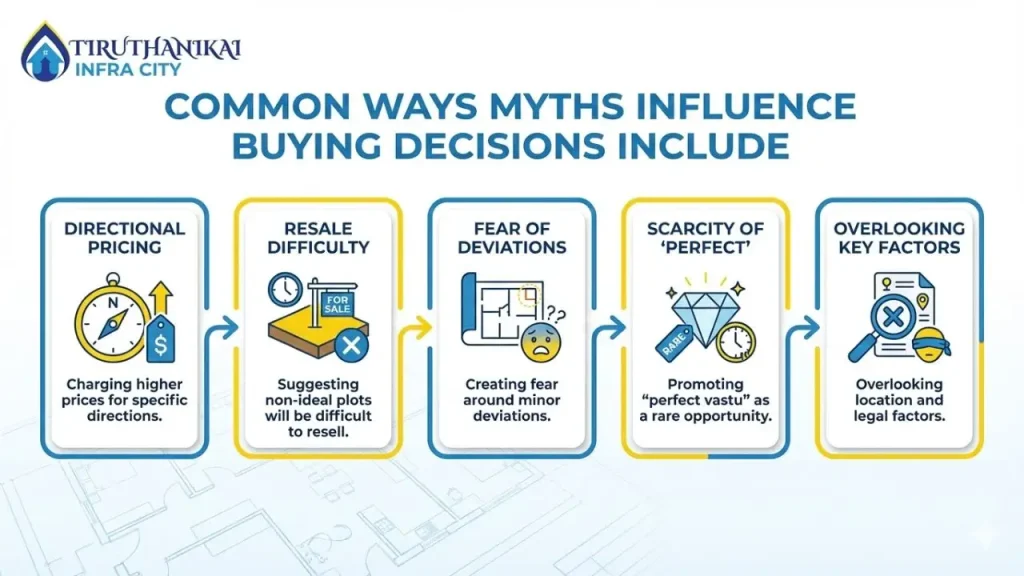
- Charging higher prices for specific directions
- Suggesting non-ideal plots will be difficult to resell
- Creating fear around minor deviations
- Promoting “perfect vastu” as a rare opportunity
- Overlooking location and legal factors
When buyers rely only on these perceptions, they may ignore more critical aspects like infrastructure, approvals, and long-term growth potential. Understanding which beliefs are genuine preferences and which are marketing-driven helps buyers evaluate plots more rationally.
Separating myths from practical considerations ensures that vastu becomes a balanced factor rather than a source of confusion. This clarity allows buyers to make confident decisions based on both personal comfort and real investment value.
Does Vastu Affect Plot Price & Resale in Reality?
Many buyers assume that vastu directly determines a plot’s price and resale potential. While direction and layout can influence buyer perception, the actual impact on price and resale is usually less significant than commonly believed. In most cases, location, infrastructure, and legal clarity play a far greater role in determining long-term value.
In certain markets, east- and north-facing plots may command slightly higher demand due to buyer preference. This can sometimes result in small price variations within the same layout. However, these differences are usually influenced by perception rather than measurable investment performance. A well-located plot with clear approvals and strong connectivity often appreciates well regardless of direction.
Resale demand typically depends on:
- Accessibility and surrounding development
- Legal documentation and approvals
- Infrastructure and connectivity
- Neighborhood growth potential
- Overall market conditions
If these factors are strong, resale value generally remains stable even if the plot does not perfectly match traditional vastu preferences. Many buyers prioritize practical benefits over directional alignment when making investment decisions, especially in urban and rapidly developing areas.
In contrast, plots in less developed locations may rely more on perception-driven demand. In such cases, direction-based preferences can influence negotiation, but they rarely determine whether a property can be sold. Over time, market growth and infrastructure improvements tend to outweigh purely directional considerations.
Understanding this reality helps buyers avoid overpaying for perceived advantages while still respecting personal preferences. A balanced approach ensures that both investment value and comfort are considered without letting myths dominate the decision-making process.
Practical Tips While Choosing a Residential Plot
Choosing a residential plot becomes easier when buyers follow a practical checklist instead of relying solely on direction or general beliefs. A balanced approach helps ensure the plot is legally safe, easy to build on, and capable of delivering long-term value. Vastu can remain one of the considerations, but it should not overshadow more critical factors.
Before finalizing any residential plot, buyers should focus on these essential checks:
- Verify clear title and layout approvals
- Confirm road access, drainage, and basic infrastructure
- Check plot dimensions and usability for construction
- Review surrounding development and future growth potential
- Ensure availability of water, electricity, and connectivity
- Evaluate resale demand in the locality
- Consider vastu as a preference, not the only deciding factor
A structured evaluation helps buyers avoid overpaying for direction-based premiums and ensures that the property remains practical for construction and resale. Professional perspectives shared through expert guidance often emphasize the importance of combining legal verification, location analysis, and personal preferences during plot selection.
Smart Buyer Checklist
| Factor | What to Check |
| Legal approval | Verified documents |
| Location growth | Infrastructure & demand |
| Road access | Clear and usable |
| Plot shape | Regular and buildable |
| Vastu | Balanced consideration |
| ROI potential | Long-term value |
Following a checklist like this allows buyers to make confident and well-informed decisions. When vastu is considered alongside practical factors rather than in isolation, the result is a plot that offers both personal comfort and strong long-term value.
Looking for a Vastu-Friendly Plot Without Compromising on Practical Factors?
We help you evaluate direction, layout, approvals, and growth potential so you invest with clarity and confidence.
📞 Speak to Our Property Experts Now: Tiruthanikai Infra City
How to Balance Vastu with Practical Investment Logic
For most buyers, the best approach is not choosing between vastu and practicality – but balancing both. Vastu can remain a personal preference that offers comfort and confidence, while practical factors ensure the plot remains legally safe and financially sound. When these elements are considered together, buyers can avoid confusion and make more confident decisions.
The key is to treat vastu as one factor within a broader evaluation framework. Instead of rejecting or selecting a plot purely based on direction, buyers can first confirm that the fundamentals are strong and then assess whether the plot meets their personal comfort level.
A balanced decision usually involves
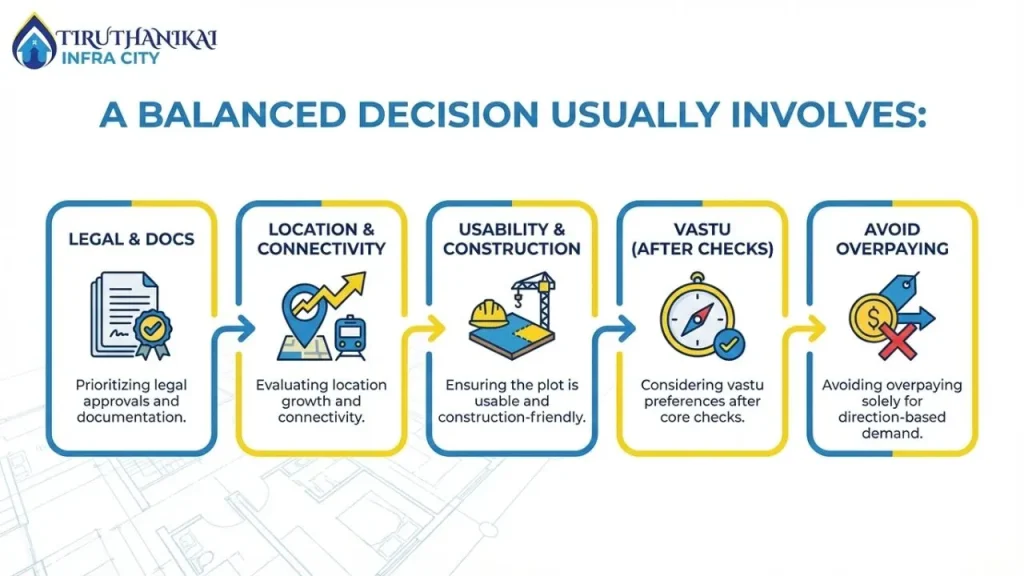
- Prioritizing legal approvals and documentation
- Evaluating location growth and connectivity
- Ensuring the plot is usable and construction-friendly
- Considering vastu preferences after core checks
- Avoiding overpaying solely for direction-based demand
This approach helps both end-users and investors. Buyers planning to build and live on the plot can choose options that feel comfortable while still ensuring long-term value. Investors, on the other hand, can focus on appreciation and resale potential without being overly influenced by directional myths.
Real buyer experiences also show that those who balanced practical checks with personal preferences often made more satisfying purchases. Many reported smoother buying and construction journeys, as reflected in genuine customer feedback from buyers who focused on fundamentals first.
Balancing vastu with practical investment logic ensures that the final decision is not driven by fear or marketing pressure. Instead, it becomes a well-informed choice that supports both emotional comfort and financial stability.
Find the Right Plot That Aligns With Both Vastu & Investment Logic
Explore well-planned, legally approved residential plots designed for comfortable living and strong resale value.
🚀 Schedule a Site Visit Today: Tiruthanikai Infra City
Final Thoughts
Understanding vastu for residential plots is less about blindly following rules and more about making balanced, informed decisions. While vastu continues to influence buyer sentiment and personal comfort, it should be viewed alongside practical factors such as legal approvals, location growth, and long-term usability. When these fundamentals are strong, minor directional variations rarely affect the real value of a residential plot.
For buyers planning to build and live on the property, vastu can remain a meaningful personal consideration. However, relying solely on direction without verifying documentation, infrastructure, and development potential can lead to missed opportunities or unnecessary compromises. A well-chosen plot should offer both emotional satisfaction and practical investment security.
Separating myths from practical guidance allows buyers to approach plot selection with clarity rather than confusion. By balancing tradition with logic, it becomes easier to choose a property that supports comfortable living as well as future value.
Choose the Right Residential Plot With Confidence
Selecting a residential plot becomes simpler when guided by clear information and proper planning. With the right support, buyers can evaluate legal approvals, location growth, and vastu preferences together – ensuring a decision that is both practical and comfortable.
Explore our plot services to find well-planned residential plots that align with your long-term vision and investment goals.
FAQs – Vastu for Residential Plots in Tamil Nadu
1. What is the importance of vastu for residential plots?
Vastu plays a psychological and cultural role for many buyers in Tamil Nadu. While it may influence comfort and buyer preference, practical factors like legal approval, infrastructure, and location growth are more critical for long-term value.
2. Which plot direction is considered best according to vastu?
East- and north-facing plots are commonly preferred in traditional vastu beliefs. However, south- and west-facing plots can also be suitable depending on design and layout planning.
3. Does a south-facing plot bring negative results?
No. South-facing plots are often misunderstood due to myths. With proper planning and construction, they can perform just as well as other directions in terms of livability and resale value.
4. Is plot shape important in vastu?
Yes, regular shapes like square or rectangular plots are generally preferred because they allow easier construction and better space utilization. Irregular shapes may create planning challenges.
5. Does vastu affect resale value of a plot?
Vastu may influence buyer perception, but resale value depends more on location, infrastructure, legal approvals, and overall development in the area.
6. Should I avoid irregular-shaped plots completely?
Not necessarily. While regular shapes are easier for construction, an irregular plot can still be a good investment if it has strong location advantages and proper documentation.
7. Is road position important in vastu?
Yes, road position is often discussed in vastu, but from a practical standpoint, good road access, width, and connectivity matter more for usability and resale.
8. Can I modify vastu during house construction?
Yes. Many vastu adjustments can be made during the building design stage. Even if the plot direction isn’t ideal, layout planning can align major elements effectively.
9. Should I pay extra for a vastu-compliant plot?
It depends. If it gives you personal peace of mind, it may be worth considering. However, avoid overpaying solely based on direction if other practical factors are weak.
10. What is the most important factor while buying a residential plot?
Legal clarity, layout approvals, infrastructure, connectivity, and future development potential should always be prioritized before considering vastu preferences.