
Introduction
In today’s evolving real estate landscape, the concept of secure land ownership is becoming increasingly important for property buyers and investors. With rising interest in land investments and expanding urban development, individuals are placing greater emphasis on legal clarity, proper documentation, and long-term ownership security. This shift reflects a growing awareness that owning land is not just about acquiring property but ensuring that ownership is legally protected and sustainable for the future.
Modern property markets have introduced more structured systems that help buyers verify land titles, review documentation, and comply with legal requirements before completing transactions. These measures are designed to reduce risks such as ownership disputes, incomplete records, or regulatory complications. As a result, a key factor in building trust within real estate markets.
Looking ahead, the future blueprint is shaped by improved regulations, digital land records, and stronger verification processes. Buyers and investors who understand these evolving systems can make more informed decisions and approach land investments with greater confidence. In the following sections, we will explore the factors that define secure land ownership and how future property markets are strengthening ownership security.
Why Secure Land Ownership Matters More Than Ever
As real estate markets expand and property investments increase, ensuring has become a critical priority for buyers and investors. In the past, many land transactions were based on informal agreements or incomplete documentation, which sometimes led to disputes and ownership complications. Today, property buyers are far more aware of the importance of legal verification and proper documentation before purchasing land.
One major reason secure matters today is the rising value of land assets. As infrastructure development and urban expansion continue, land investments are becoming more valuable. This increased value makes it essential for buyers to confirm that the land they purchase has clear legal ownership and verified documentation.
Modern investors also recognize that ownership security protects long-term financial stability. When land titles, approvals, and property records are properly verified, buyers can confidently hold or develop the property without legal uncertainties.
Several factors explain why secure land ownership is gaining greater importance:
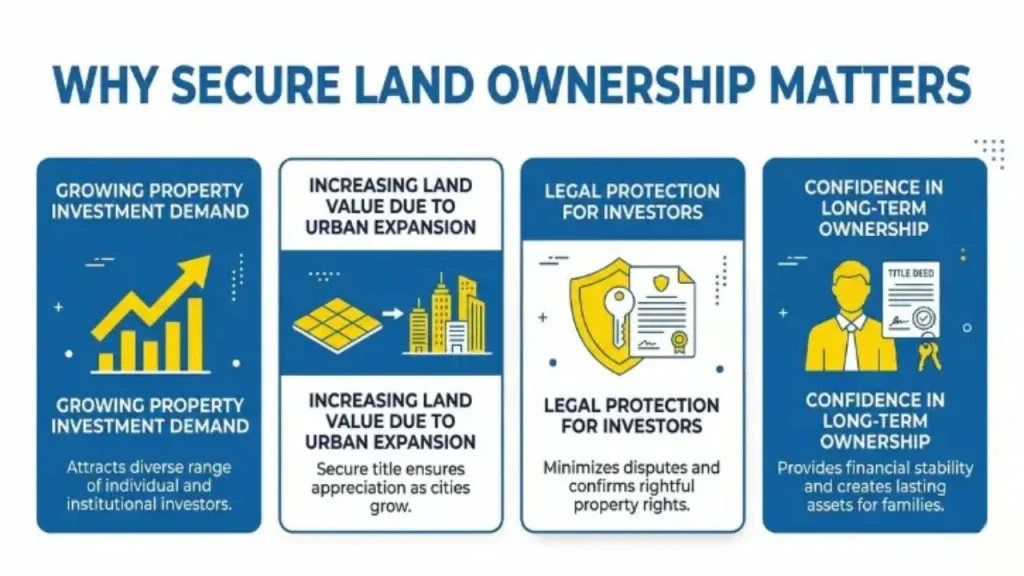
- Growing property investment activity in developing regions
- Stronger legal regulations governing land transactions
- Increased awareness among buyers about ownership verification
- Rising land values due to urban development
Recent discussions about legal changes highlight how evolving regulations are strengthening protection.
As property markets continue to grow, secure is becoming an essential foundation for safe and reliable real estate investment.
Key Legal and Documentation Factors in Secure Land Ownership
Ensuring with verifying the legal and documentation aspects of a property transaction. Proper documentation not only confirms ownership rights but also protects investors from potential disputes or legal complications in the future. As real estate markets become more structured, buyers are increasingly focusing on verifying property records before making investment decisions.
One of the most important steps is title verification. A clear and valid land title confirms that the seller has legal ownership of the property and the right to transfer it. Without proper title verification, buyers may face ownership disputes or legal challenges later.
Another key factor is checking government approvals and regulatory compliance. Land intended for residential or commercial development must comply with zoning laws, local regulations, and approved land-use plans. Ensuring that these approvals are in place helps avoid complications during property development.

Buyers should also review essential documentation before purchasing land. Important verification steps typically include:
- Land title verification to confirm ownership rights
- Review of government approvals and permits
- Checking land-use classification and zoning regulations
- Verifying historical ownership records
Insights discussed in this land trends article highlight how property buyers are increasingly prioritizing legal transparency in land investments.
By carefully reviewing these legal and documentation factors, investors can ensure that their remains secure and protected over the long term.
How Future Models Are Evolving
As real estate systems modernize, the framework of evolving to become more transparent and efficient. Governments and real estate authorities in many regions are adopting improved systems that help buyers verify property details more easily. These developments aim to reduce ownership disputes and make land transactions safer for investors.
One of the key changes shaping modern is the shift toward digitized property records. Digital land registries allow buyers to verify ownership details, historical records, and land-use classifications more quickly. This improves transparency and reduces the risk of fraudulent transactions.
Another important development is the introduction of stronger regulatory frameworks. Property transactions today often require detailed documentation, legal verification, and compliance with zoning regulations. These measures ensure that land transactions are legally protected and structured according to official property laws.
Several evolving systems are helping strengthen future models:

- Digital land record systems improving transparency
- Government-backed verification platforms for property data
- Stronger regulatory frameworks guiding land transactions
- Improved documentation processes for ownership transfer
The Role of Technology in Secure Property Ownership
Technology is playing an increasing role in improving property verification processes. Digital databases, online land records, and automated registration systems are helping investors confirm ownership details more efficiently.
Discussions about land use trends highlight how modern land management systems are shaping the future of property ownership.
Traditional Land Ownership vs Secure Modern Ownership
The approach to land ownership has changed significantly as property markets have become more organized and legally regulated. In earlier years, land transactions often relied on paper records and informal verification processes. While many transactions were successful, limited transparency sometimes created challenges related to documentation and ownership verification. Today focuses on structured verification systems that provide buyers with greater legal clarity and confidence.
Modern practices emphasize transparency, legal compliance, and accessible property records. Governments and regulatory authorities have introduced systems that allow buyers to verify land titles, review documentation, and ensure that property transactions follow official guidelines. These improvements are helping create safer and more reliable land investment environments.
Another major difference is the increased awareness among buyers. Modern investors often conduct detailed research, verify legal records, and consult professionals before completing property transactions. This shift reflects a broader understanding that secure ownership is essential for long-term property investment.
The comparison below highlights how traditional approaches differ from modern secure ownership systems.
| Ownership Factor | Traditional Approach | Modern Secure Approach |
| Documentation | Paper-based records | Digital verification |
| Transparency | Limited access | Public record systems |
| Legal checks | Often overlooked | Mandatory verification |
| Investor awareness | Low | Highly informed buyers |
These developments show how evolving property systems are strengthening ownership security for future land investors.
Challenges and Risk Factors in Security
While the systems supporting have improved significantly, investors must still be aware of potential risks before purchasing property. Land transactions can involve complex documentation, regulatory requirements, and verification processes. Understanding these challenges helps buyers take the necessary precautions to protect their investments.
One of the most common risks is unclear land titles. If ownership records are incomplete or disputed, buyers may face legal complications after purchasing the property. Verifying the land title and reviewing historical ownership records are essential steps in avoiding such issues.
Another challenge involves incomplete or incorrect documentation. Land purchases require several legal documents, approvals, and permits. Missing or incorrect paperwork can delay property transfers or create regulatory complications.
Investors should also consider the importance of due diligence before completing any land transaction. Conducting background research on the property, verifying government approvals, and reviewing development plans can reduce the likelihood of investment risks.
Key risk factors that buyers should evaluate include:
- Unverified land titles that may lead to ownership disputes
- Incomplete property documentation creating legal complications
- Regulatory compliance issues related to zoning or land use
- Lack of due diligence when researching property history
The table below highlights common risks and the preventive actions investors can take to ensure secure land ownership.
| Risk Factor | Potential Impact | Preventive Action |
| Unverified titles | Ownership disputes | Conduct title checks |
| Incomplete documentation | Legal complications | Verify approvals |
| Poor due diligence | Investment risk | Research property history |
| Regulatory issues | Transaction delays | Follow legal compliance |
Learn from Real Estate Leadership and Development Vision
Understanding the perspectives of experienced professionals can help investors approach with greater confidence. Real estate leadership insights often provide valuable information about how land investments are evaluated, how development plans are structured, and how long-term property value is created. These perspectives allow buyers to understand the broader vision behind organized property development.
Learning about a company’s background and development philosophy can also help investors evaluate the reliability of property opportunities. By exploring the organization’s history, projects, and development goals, buyers gain a clearer picture of how land investments are planned and managed over time. This information helps investors make more informed property decisions.
Individuals interested in learning more about development strategies and organizational values can explore the company’s company overview to understand how real estate development initiatives are structured.
In addition, leadership perspectives often highlight long-term investment thinking, project planning strategies, and market insights. Reviewing these viewpoints through leadership vision can help investors better understand the guiding principles behind property development decisions.
By examining leadership insights and development strategies, investors gain a broader understanding of how structured planning supports secure land ownership and long-term property investment.
Final Thoughts
The future of secure land is shaped by stronger legal systems, improved documentation processes, and growing awareness among property buyers. As real estate markets continue to evolve, secure ownership practices are becoming essential for safe and reliable land investments.
Key takeaways from the future blueprint of secure land ownership include:
- Verified documentation and clear land titles ensure legal ownership security
- Digital land records and technology improve transparency in property transactions
- Stronger regulatory frameworks protect buyers from ownership disputes
- Careful due diligence and research help investors make safer land investment decisions
By understanding these principles, investors can approach land ownership with greater confidence and ensure their property investments remain secure for the long term.
Frequently Asked Questions
1. What is secure land ownership?
Secure land ownership refers to legally verified property ownership supported by proper documentation, clear land titles, and regulatory compliance. It ensures that buyers have legitimate rights to the land and reduces the risk of ownership disputes or legal complications.
2. Why is secure land ownership important for investors?
Secure land ownership protects investors from legal risks and ensures that property transactions are legitimate. Important reasons include:
1. Verified land titles confirming ownership rights
2. Proper documentation supporting legal transactions
3. Compliance with zoning and land-use regulations
4. Reduced risk of ownership disputes
These factors make property investments safer and more reliable.
3. What documents are required to verify land ownership?
Common documents required for land verification include land title records, sale deeds, property tax receipts, and government approvals. These documents confirm the legal ownership and regulatory status of the land.
4. How do digital land records improve ownership security?
Digital land records improve transparency and make property verification easier. They provide:
1. Online access to ownership details
2. Verified historical property records
3. Reduced chances of document manipulation
4. Faster property verification processes
These systems help investors confirm property details more efficiently.
5. What are the risks of buying land without proper verification?
Buying land without proper verification can lead to ownership disputes, legal complications, or regulatory violations. Investors may face financial losses if the land title or documentation is unclear.
6. What steps should investors take to ensure secure land ownership?
Investors should follow several important steps before purchasing land:
1. Verify the land title and ownership history
2. Check government approvals and zoning regulations
3. Review property documentation carefully
4. Conduct proper due diligence on the property
5. These steps help ensure a safe land investment.
7. How does infrastructure development affect land ownership value?
Infrastructure projects such as highways, metro systems, and industrial developments can increase land demand in surrounding areas. As accessibility improves, land values often rise, benefiting property owners.
8. Why are legal regulations important in land transactions?
Legal regulations ensure that property transactions follow official guidelines. They help:
1. Protect buyers from fraudulent transactions
2. Maintain transparency in property ownership
3. Regulate land-use planning and development
4. Ensure proper documentation and approvals
These regulations support secure property ownership.
9. Can secure land ownership support long-term investment growth?
Yes, secure supports long-term investment growth by protecting property rights and allowing investors to hold land confidently as its value increases over time.
10. What is the future of secure land ownership?
The future of land ownership is likely to include improved digital records, stronger regulatory frameworks, and more transparent property verification systems. These developments will help investors verify land details more easily and ensure safer real estate investments.